Another week, yet another opportunity for Library Loot. It seems I just can't help myself - I go to the library to return books and end up finding even more books that I actually want to read! What is up, public library? How did you suddenly get so much better at stocking romance? Oh well. The loot:
A Bride in the Bargain, by Deeanne Gist. I've never read inspirational romance before, but I was interested in this book because Gist hosted a very illuminating workshop at RWA 2009 about how book covers come to be, and this book was featured. Yup - Bethany House has some gorgeous covers y'all. FUN FACT: that girl on the cover is actually Gist's daughter! Anyhoo, the story sounds pretty good - hero needs a wife in order to keep his land. Heroine thinks she's being hired as a cook. Hilarity ensues!
The Courtesan's Daughter, by Claudia Dain. Where better to go for a lucky author dip than a place where you don't have to pay for a book? I've heard some good things about Claudia Dain's Courtesan series, and since this is the first book, I thought I would give it a try.
From the blurb, it sounds like the heroine's having a tough time getting a husband because her mum used to be a courtesan, so Mummie Ho agrees to clear the hero's debts in return for marrying her lovely daughter.
Hilarity - and presumably, financial transactions - ensues!
Just as I thought I was on my way out the library door, I caught sight of Victoria Dahl's One Week As Lovers, the sequel to A Rake's Guide to Pleasure that stars Emma's hot-but-poverty-stricken BFF Lancaster. Not only was it there - it was a new library copy. The spine of the paperback wasn't even creased! None of the pages were bent!
So yeah, I caved. A Rake's Guide to Pleasure was a lovely book, and this novel has a gorgeously romantic cover - that for once depicts something tender and sweet and not one of those hair-in-the-wind, O-face, riding-the-hero's-muscular-thighs cover.
The Chick: Maria Martingale. A talented chef, her life's dream is to open her own patisserie and serve delicious pastries to the rich and titled. She thinks she's found her perfect kitchen, but she forgets the most important thing in real estate... The Rub: ...Location, location, location! Her shop is located smack dab next to the arrogant marquess who paid her to abandon her dreams of marrying his brother twelve years ago. Dream Casting: Reese Witherspoon.
The Dude: Phillip Hawthorne, Marquess of Kayne. When he discovers the pretty schemer who nearly ran off with his brother has opened a bakery right next door, he feels it's hardly a coincidence. Plus, her presence stirs up all sorts of long-hidden feelings. The Rub: However, he can't reveal or act on his feelings - he's a marquess and a gentleman, while she's merely a chef. Dream Casting: Richard Armitage.
The Plot:
Twelve Years Ago...
Maria: Lawrence and I are running away together!
Phillip: No you're not! *pays off*
Now...
Maria: I'm moving in next door!
Phillip: No you're not!
Maria: Uh - yes I am.
Phillip: No!
Lawrence: *sad puppy eyes*
Phillip: Fine, dammit.
Maria: Lawrence said I could bake for your charity parties!
Phillip: Fine. You're still beneath me. *kisses* I'm like, a million times higher than you. *gives orgasm in carriage* Did I forget to mention I'm a peer and you're a chef? Heh heh, want to be beneath me both in status and physically? *sexx0r* Let's have a totally unequal marriage.
Maria: Mmm, let me think about i--FUCK OFF.
Phillip: Um, okay, forget what I said. Just marry me.
Maria: Okely dokely! I'll give up the business that's been my life's dream, too!
Phillip: Hooray!
Romance Convention Checklist
1 Snooty Peer Hero
1 Workaholic Heroine
Several Tasty Pastries
1 Very Annoying Sequel Bait (Daisy, the cra-ha-ha-zy redhead who can't hold down a job!)
1 Botched Elopement
2 Botched Marriage Proposals
1 Stolen Hair Ribbon
The Word: Oh, Laura Lee Guhrke. You are so much like that girl in the nursery rhyme - when you are good, you are very, very, oh-so-heartbreakingly good (And Then He Kissed Her and His Every Kiss made my Top Ten Year End lists of 2008 and 2009 respectively), but when you are bad, you are horrid. It's very difficult when considering which books of yours I want to buy or not. In this case, I'm theoretically sorry I bought this novel (because it really doesn't come anywhere near the level of greatness I know you are capable of), but in practice, I'm not, because I bought it during the Literacy Booksigning at RWA 2009 so all the proceeds went to charity.
The latest Girl-Bachelor of Guhrke's to find her twu wuv is Maria Martingale, the chef BFF to Emma and Prudence. Now that Prudence is swimming in dough (heh heh), she's decided to help fund Maria's attempt to start her own bakery. After months of searching, she's found the perfect building - great kitchen, great space, it's clean. There's only one problem - it's right next door to the London townhouse owned by Phillip Hawthorne (Marquess of Kayne) and his brother Lawrence.
The Hawthornes and Maria, it turns out, have a History. Twelve years ago, Lawrence and Maria nearly eloped, until Phillip found out and threatened to cut off Lawrence's income. In turn, he offered Maria a thousand pounds to get the hell out of dodge, and exacted a promise that she never come near or attempt contact with Lawrence again.
When Phillip and Maria run into each other outside her shop, he's convinced it's no accident and that she's running another scheme. With Lawrence only just returned from America, with an all-but-official fiancee on his arm, no less, Phillip thinks Maria's reappearance is a little too convenient. Lawrence, who for years was the irresponsible, devil-may-care brother, finally looks like he's settling down and Phillip refuses to let anyone ruin that. When Maria turns down the opportunity to be bought off a second time, he sends her an eviction notice (he happens to own the building). Maria refuses to be driven away, however.
There's more to their conflict than just an elopement. In their childhood, lords of the manor Phillip and Lawrence were close friends with Maria, even though she was the daughter of the house cook. However, once Maria came home from boarding school at age 15, Phillip suddenly remembered (gasp!) there are class differences and essentially severed all contact with her, not even condescending to comfort her after her father died (ouch). To this day, Maria remains hurt and befuddled that Phillip would let propriety dictate his friendships, and is unsurprised to find he still clings to aristocratic tradition with a white-knuckled grip. In fact, when they first re-encounter each other, he actually pretends they've never met (double ouch!).
I rather liked Maria as a character - she's a tough nut and a hard worker. Socially, she's at a disadvantage in the cooking world because she's a woman but she refuses to be cowed - there's actually a rather amusing scene where she gains a French chef's respect in a heated shouting match. The main flaw in her characterization comes from her romance with Phillip.
Ah yes, Phillip. I understand where his character is coming from, really I do. The title of this romance, as overdone as it sounds, is actually a pretty accurate summation of the novel - Phillip is horny for Maria, but has to keep it under wraps because he's a Marquess whose English flag should only salute a woman of proper bloodlines. So what happens in the book is that inwardly Phillip is eager to introduce his baguette to Maria's English muffin, but outwardly he continues to do totally ass-hatish things - the idea being that, awwww, since he's secretly in love with her while he's being a royal jackhole, all of this is okay. Let's just sum up some of his behaviour, shall we?
a) He dumps her ass once she returns from boarding school because he suddenly discovers she has boobies and he needs to keep his pen out of the treacherously sexy company ink, if you will. Of course, he doesn't tell her why - he just stops talking to her, even avoiding her after her father dies. But oh, it's because he's just so adorably horny for her!
b) Around the same time, Phillip finds and pockets a hair ribbon of Maria's and keeps it to himself - even after she cries about not being able to find it because it's the only thing she owns that belonged to her dead mother. But oh, Phillip's so impassioned - impassioned enough to steal and keep a cherished possession in order to sniff it at romantic moments.
c) He had Maria evicted from the shop she leased - for immorality!
d) After diddling Maria in a carriage, he gives one of the most ridiculously offensive and nonsensical marriage proposals I've ever read. He asks for her hand in marriage - not because he's soiled her (her virtue is still intact), not because he loves her (he doesn't), and not just because he lusts for her - no, he says they must marry because he's so incredibly over-the-top Alpha-Male horny that he can't be trusted in her presence.
What makes it more ridiculous is that he lists all the reasons their marriage would be wrong - it betrays his duty, it dilutes his bloodline, his family will be shunned - but he's going through with it anyway because he can't control his penis. It apparently has a mind of its own - Phillip essentially says, "either way you're going to end up fucked. Might as well be fucked in a wedding dress, eh?" Did I mention he grumbles all the while that it's not his fault, that he never wanted to be so shamefully attracted to her, that it's an impediment and a burden to be eternally at half-mast in her presence?
Did I also mention that all of Maria's dimwitted friends (including Emma and Prudence - for shame!) hear about this "marry me because I can't keep my dick in my pants" proposal and think "It's true love! Maria is just afraid of commitment!" Meanwhile, I want to bang my fist and shout, "Agh! It's not love! He only asked because a wedding is less of a hassle than rape charges!"
Okay, these points aside, Phillip is not always a jackass to Maria - but he's never particularly nice to her either, and certainly not romantic. He spends the vast majority of the novel well aware of the difference in their stations and determined to maintain the boundary. But all it takes is a kiss and a smooch and some lovin' with her muffin and Maria thinks it's love, despite the fact that they share no chemistry. I'm sorry - but finding out he's secretly been in love with you the entire time shouldn't make up for the fact that he treated you like a dust mop for twenty years!
I honestly couldn't comprehend what Maria would see in Phillip - it didn't match up with her independent, strong character and it didn't match up with how Phillip treated her (poorly, may I remind you). Furthermore, the novel certainly doesn't explain what Maria finds so fulfilling in Phillip that's worth giving up her entire dream and life's work for. Yes, she gives up working in her dream bakery after only three months! This novel gives me a better appreciation of The Princess and the Frog where the heroine has her cake and keeps a place to bake it in, too.
The Secret Desires of a Gentleman didn't deliver. Most of the Phillip's feelings for Maria are just plain lust - and self-loathing lust to boot! I never understood where his immense feelings of desire (accompanied by his determination to repress them) turn into love, and similarly this lowers Maria as a character. Several times she's reduced to misery by this man who casually did away with years of cherished friendship because he couldn't put a leash on his trouser snake, and most of the other times he's just blandly polite, but one kiss or one smile or one off-the-cuff endearment and she's ready to follow at his heels like a puppy - at least until the next scene when he gives her the blue-blooded-brush off - again.
Seriously - I can understand how his kisses could be nice, but how does that translate into affection and love? I appreciated that she spends most of the book yelling at him, and respected how she vehemently refused his first two douchebag proposals, but how I never bought how in the short slice of the novel where they aren't yelling at each other they somehow develop a love strong enough to make Maria give up her life's dream for his. Again, the entire novel wasn't heinous - it was just bland for the most part with heinous bits. In baking terms, it was a raisin oatmeal cookie. Most of the cookie's just boring oatmeal, but with occasional icky gross raisins. When you're done the cookie, well, it didn't poison you but you remember the icky gross raisins more than anything.
M'eh. Best keep The Secret Desires of a Gentleman an unshared secret. C+
SPOILER WARNING: I always spoil a lot in my reviews, but this is one of the few romances I've read where there are some real surprises - so you've been warned.
The Chick: Sophie Evans. She eloped with the love of her life, only to discover he cared only about her fortune and the scandalous friends his new wealth would bring him. After he died, she swore she would never let a man control her heart. The Rub: However, one of her late husband's aforementioned scandalous friends, the Earl of Banallt, has now declared his love for her. Loving him would only repeat her worst mistakes - wouldn't it? Dream Casting: Sally Hawkins.
The Dude: Gwilym, Earl of Banallt. Years ago, he started a friendship with his friend's wife and just as quickly destroyed it. Now a changed man, he's determined to win back Sophie's affections. The Rub: Sophie knows full well the sort of callous rake he was before, as well as the pain that marriage to a rake can inflict. How can he hope to convince her of his sincerity? Dream Casting: Johnny Depp.
The Plot:
Banallt: I love you!
Sophie: No you don't.
Banallt: You're beautiful!
Sophie: No I'm not. You're sleeping with Mrs Peters!
Banallt: No I'm not.
Sophie: You're just going to leave me!
Banallt: No I won't.
John, Sophie's Hot Brother: I'm going to have a totally awesome secondary romance with Banallt's sexy cousin!
Evil Rake: No you're not. *shoots dead*
AnimeJune: *reading* Well ... shit.
Sophie: Don't leave me alone.
Banallt: I won't.
Sophie: Don't ever treat me like my husband did.
Banallt: I won't. ... Marry me?
Sophie: I will.
Banallt: HOORAY! Wait - you're just saying that! You don't love me yet!
Sophie: Yes. Yes I do.
Banallt: HOORAY FOR REALSIES!
Romance Convention Checklist
1 Reformed Rake
1 Wary Widow
1 Very Bad Husband (Deceased)
1 "Holy Crap, That Just Happened" Death
1 "Huh, Not Surprised" Death
1 Evil Rake
1 Big Fat Ho
2 Romantically Lacklustre Rivals
1 Inappropriate Advance
Several Romance Novels
The Word: There's a certain part of the average historical romance that I hate. You know, it's the part of the novel near the end where the debauched rake finally comes to his senses and realizes that the heroine is the One For Him, but oh it's too late, the heroine is convinced He'll Never Love Her, despite all the cuddling and sexual tension and smouldering looks of the last 200 pages. So the hero has to spend the last two dozen pages convincing her of the truth. Okay, so I don't always hate those parts of the Regency romance, but they're never my favourite part - mostly since the heroines spend so much time trying to win the hero only to give up at the last minute, despite the fact that it's so very obvious that the heroes adore them. Come to think of it, Karma Girl had an ending just like that.
Now imagine a novel where that part is the entire story. It's bound to suck, right? Right?
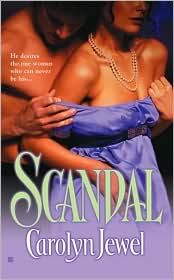
Scandal actually begins as the Earl of Banallt returns to Duke's Head, ostensibly to visit his ancestral seat of Darmead Castle, but really to ask Sophie Evans to marry him now that their respective spouses are both dead. He loves her, he loves only her, and he'll love her forever, and if she just says yes he'll shower her with money and affection and Alpha Male babies for the rest of her days.
He confronts her, divulges his feelings and asks for her hand. She refuses point-blank.
Sophie Evans has been severely scarred by love, and by her earlier experiences with Banallt. She caused a scandal and alienated herself from her family when she eloped with Tommy Evans, only to discover he was a heartless fortune hunter. While her husband burned through her inheritance with his mistresses in town, Sophie was abandoned to rusticate in the countryside and survive the mounting debts as best she could - by writing novels under a pen name. Occasionally, however, Tommy would return to the country estate, often with a drunken friend in tow - in several cases, the rakish Earl of Banallt. Even under such unorthodox circumstances, Banallt and Sophie came close to forming a tentative friendship, until the night Banallt ruined everything.
Now that her husband is dead and she's reconciled with her politically-minded brother, John, Sophie has no desire to marry anyone. Moreover, she's witnessed Banallt at his jaded, degenerate worst. He wasn't only a reprobate - he was the rake that her husband Tommy aspired to emulate. For Sophie Evans, it's not enough to be told that Banallt loves her. The beauty of Scandal comes from the strength of the characterization and plotting as the events that throw Sophie and Banallt together slowly, gradually show her the truth.
Sophie's a very frustrating character - her main role in the narrative is to say "NO." Banallt's after an HEA from the very first page, so keeping the novel, well, novel-length, requires constant rejection on Sophie's part. What's frustrating about her was that Carolyn Jewel paints her in such lush, multi-faceted, and sympathetic tones that you completely understand why she continues to dig in her heels, despite the fact that Banallt is a fat-and-calorie-free chocolate cake sprinkled with angel dust offered to her on a silver platter, at no charge.
Most of Sophie's objections aren't that she believes love is a delusion, or that it doesn't exist, or that she and Banallt are incapable of it. She tried the whole "marry for love" deal, and it nearly destroyed her. The most painful fact of Sophie's marriage was that she still loved Tommy, even though he essentially married her for beer money and abandoned her. Early on in the book, she reveals to Banallt that in the last excrutiating days of her marriage, Tommy came back, promising to reform, and she accepted him with her whole heart only to discover it was just another ploy to wrangle funds from her relatives.
Ultimately, this is why she refuses Banallt's advances while not exactly refusing the attentions of two boring, sensible rivals who show an interest in her: there's no risk that she might fall in love with them. However, even from the beginning of the novel, she knows she could fall for Banallt, if she let herself, and she fears that marrying him would trap her in the same situation she had with Tommy. However, throughout the novel she continually tests her own boundaries, dipping her big toe in, seeing what she can get away with - can she manage a conversation? Can she risk a dance with him? Can they just be lovers?
By necessity, Banallt must be the subtler character, because he doesn't have to travel the same emotional distance that Sophie does. He's already changed (as we can see through the narrative's graceful use of flashbacks), and he wants to prove it to Sophie, but at the same time he doesn't want to force anything on her or damage her reputation. He helps her test her boundaries and face her fears, and he refuses to give in to self-pity. There is a despairing edge to him though - there's no way to take back what Tommy's treatment did to Sophie, and no way to take back his own mistakes, so the only thing he can do is soldier on.
Carolyn Jewel crafts a subtle, quiet narrative on the nature of love and loss, using unique symbolism and not pulling punches that most other romance authors would have. Spoilers ahoy - the best example of this is with Sophie's brother John. He's a contributing character - he's young, hot, decent, and has actual lines. He makes goo-goo eyes at Banallt's cousin Fidelia, and she makes goo-goo eyes in return. The story gives every indication that John will pursue a secondary romance with Fidelia. So it comes as the greatest possible surprise when he ends up shot and killed more than halfway through the novel (in a darkly funny bit of metahumour, Sophie says, "He couldn't be dead. He was in love.").
It's a shock and a tragedy - but it serves the narrative, heightening Sophie's fear of loss and abandonment, giving Banallt the chance to demonstrate his heroism and his steadfastness, and serving as a potent reminder of the fragility of life and love. Fidelia and John failed to act on their attraction because of class differences and the awkward history between Sophie and Banallt, and when Sophie sees Fidelia, she discovers that Fidelia is the poorer for having lost love before she could truly experience it, which in turn influences how Sophie eventually stops running from love herself. I don't know how many other authors would have made an unconventional choice like that to serve the story. Hot brothers in Romance tend to live until they get sequels.
That was Scandal is - an unconventional, yet low-key romance between two very heartsick people. There's the repeated theme that Sophie's isn't Banallt's "type" (short, delicate, brunette), yet even from their first meeting it's apparent that nearly every aspect of her self fits perfectly, in one way or another, with some aspect of Banallt's (my fave example? Sophie catches Banallt reading her work and discovers he's a huge fan of her novels - before he'd even met her). It just takes the length of the novel for Sophie to discover this. That being said, this book just misses getting a perfect A grade because the narrative is slow, to the point where it sags a bit in the middle. A-.
The Chick: Carmen Cole. After she caught her superhero fiance in bed with her ubervillain best friend, she dedicated her career to exposing the true identities of all caped crusaders - until one of them commits suicide after being unmasked. The Rub: Just when she wants to give up her exposes, Carmen is kidnapped by a trio of ubervillains who want her to unmask the Fearless Five, a powerful superhero team. Unfortunately, to save her hide, she just might have to ask for help from the super-teammates of the guy who offed himself thanks to her. Awkward. Dream Casting: Sarah Michelle Gellar.
The Dude: Sam Sloane, a.k.a. "Striker." When the reporter infamous for dragging super-powered people out of the closet starts tailing him, he knows he's in for trouble, even when she claims she's doing it to find out the true identity of his worst enemy. The Rub: He totally wants to go undercover with this intrepid reporter - but she made his best friend jump off a building! Kind of a turnoff. Dream Casting: James Marsden.
The Plot:
SuperFiance and Captain Slut: Oops, did we ruin your wedding?
Carmen: You ruined a whole lot more than that. *snaps picture*
Front Page: EXTRA EXTRA! HEROINE GETS TRAGIC BACKSTORY!
Carmen: I won't stop until all super-powered people are exposed for who they really are!
Random Hero Dude: *dies*
Front Page: THIS JUST IN - HEROINE IS A HEARTLESS BITCH!
Carmen: Oh crap. I'll never unmask another hero again!
Terrible Triad of Villains: Yes you will - or we'll dump you in radioactive waste!
Carmen: Save me Fearless Five!
Striker: You're pretty.
Carmen: I drove your friend to suicide.
Striker: HAWT.
Striker and Carmen: *sexxor*
Terrible Triad: Nyaahaha! *kidnap Striker*
Carmen: *saves Striker*
Striker: Great! Let's get married!
Carmen: No, let's wallow in guilt and self-loathing for a few more pages.
Striker: ...
Carmen: Okay I'm done!
Striker: Hooray!
Romance Convention Checklist
1 Heroine with a Sad Romantic Past
1 Hero Who Likes Leather
1 Flaming Bitch
2 Almost-Rapes
Several Pairs of Designer Footwear
2 Guilt Trips
1 Full-Body Leather Suit With Pockets For Condoms
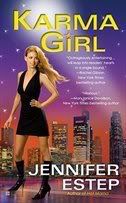
The Word: In a clumsily-structured introduction, our heroine Carmen Cole discovers her fiance is a superhero and her best friend is an ubervillain - at the same time she discovers they've been sleeping together, 30 minutes before her wedding ceremony. Ouch. Betrayed three ways from Sunday, she gets her revenge by taking pictures of the two and splashing their true identities all over the front page of her newspaper.
To her, however, it's not enough - every one who puts on a mask, for good or evil, is lying or betraying someone in some way, so she sets out to expose every super-powered being she can. She does a pretty good job of it, too, until she unmasks Tornado, a member of the super-team the Fearless Five, and he commits suicide shortly thereafter. Shunned by the general public, demoted to working the Society beat at her newspaper, and sick with shame, Carmen swears she'll never rip off another mask.
Too bad she doesn't get a choice. Walking home from work one day, she's kidnapped by the the Terrible Triad, a trio of ubervillains headed by the nasty bad-girl Malefica. They want her to uncover the identity of the leader of the Fearless Five, a dashing fellow named Striker who wears black leather and wields katanas. If Carmen doesn't figure out who he is in a month's time, they'll dump her in radioactive goo. Carmen refuses to be responsible for another superhero's death, but the only solution she can come up with is to discover Striker's identity and use that, in turn, to discover Malefica's (because arch-enemies are always linked in some way, she reasons).
Striker, as well as the rest of the Fearless Five (now the Fearless Four, I suppose), have no intention of giving away their identities, but they can't just sit back and let a (somewhat) innocent reporter get murdered either, so Striker offers her protection. Carmen is immediately attracted to Striker but knows there are too many obstacles - he's a mega-popular superbeing and possibly a billionaire, while she's an impoverished social pariah, and let's not forget the fact that she drove his best friend to swan dive off a skyscraper.
I'll start with the good: Estep's world-building is fun and kooky while still consistent, and parodies comic book stories with canny precision. This, Judi Fennell, is how to establish a comedic setting. I loved the alliterative names of every hero/villain (Fiona Fine, Sam Sloane, Matt Marion, etc.), I loved how even ubervillains had fans, websites, promotional materials, and charities. The goofy names of companies and buildings, the over-the-top costumes, the references to the typical superheroine body type (tiny waist, huge boobs), the zaniness tempered by overall good plotting and structure. All good stuff.
As well, the obstacles between the hero and heroine are heartfelt and real, an island of normality in all the neon spandex: the heroine who spent years ruining superheroes' lives must now depend on one, and her proximity to the Fearless Five helps her understand all the things about superheroes she used to hate (namely, the secrecy).
However, there is also the bad, which unfortunately takes up the greater chunk of my opinions regarding this book. Opinion-wise, I'm just going to put it out there: I hated that this book was told in first-person, entirely from Carmen's point of view. I seriously believe it hampered my personal enjoyment of the novel as a romance. I have no beefs against first person narration in general (one of my favourite fantasy trilogies of all time, The Farseer Trilogy by Robin Hobb, is told entirely in first person) but I have deep issues with first-person narration told from a single character in a romance.
Romance, from what I've come to expect, revolves around two protagonists - the hero and the heroine. In nearly every romance I've read, the reader gets a peek into both the hero's and the heroine's thoughts, with front-row seats to how they both evolve and develop toward their HEA. Karma Girl, however, is all about Carmen - we don't get any scenes told from Striker's point of view. At all. I felt a deep and gaping void in the narrative development of the romance because we only see the relationship's growth from one side. There were several scenes (like when Carmen and Striker make love for the first time) where I frankly did not understand Striker's actions, and some insight into his motivations would have been welcome - without it, Striker never comes off as a romantic protagonist. Instead, he's merely a love interest.
As well, I found Carmen, as a character, to be disappointingly shallow, which is another negative to a novel that's told entirely from her corner. She's very black-and-white, acting in extremes, with little subtlety or nuance in between. This is especially apparent in the introduction, where she goes from Completely Self-Righteous to Completely Guilt-Ridden and Self-Loathing within the span of a few pages. She also jumps to an out-of-the-blue conclusion near the end of the novel that makes no sense and only serves to drag the story out another twenty needless pages. The biggest complaint I had with this novel, however, was the writing. Jennifer Estep's writing style is simplistic, juvenile, and repetitive - often repeating familiar phrases and words, using bizarre and ill-fitting similes and metaphors, or resorting to cliches. Carmen's "inner voice chatters" at her more than half a dozen times over the course of the novel, and Striker always makes her feel "feverish". They're not awful words or phrases, but when repeated ad nauseum they start sticking out and interfering with the reading experience.
To put it bluntly, I like what Jennifer Estep has to say, but I hate how she says it. While she has an interesting story to tell and cheeky *nudge nudge, wink wink* worldbuilding, the lack of a hero's POV, a poorly-developed heroine, and lacklustre technique render this story less than super. C+
The Chick: Emily Jensen, a.k.a. "Lady Emma Denmore." On the run from a creepy relative, and determined to make it on her own, she uses her cunning card skills and an aristocratic alias to fleece nobles of their fortunes in order to secure her own independence. The Rub: The Duke of Somerhart, who met her as a girl, could very well ruin all her plans if he recognizes her - and yet, he's too tempting to ignore. Dream Casting: One Tree Hill's Bethany Joy Galeotti.
The Dude: "Hart," Duke of Somerhart. Renowned for his cold demeanor and rigid self-restraint both in and out of the bedroom, he's attracted to Emma and can't understand why she insists on refusing him when it's perfectly clear she wants it as much as he does. The Rub: In his attempt to loosen her screws, he risks losing his tightly-held control, and he refuses to be made into a naughty figure of ridicule and gossip. Dream Casting: Eric Bana.
The Plot: Hart: We should be lovers.
Emma: We can't do that.
Hart: We should be loooooooooooovers and that's a fact!
Emma: Why are you singing?
Hart: ...
Emma: My answer is no.
Hart: Okely dokely. *smiles*
Emma: Curse my horniness! I give up! Uncle! UNCLE!
Hart: Sexy uncle?
Emma: Yes, of course, sexy uncle, damn your eyes...
Hart and Emma: *sexx0r*
Emma: *leaves*
Hart: How DARE you! When I find you I'm going to strangle you...
Lancaster, Future Dahl Hero and Emma's BFF: *glares*
Hart: ...in an erotic and consensual manner for our mutual pleasure?
Emma: Hart, go away!
Matthew, Creepy Suitor: Let's get married, whore!
Emma: Hart, come back!
Hart: *saves Emma*
Matthew: *falls off cliff*
Emma: Thanks for saving my life and all, but I think I'll be on my way...
Hart: Okely dokely. *smiles*
Emma: Oh all RIGHT I'll marry you.
Hart: Hooray!
Romance Convention Checklist
1 Cold As Ice Hero
1 Emotionally Restrained Heroine with a Dark Past
3 Romantically Lacklustre Rivals
1 Romantically Lacklustre but Still Very Charming Sequel-Baiting Rival
1 Crazy Stalker
1 Very Bad Parent (Deceased)
2 Inconveniently Dead Siblings
The Word: I wasn't expecting to like this novel as much as I did. Don't get me wrong, I walked into this novel expecting to like it, but the first four or five chapters made me think I knew where the book was going - but by the time I'd settled down to what looked like a pleasant-but-nothing-new read, the book got all, like, intellectual on me and stuff.
Our heroine, Emma, has her whole future planned out - arriving in London under the assumed name of Lady Denmore with only 600 pounds in her pocket, she's padded her nest egg quite nicely by trolling the card rooms and gambling tables at parties and hustling aristocrats out of their coins. Her ambitions are small but precious: to amass 3000 pounds in winnings, which, invested in the funds, should leave her independently set for life.
She's close to attaining her goal when she meets the Duke of Somerhart at a party. She remembers Somerhart from her girlhood, when she spotted him at one of her degenerate father's scandalous parties. While only a small event, she still remembers him and is frightened he'll recognize her as well, revealing her deception and ruining all her plans.
Somerhart, or Hart as he is known, does not recognize her - but he is attracted to her nonetheless. In Society he's adopted the nickname of "Winterhart" for his chilling hauteur and his restraint in both his public and personal life. He pursues Emma, both flabbergasted and challenged by her repeated refusals, especially since it's obvious to both of them that they're horny as hell for each other.
The first few chapters of this novel were well-written but otherwise unexceptional. Somerhart vacillates between Angry and Horny in standard Alpha Male fashion. Emma worries about her past, and whether all her lies will catch up to her. As well, it's apparent early on that this is a story that revolves primarily around sex and sexual attraction and I wasn't sure whether I was comfortable with that or not. I don't read romance novels for the sex, I skim most sex scenes, and I avoid erotic romances and erotica. "Not that there's anything wrong with that," etc. etc., but I'm just not a personal fan. It's like, I personally hate the colour orange - but I don't think the colour orange is wrong or that people who do like orange are filthy pirate hookers. Don't just expect to find me wearing orange.
Further in, the story starts peeling back all these layers, revealing a depth I wasn't expecting. At its heart, A Rake's Guide to Pleasure is an intelligent, insightful, and most of all interesting examination of lust and morality. Yes, it is a story that focuses on sex and humping and squishy fun feelings, but as an intellectual theme rather than mindless sex scenes and humping for no reason. The novel has three characters who are tormented by lust and their own individual objections to it.
Emma's fear and personal trials with Hart come from the fact that she is a naturally sensuous woman. Hart's seduction of Emma never lowers itself into forceful seduction territory because he really doesn't have to work that hard to get Emma revved up. Emma fights herself more than she fights Hart in those scenes. Now, as a woman in 19th-century England she already has a reason to think sex is evil and wrong, but Victoria Dahl takes a different tack.
Emma's father was a selfish and self-indulgent rake who held parties that were little more than orgies. Growing up in that household and witnessing the things she did, taught Emma to believe that the natural sexual urges she feels are wrong, that the inevitable result of sex is the deviancy and promiscuity her father demonstrated. Emma's frightened that giving in to her sexual urges, even a little, will leave her as mindlessly and selfishly addicted to pleasure as her father was.
As well, Victoria Dahl cannily inserts the special moral pressure society applies to sex when dealing with Emma's con - while she feels guilty about impersonating a noblewoman (a crime), lying to people, gambling recklessly, and doing nearly anything for cash - it's her sexuality that troubles her most.
However, Somerhart is also a character taught by circumstance to mistrust his sexual appetite. When he was younger, he fell in love with another man's mistress and become a laughingstock when his incredibly personal letters to her became public. Society's laughter and scorn ingrained in him a sense of his own perversity. He came to associate lust with loss of control, and therefore, as "Winterhart," he continues to have sexual encounters but under rigidly enforced terms. There's a certain scene in the novel where Emma engages in an intentional act of voyeurism with Hart that evocatively establishes Hart's personal views on sex: Hart reacts with anger and fear after it's done once he realizes how little mastery he had over the situation.
The third character is Matthew, the crazed former suitor of Emma's who stalks her to London. His views on sex are influenced by a radical religious sect. He blames Emma for inflicting lust on him and believes the only way to absolve himself of sin and save himself (and Emma) in the eyes of God is to marry her - and spend his marriage dutifully "shepherding" Emma (by any means necessary) towards the path of the righteous. While Matthew is definitely is sinister, misogynistic and mentally imbalanced, Dahl also makes him a pitiable figure. Like Emma and Hart, he experiences perfectly natural sexual urges but is crushed by the conviction that they're sinful and wrong.
Yes, sex is the central theme of the novel and the sex scenes are graphic - but they are also beautifully written, narratively relevant, and judiciously applied. Every sex scene between the hero and heroine has a purpose, every romantic encounter accomplishes something. The voyeurism scene, for instance, between Emma and Hart has a direct bearing on the plot and on the protagonists' character development and if it hadn't been included, a significant part of the narrative would have been missing. My main complaint about sex in romance has never been about morals or sexuality, but that so many sex scenes in romance seem put there to fill a quota or fulfill an unspoken genre expectation than to serve the story. Unsurprisingly (this is a romance novel after all) love does manage to sneak its way in, even though it does so later in the book.
Leaving the big important themes aside, I liked Victoria Dahl's writing style - it's very lyrical without losing its clarity. I'd heard very good things about her style and I'm glad to say she lived up to the hype. I enjoyed her characters for the most part (although Hart was very much a run-of-the-mill Cold Rake for most of the novel). She even managed to scrounge up some sympathy in me for a fundamentalist Christian misogynist scumbag. Okay, so while this review technically is out on December 31st, I already did my year round-up - so let's just say that Victoria Dahl was a very pleasant way to start my new year of reading.
2009 was a busy year for the blog. In my 2008 retrospective, I mentioned how that was the year I finally focused my blog into a romance review site, rather than just a mishmash of whatever important thing was going on in my life at the time. If 2008 was when Gossamer Obsessions became a romance review blog, than 2009 was the year that people, uh, actually starting reading Gossamer Obsessions as a romance review blog.
2009 was full of good (finished the first draft of my romance novel!) and bad (got rejected for grad studies...), but mostly it involved me discovering and commenting on other blogs and becoming absorbed into the social world of blogging and reading that I hadn't discovered before. I started writing a few more commentaries (basically on how Not To Lose Your Shit as an Author and a Critic, and the argument of Sex in Romance), which people started commenting on in turn.
I even Guest Dare'd for the Booksmugglers, discovering Linnea Sinclair in the bargain!
I started taking more part in the social side of reading that I didn't before - this was the year I actually participated in Book Blogger Appreciation Week, and ended up being nominated and eventually shortlisted for Best Romance Blog (the award which eventually went to the fantastic Book Binge). Yeah, I didn't win, and there have been a lot of complaints about the event, but I discovered so many more blogs thanks to BBAW (such as Rip My Bodice and Books I Done Read) that I never would have discovered otherwise.
Also - this year I discovered RWA Nationals, and wow, was it a once-in-a-lifetime-experience! I met all sorts of people (reader, blogger, and author) and probably carried away far more free books than were good for me.
As well, I ended up reading a whole lot more than last year. In 2008, I wrote 37 reviews. In 2009, I ended up reading and reviewing 63. Almost double the amount! As for my Best of and Worst lists - there aren't going to be any special or consistent numbers this time around. Instead I'm going to stick to the good ol' letter grade. I didn't think it'd be fair to, say, have a top 10 list that involves most of the A+ and A graded books but leaves some out - and, for the same reason, I'm not going to add books that just got Cs and C+'s to the Worst List to pad out the number.
This book really has a lot going for it - great storytelling, fascinating characters, and no clear villain still alive to point the finger at. My favourite aspect of this novel is that even though Lord Ian, who suffers from Asperger's Syndrome, tells Beth that he's incapable of loving her, it's clear from the start that he can and does - the beauty of his characterization and development come from how he slowly realizes that he's been experiencing love all along, but was just incapable of identifying it in himself without help from others.
Now this was a Second Chance Challenge that did work. Bryony, honestly, is one of my favourite heroines of all time - and writing the blog entry describing just what it was about her that got me to empathize with her brought me to tears because I've experienced a lot of what she went through. I understood her isolation and her insecurities, the comfort she took in her separation from the real world. I understood how she reacted to Leo's flaws, while at the same time I empathized with Leo and felt sorrow for both. Mostly, I loved reading about her painful joy while experiencing a second chance at love - thanks to Leo's intense grovelling.
By now I've read three of Heyer's novels, and so far this is the only one that's really impressed me. We have a dashing but spoiled and hot-headed hero, and a downtrodden plain jane heroine. Combine the two, add a stray bullet and a skanky ho sister, and you have a deliciously frothy road romance where our hero learns that actions have consequences, women holding guns shouldn't be taunted, and that he really must check to make sure the woman he's abducting is an actual slut and not just a Ho for Show.
Similarly, our reasonable Heroine discovers that Bad Boys are Hawt, Good Boys are boring, and that one really must check to make sure the mysteriously wise old man she divulges all her secrets to is just a mysteriously wise old man and not her love interest's dad.
Like all the best Crusie novels, Fast Women combines light and dark, humour and tragedy. While tagging along with the heroine's long journey to recover her mojo and self-esteem after a crushing divorce, the reader also taps into murder, conspiracies, and the very real marital woes of other main characters that demonstrate that marriage isn't all Happily Ever After - it takes work, and the strength of this novel comes from reading how the heroine and hero work (and work and work) to make sure their romance lasts. Along with a smart mystery and crackling dialogue, we also have well-rounded characters on both sides of the gender line - there are no demonized exes, and no obvious villains (relationship-wise - of course the murderer is a villain!).
Truly a marvellous debut - complete with a goofy but sexy celebrity hero who discovers his World's Sexiest Smile isn't valid currency with the heroine, a strong heroine who doesn't allow her personal relationship problems to affect her mad courtroom skillz, and a storyline that doesn't compromise our protagonists' professions and career ambitions.
For anyone who's ever hated those romantic comedies that end with the heroine or hero giving up a big promotion or quitting their jobs to get with their Soul Mate - read this book. Yes, romantic heroes and heroines, you are allowed to have a job that's important to you and still struggle with relationships!
Okay, so I'm not exactly a fan of all her books, but McNaught's Almost Heaven is a sweet and satisfying tale of learning to trust after being betrayed. While our protagonists both learn they were tricked long ago by a vindictive third party, re-exploring their love isn't a simple matter of flicking a switch on and off. In one of the smartest uses of the Big Misunderstanding plot, McNaught shows how each protagonist re-enters their relationship holding something back, afraid that the happiness they've discovered might just turn out to be another trick, and how their love can't truly flourish until they're willing to give up everything. Well-written and empathetic (with a take-no-shit heroine), Almost Heaven is a literary treat.
Okay, there's been some controversy on the Interwebs as to whether this is a romance or not, because of the ending. Well, I for one will come out on the side that this is a romance. Unabashedly. We have a hero who bounces back and forth through time but mainly towards events that matter a lot to him - and more than any other time and place, he winds up running into his wife/soul mate - over and over, through different periods of his and her life. Despite the less-than-happy events of the end, the hero and heroine are forever changed for the better by the miracle that allowed them to find each other, and if that isn't a romance - or at least romantic - than I don't know what is.
Ah yes, the book that set off my perpetual fandom of Laura Kinsale. A complex and well-characterized medieval where our Princess is more accustomed to rescuing herself from her tower than depending on anyone else, and a knight who clings to his (doomed) vow of chastity like the last broken spar of a sinking ship. For those readers who love seeing complete opposites (calculating aristocrat, honest warrior) thrown together to mingle, react, and change, I heartily suggest For My Lady's Heart.
Shame, shame on me for abandoning Laura Lee Gurhke after the so-so Wicked Ways of a Duke, because I almost missed this stunner: a composer tormented by a constant ringing sound in his head thanks to a concussion hears music for the first time in years while he's around a starving violinist, and he'll do anything - anything - to keep her close enough to help him finish his long-awaited symphony. It's difficult to get more tormented than this hero, who's barely been able to think over the constant whining sound in his head, and now he has to deal not only with the possible love of his life, but a secret baby, too!
Again, another book that came out of the blue after reading a so-so novel first. I liked Match Me If You Can, but it was nothing special, so reading Natural Born Charmer was a pleasant kick to the face (uh...). What could have been the time-honoured Tortured Hero with Horrible Childhood plot turns into a story about how the hero's Neglectful Parents have changed their lives for the better, and how our stubbornly cute heroine pulls the hero's self-pitying head out of his own ass so that he can discover this amazing fact for himself.
A+ While For My Lady's Heart was excellent enough to make me try another of Laura Kinsale's books, Prince of Midnight was gorgeously, all-consumingly, obsessively, spectacularly AWESOME enough to make me go out and order/steal/borrow/find all of her books that I possibly could!
Our hero, S.T. Maitland, is a formerly-dashing folk legend turned bumbling fool thanks to a shot-to-hell inner ear that screwed up his sense of balance - but even the fact that he can barely walk in a straight line won't stop him from coming to the rescue of a beautiful damsel, no matter how many times he trips over himself trying. His romantic view of the world helps thaw the grieving heroine and re-introduce her to the joys of living. Can it get any better? I think not.
As with the good, however, there must come the bad. The really, really bad. Thankfully, I didn't find so muchbad this year to round out a full Top Ten list - so you'll simply have to be satisfied with the six novels I read that couldn't keep themselves above a C- grade.
I see-sawed several times in my expectations/reactions to this novel. As readers know, I was squicked out by the first chapter excerpt, but upon reading the next couple of chapters, I was quite intrigued! It looked like we had a developed, three-dimensional villain; it looked like we had complicated family drama that couldn't be solved in an easy, unmask-the-traitor manner; it looked like our heroine was realistically torn in her loyalties between the villain and the hero.
Looks can be deceiving - beneath the veneer of originality is a story by turns predictable and creepy. Turns out our developed villain really is just a cartoonishly sex-addicted evil poisoning MILF, the heroine is a doormat, the hero is forceful, exploitative and cruel, and the novel ends without solving the hero's family problems! (NOTE: as it turns out, I met Barbara Pierce at RWA 2009 and asked her about the abbreviated ending - turns out she'd planned to extend the story into part of the next book, but the publisher cancelled her series so she had to cram what endings she could into this book. As sad as it is, I still have to review the finished product and the ending was crap - not really the author's fault crap, but still crap).
Ugh. Many people love this book, or so I'm told. It has an interesting premise, to be sure - a young lord is declared mad and then imprisoned by his evil uncle who wants to control his fortune, and the heroine is kidnapped and taken to the hero to sate his sexual needs.
Unfortunately, we have to deal with a whinging doormat weakling heroine who blames herself for everything that goes wrong in the world, including but not limited to the hero's inability to give her an orgasm on the first try. Add to that innumerable and completely ridiculous, unnecessary and page-wasting sex scenes (including a sequence of three consecutive back-to-back scenes of frantic humping that made me want to throw this book under a lawn mower), overwraught purple prose, and an inconsistent and poorly-developed plot.
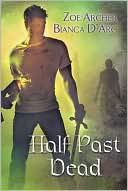
I wanted to like this book, since Zoe Archer was kind enough to offer a free ARC and she's great fun on Twitter, but the fantasy-nerd in me couldn't get over the inconsistent and contradictory world building of her story, "The Undying Heart." The zombie hero can still get it up even though the story establishes he has no blood circulation, and the incompetent Mary Sue heroine's hired by a secret organization to track evil wizards despite a) having no magic training, b) having no weapons training, c) her crusading experience consists of handing out pamphlets.
And the overall-good-storytelling-and-basic-writing-ability-nerd in me wants to chop off the head of Bianca D'Arc's shuffling, brainless entry "Simon Says," about a guy with angst. I guess. And zombies. And the heroine he ruined for all other men because he's just that awesome. I think. And I think they hunt zombies. Listless, cliched writing and absolutely blank characters.
Where do I start with this book? How about the flat, childish heroine propelled by a single motivation that is repeated over and over (we GET IT, you want to herd SHEEP)? How about the cowardly manbaby hero who'll get with the heroine but won't marry her because he's much too scared to ask his Daddy for permission? How about the redundant and ultimately pointless scenes of Tudor court life that allow the author to cram in every last scrap of historical research she did, despite the fact that they have no bearing whatsoever on the story? Or how about the groan-inducing sexual euphemisms like "love lance," "love juice," and "love passage" during intimate scenes? Pick one! Pick them all! Just don't make me think about this stupid book any longer than I have to!
This was a silly, silly book. However, the silliness like the fish puns and the cartoonish worldbuilding and the murderous albatrosses in this book are not what made this novel stink like week-old tuna left in the sun. In a discussion I had with a reader who liked the novel, she told me I obviously too this book too seriously.
If "taking a novel too seriously" means expecting cause-and-effect in plotting, or expecting plot threads integral to the novel to be wrapped up, or feeling entitled to characters who behave like realistic human beings, or expecting random deus ex machina solutions to problems to be explained and not just packed away under the ludicrous "the gods decided it but don't want to tell you why" excuse, then I can't really imagine how not to take a book seriously. The central mystery of the novel is solved in a heartbeat by Zeus without ANY REASON GIVEN, the reason the heroine needed to be dragged to the ocean turns out to be false but we're never told the real reason she needed to grow a mertail despite the fact that IT'S THE MAIN MOTIVATION BEHIND THE ROMANCE PLOT, the hero's reversion to his merman form doesn't work the way it's supposed to the first time but that's never explained (although the "gods promise it won't happen again"). I can tolerate feathered spies. I can handle a jokey parody setting - but even jokey parody settings need to be consistent and established for a novel-length (series length!) story.
But even a dimbulb heroine who believes she's fatally allergic to 75% of the Earth's surface doesn't make this the worst of the worst. Oh no. Not nearly.
FOR YOUR READING PLEASURE, ANIMEJUNE'S ABSOLUTELY WORST READ OF 2009 IS:
F. This was the worst of the worst. THE WORST. The most AWFUL, HATEFUL, HAIR-PULLINGLY-LUDICROUS book I have ever read. EVER. EVER. One of the only TWO F grades I've ever given in this blog's history. This is a book that I really think had no right to be published. Inaccurate word usage, a complete ignorance of how the real world operates, inconsistent backstories, flagrantly nonsensical plot points (the heroine thinks a yorkshire terrier's bound for an abusive home, so she buys another yorkshire terrier thinking she'll switch the two), and shambling puppet characters with the mentality, morals, and world-view of eleven-year-olds. There - there are no words to accurately describe just how bad this novel is.
Our heroine, whose hobbies include taking photos of adowable puppies, worshipping her perfectly-perfect daddy, harbouring an unwarranted prejudice against lawyers, and curling herself into a fetal ball and sobbing herself to sleep at the first mention of trouble, learns that her now-deceased mother was a bank robber, and that to keep her unexpected inheritance she needs to get Mean Ol' Mummy's accomplices to pay up. Needless to say, she finds a cute fella who reminds her of her perfect Daddy - and wouldn't you know, she reminds him of his perfect Mummy! Thankfully, when they marry, she won't have to give up her precious, all-knowing Daddy - Daddy actually says (I'm not making this up), that he's not giving her away - he and her hubby will just "share her."
Don't worry about the vomit, readers - the heroine's 1, 000 000 Yorkshire terriers will make short work of it!
So that's it for 2009, folks! Here's hoping to some fun reads in 2010. And now, to round out my post - the Best of the Rest of Gossamer Obsessions 2009:
 Another week, yet another opportunity for Library Loot. It seems I just can't help myself - I go to the library to return books and end up finding even more books that I actually want to read! What is up, public library? How did you suddenly get so much better at stocking romance? Oh well. The loot:
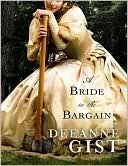 A Bride in the Bargain, by Deeanne Gist. I've never read inspirational romance before, but I was interested in this book because Gist hosted a very illuminating workshop at RWA 2009 about how book covers come to be, and this book was featured. Yup - Bethany House has some gorgeous covers y'all. FUN FACT: that girl on the cover is actually Gist's daughter! Anyhoo, the story sounds pretty good - hero needs a wife in order to keep his land. Heroine thinks she's being hired as a cook. Hilarity ensues!
 The Courtesan's Daughter, by Claudia Dain. Where better to go for a lucky author dip than a place where you don't have to pay for a book? I've heard some good things about Claudia Dain's Courtesan series, and since this is the first book, I thought I would give it a try.
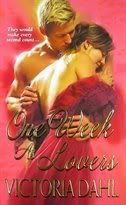 Just as I thought I was on my way out the library door, I caught sight of Victoria Dahl's One Week As Lovers, the sequel to A Rake's Guide to Pleasure that stars Emma's hot-but-poverty-stricken BFF Lancaster. Not only was it there - it was a new library copy. The spine of the paperback wasn't even creased! None of the pages were bent!