Thursday, February 11, 2010

"Too Wicked to Kiss," by Erica Ridley

The Chick: Evangeline Pemberton. On the run from her appalling stepfather, she tags along with her neighbours, the Stantons - unaware that Lady Stanton plans to use her (and her psychic "Gift" of reading people) as a pawn to help her daughter snag a husband.
The Rub: Evangeline doesn't want to trap any groom, even a suspected killer like Gavin - but she has nowhere to go if she doesn't comply.
Dream Casting: Felicity Jones.

The Dude: Gavin Lioncroft. While he'd much rather stay in his giant house and mope, his sister (whom he hasn't seen in a decade) decides to throw a houseparty, in his digs, without telling him. At least he gets to see his nieces.
The Rub: When his sister's awful husband is murdered under his roof, all suspicion points to him.
Dream Casting: Hugh Jackman. Why? So that even as this book became irredeemably silly, I could think about Hugh Jackman. In a cravat.

The Plot:

Evangeline: Save me from my evil stepfather!

Lady Stanton: Sure - PSYCH! We're taking you to an evil houseparty run by an evil rich dude!

Evangeline: Wait, why?

Lady Stanton: Because we need your psychic powers to help trap my daughter in marriage with a murderer!

Evangeline: That makes no sense.

Lioncroft: Gar! Why are people at my house?! Who DARES disturb my brooding angst!

Evangeline: Wow - despite the fact I think he's a cold-blooded murderer, I totally want to bang him!

Susan, Lady Stanton's Daughter: That makes no sense.

Lord Hetherington, Wife Beater: *dies*

Lioncroft: Who could it be?

Evangeline: Was it Tipsy McDrunkard? Or Consumption McGee? Or SlutWhore TotallyPreggers?

Lioncroft: Why aren't you actually, uh, using your psychic powers?

Evangeline: No reason.

Lioncroft: That makes no sense. But I can't love you! I'm too angsty! I'm a murderer!

Evangeline: Dude, I thought you were hot even when I thought you were a murderer.

Lioncroft: HOO--

Evil Stepfather: Yoink! *steals Evangeline*

Evangeline: *shoots stepfather*

Lioncroft: --RAY!

AnimeJune: That makes no sense!

Romance Convention Checklist

1 Broody McAngstyPants

1 Psychic Broody McAngstyPants

1 Evil Mutha

1 Evil Mutha-To-Be

1 Not Quite Evil But Still Spineless and Untrustworthy Mutha

1 Crazy-Ass BFF

1 Cranky Old Man

1 Case of *cough cough* Convenient Consumption

1 Evil Rapist Batterer Pedophile Stepfather

2 Inconveniently Dead Parents

1 Secret Passage

The Word: First of all, I would like to thank Erica Ridley, who offered me a free ARC of her debut novel, Too Wicked to Kiss. To return the favour, I would like to advise that she not read this review. I didn't enjoy your novel, Ms. Ridley, but I'm sure other people will. That being said, unless you're in the mind for some constructive (and some not-so-constructive) criticism, this review might not send you to your happy place.

Our heroine, Evangeline Pemberton, wakes up in a carriage that's not going where it should. She thought she was mooching a ride to a London houseparty with Lady Stanton and her daughter Susan. Her mother, who for years protected Evangeline from the dastardly machinations of her eeeeevil stepfather, took an assisted swandive down a flight of stairs five days past. Now Evangline has no one and needs to get the hell out of Dodge by any means necessary.

However, Lady Stanton, who's so evil she might as well be Evangeline's stepdad in drag, has other plans. Thanks to some shenanigans, her daughter's reputation is in tatters so the two are off to the country estate of one Gavin Lioncroft, a man who is believed to have murdered his parents, thus making him the only man in England who ranks lower in public opinion than Susan. If Evangeline doesn't want to hitchhike through the empty English countryside, than she'll have to help Susan to compromise herself with Lioncroft and force an engagement.

By this point, the reader has to suspend disbelief and just buy that Susan is apparently so compromised that the only man she can marry is one that even her mother thinks is a cold-blooded killer. And this is the first chapter, ladies and gentlemen.

Lady Stanton also wants Evangeline's particular assistance because she knows of Evangeline's special "Gift" - like that dude from The Dead Zone, Evangeline gets visions (along with wicked migraines) whenever she touches people. Gal can't even give a handshake without discovering you've cheated on your taxes.

Anyhoo - they arrive at Blackberry Manor (Lioncroft's crib), only to discover that the host has no idea a houseparty was even planned. His sister Lady Hetherington, whom he hasn't seen since the *lowers voice, waggles fingers* incident with their parents, needs his help snaring a suitor for her daughter, Nancy, who has also been up to shenanigans. Gavin, in typical Alpha Male With an Obvious Predator Metaphor In His Last Name fashion, growls and snaps and makes an ass of himself in an attempt to scare his guests away with bad behaviour and terrible home decor.

During this time, we are introduced to the other guests, all thinly-drawn caricatures who rely on repetitive character traits: Edmund (Tipsy McDrunkard), who is Always Drunk, All the Time, and is never found without an alcoholic beverage on hand; Benedict (Consumption McGee) who cannot move, sit, or pass wind without coughing suspiciously into a handkerchief; his wife, Francine (SlutWhore TotallyPreggers) who always clutches her belly at important moments in the story as if asking the unborn fetus for advice; and Lord Teasdale, a crotchety old dude who Lady Hetherington is intending to betrothe her daughter to. As well, we have Lord Hetherington, casual Wife Beater and All-Round Douchebag, but he's not that important since he dies early on in the narrative.

Of course, everyone seems convinced Lioncroft murdered him, including Lady Stanton, but even that doesn't diminish her determination to trap him in marriage. When she asks Evangeline to use her gift on Lioncroft, it's not to discover if he's innocent of the crime, but whether he'll be caught and hanged for it.

Trouble is, Evangeline's tried touching Lioncroft - several times, in fact, even though she's convinced he's an awful violent brute just like her stepdad. I guess the idea of parental murder just makes her freak flag fly, since she can't even look at him without tripping, falling, and accidentally shoving her tongue down his throat. However, in a quirk a la Twilight and the Sookie Stackhouse books, Lioncroft is the only person she's ever touched who doesn't give her headaches and visions. So she'll have to grope elsewhere for clues.

As explained in the author's note at the back of the novel, Too Wicked to Kiss is another entry in the recent bizarre resurgence of Gothic Romances. In this novel's case, this entails reams of melodramatic and florid description, stilted and often anachronistic dialogue, and spooooky home decorating (carpets the colour of blood, creepy statuary, "undulating" grey wallpaper, etc.), all of which only serves to make this novel about as dark and shady as a game of Clue. Mr. Lioncroft - in the bedroom - with the blood-stained pillow!

However, easily the worst element of this book is the fact that not a single character - not one - is sympathetic or worth reading about. I would gladly push any of them into the path of a speeding train. The author utterly fails to give any character a reasonable or understandable motivation for their actions.

I mean, we have the obvious Murder Motivations for our four one-note murder suspects (Edmund, Benedict, Francine, Teasdale), but why do they stick around after Hetherington dies? Some of them really think Lioncroft is the murderer, but they continue to eat his food, sleep under his roof, and continually insult him to his face. Um, what? Okay, if I had to pick a favourite it would probably be Teasdale, since his main "character flaw" is that he's crazy-old and says whatever he wants to, which makes him kind of awesome, actually. But still - where's the motivation?

We also have Lady Stanton - who seems desperate to marry Susan off to a man she (in her mind) knows is a murderer. ***Mild Spoilers*** Susan's so-called shenanigans involved getting caught repeating nasty gossip - it wasn't like she was caught in the middle of a Devil's Threeway! ***Mild Spoilers*** Are you telling me that recruiting a psychic to forcibly trap a reclusive murderer who lives several miles in the middle of nowhere was your only option to marry off your daughter? Really? It was murderer or nothing? Lady Hetherington was willing to marry her shenanigan'd daughter off to the Regency equivalent of Mr. Burns. Were there no rich old farts around at this time of year?

Then, we have her daughter Susan, a young woman with the intellectual speed of a hamster on a broken wheel. Her favourite activities include Jumping on the Popular Bandwagon, Being Easily Led, and Inconveniently Interrupting Important Conversations. And those are her consistent traits - in nearly everything else, she's a cipher for whichever character trait is most irritating at the time, whether or not it relates to her previous behaviour. Want her to make a lot of Stupid and Ignorant Assumptions in this chapter? Sure! As long as she can make an Unexpectedly Wise Pronouncement in the next chapter! Let's have her Wail About People Remembering Her Past Shenanigans in this paragraph - and then she can Wail About Another Character's Past Shenanigans in the next!

Perhaps that's why no one in Society wants to marry her - not because she spreads gossip, but because she's the character equivalent of an elementary school student's collage of Annoying Tropes raggedly cut out from old issues of Highlights and National Geographic magazines from the '70s. And guess what - she gets a freaking sequel.

Now let's discuss our heroine, shall we? Also a breathtakingly inconsistent and unmotivated character, she claims to hate violent, murderous men because they remind of her rape-happy step-father, and yet just a look from Lioncroft (before she even shares a conversation with him) sets her all a-flutter. Um, what? She spends the greater part of the first half of this novel believing he's a killer, but she continues to make out with him and get crazy-jealous of Susan and harp on his personal appearance. Why?

Because of this, Gavin and Evangeline don't really have any positive interactions for the first half of the book - every time he stops to talk to her she treats him like dirt and makes a lot of ass-hat-y comments. Of course, by the second half, despite the lack of interaction, Evangeline is mostly convinced Gavin is innocent - why? Again, because he makes her horny - heaven knows they haven't spent nearly enough time together in the narrative to indicate anything else. Um, I'm sorry, but if female genitalia were capable of telling the difference between good and evil then Bernie Madoff would have died a virgin.

As well, even though Evangeline's tasked with engineering Susan's compromisation, she and Lioncroft are repeatedly discovered by several people in tawdry situations that should have been compromising in and of themselves, but everyone conveniently fails to notice.

And even when Evangeline's mostly convinced of Gavin's innocence, she takes every excuse to demean him. She implores him to be kinder to people, but of course, if he shows a spark of kindness to a woman, Evangeline bitches at him and storms off in a huff. If he shaves, she throws a shitfit. I suppose Ridley gives us an interesting gender-reversal of the popular romance trope: this time it's the heroine who's overjudgemental and self-righteous and asshat-y, and the hero lies down and takes it.

As well, her power is never really developed or explained. Why is she unable to "read" Lioncroft through touch? It's not explained, we're just supposed to accept it. As well, even though two people (including one she's growing to care very deeply for) entreat her to use her powers to find out the murderer, she nods her head and agrees - and does nothing. Eventually, most of the touch-visions that help her to solve the crime occur accidentally - when she slaps someone, or when she falls and someone catches her. The villain actually ends up revealing him/herself in an egregiously clumsy, contrived and silly manner. Why did Evangeline have to have a secret power at all, if she rarely uses it even to save a man's life?

Now, our hero. In order to have her novel fit the criteria of a Gothic Romance, Ms. Ridley tries to give us a dark, brooding, angsty hero with a deep, dark past. Unsurprisingly, he's not nearly as dark as he seems. In fact, most of the time he's just somewhat rakish, very needy, and more than a bit amusingly ridiculous. He's more of a "sad Rake" from a lighter Regency - it's like he escaped from a Julia Quinn novel in order to set up shop as Heathcliff Lite - All the Broodiness, None of the Insanity.

The only thing really dark about him is the hinting he makes about the deaths of his parents, and, just like nearly everything else about this book, the payoff to the big reveal of this is incredibly lame. The book isn't out yet so I won't spoil the actual details, but it's very much of the "while fighting with my brother, I sneezed on him, and he caught consumption and died" pseudo-guilt variety.

Too Wicked To Kiss fails to impress, mostly since I could have done without any of the characters at all. We have melodramatic writing, hamhanded plotting, nonsensical character motivation, an unsatisfying climax, and a needless paranormal element.
D+

Monday, February 08, 2010

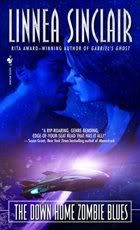
"The Down Home Zombie Blues," by Linnea Sinclair

The Chick: Commander Jorie Mikkalah. One of a group of Guardians, intergalactic zombie hunters, she's sent to Earth when her undercover contact goes missing, but she accidentally reveals herself and her mission to a human, police Sergeant Theo Petrakos.
The Rub: Now that Theo's aware of the Guardians, Guardian law states that he has to be transported to a prison planet to keep their secret. Jorie, however, still might have a use for him.
Dream Casting: Jessica Alba.

The Dude: Police Sergeant Theophilus "Theo" Petrakos. While investigating the bizarre murder of a man who appears to have been mummified, he runs into alien Jorie, who informs him he can't return to Earth now that he knows her secret.
The Rub: He catches a reprieve when he offers to help Jorie find and eliminate the zombie threat, but only if he consents to an implant that will let Jorie kill him on a moment's notice should he try to escape.
Dream Casting: Robert Downey Jr.

The Plot:

Jorie: Crap! Our Earth contact's been killed by zombies!

Theo: Crap! An alien! Crap! An uglier alien! *shoots zombie*

Jorie: Crap, now I have to make you a prisoner.

Theo: Crap, now I'll never see my home again.

Jorie: Crap - how can we hunt zombies without knowing anything about Earth culture?

Theo: I can help!
Jorie: Only if I can implant you with a killswitch.

Theo: Crap.

Jorie: Crap! We're not only hunting zombies - but evil sexy aliens!

Theo: *shoots evil sexy aliens with gun* Not so sexy now, are you?

Evil Sexy Aliens: Crap! Our advanced shields are no match for physical bullets!

Jorie: Crap! I can't contact the ship! We're on our own.

Theo: Oh well. Let's kill some zombies!

Zombies: *killed*

Jorie: *zapped back to ship*

Theo: *alone* .... SHIT.

Jorie: *zapped back* No worries, dude, I'm a captain now!

Theo: Hooray!

Romance Convention Checklist

1 Evil Whore Ex-Wife

1 Evil Whore Ex-Fiance

Several Dead Zombies

1 Jar of Glorious Peanut Butter

Several Evil Sexy Aliens

Several Good And Still Fairly Attractive Aliens

1 Nosy Neighbour

Several Greek Endearments

1 Romantically Lacklustre Rival

The Word: I wanted to like this novel. I wanted to like it with pretty much every fibre of my being. I loved Games of Command, ever since The Booksmugglers dared me to read it. Kel-Paten is one of my favourite heroes of ALL TIME and the heroine was no slouch herself. The worldbuilding was intense and relevant - no wall-paper science fiction settings. I'm pretty sure, since I have the edition of Games of Command with the un-romance-y cover, that I can trick my dad into reading it.

So I was looking forward to reading The Down Home Zombie Blues. And, to be fair - it got off to an excellent start. Commander Jorie Mikkalah is a member of the Guardians, an intergalactic military unit that hunts and kills zombies. These zombies are not flesh-eating corpses, but rather biologically-engineered creatures that were created to guard lanes of space transport against infections and biological warfare. However, two hundred years ago their genetic programming went awry and they went rogue, hunting down any warm-blooded creatures they could find and draining them of their vital fluids. As the Guardians created the zombies in the first place, they consider it their responsibility to hunt down the herds and eliminate them.

This time around, Jorie and her team are sent to Earth, a nilworld - meaning a world lacking the technological development to participate in intergalactic travel. While Guardians can openly pursue zombies on worlds as advanced as their own, on nilworlds they must remain covert, knowing their presence could spark off xenophobia, religious persecution, and wars over their technology amongst the nils. Jorie and her pals know very little about Earth, and have so far relied on the information of their agent on the inside, Danjay. Unfortunately, Danjay's gone MIA and they fear the zombies may have gotten to him.

Meanwhile, Theo Petrakos, a Florida detective, is examining the corpse of a man that appears to have been mummified. There's little evidence to be found, but the man's house contains some weirdly advanced technology. Theo takes some of the tech as evidence, tech which Jorie must retrieve in order to preserve the Guardians' secret. Her attempt to discreetly steal back the evidence fails when a zombie attacks and Theo becomes involved. In order to protect them both from zombie reinforcements, she beams them both back up to her ship.

Theo has no idea what the hell is going on, but once he learns the gist of what zombies are, he's eager to return to Earth and alert the authorities. Unfortunately, as a nil who's now aware of the Guardian presence, he can't be allowed to return to his homeworld, but will instead be transported to Paroo, a pleasant but isolated planet where the Guardians reluctantly send all nils who end up knowing too much.

However, now that it's obvious Danjay is zombiefood, Theo dreams up a way to escape: he volunteers to be Jorie's personal Earth tourguide, since the Guardians need a least a basic knowledge of Earth and its culture in order to proceed in secret. Jorie accepts, with a caveat: Theo must consent to be fitted with a killing implant that Jorie and her superior can detonate if he tries to escape. Seeing no other choice, he assents and the two team up.

It sounds like a story heavy with drama, and it is - for a while. As I kept reading, however, the story slowed more and more, until soon I was bored out of my mind and found myself daydreaming on buses and subways instead of reading the book in front of me. By page 400, I gave up entirely and started skimming to the end.

In this case, the two aspects of Linnea Sinclair's writing that I considered to be some of her best assets turned out to be the albatrosses around this novel's neck: the action, and the worldbuilding.

At the beginning, our protagonists are fully-formed and seething with angst and personal drama. Jorie is gunning for a captaincy, but she's still hurting from a broken relationship with a scientist who cheated on her. She's also a survivor of torture at the hands of an aggressive race known as the Tresh (the aforementioned Evil Sexy Aliens - I'm not kidding, their hawtness is an indication of their Treshness), and when it looks like the zombies on Earth might be the experimental projects of the Tresh, nasty memories rise up to jeopardize her professionalism. Theo, meanwhile, is recovering from a broken marriage to a woman who ended up being a cokehead looking for a new identity.

However, the action soon sweeps all character development away. The task of tracking down zombies takes over, and the characters take a backseat. While occasional spurts of development pop up occasionally, the protagonists spend more time reacting than acting, so I felt distanced from them and from the narrative. This may sound weird, but while they're smart and efficient, they're too smart and efficient - solving problems quickly and easily without really giving a sense of their personality beyond, well, intelligence and efficiency. It's easier to determine a person's character from their personal screw-ups than from their victories, and the few times they do screw-up, more often than not it's thanks to the Evil Sexy Aliens or a technological malfunction.

And holy cats, the tech. Here's where Linnea Sinclair's world-building becomes an impediment. There's a fine line in world-building - while you want to create and convey a detailed, fully-formed world with aliens and zombies and ships, at the same time, you don't want to bog down your narrative with loads of minutiae that may be creative but don't contribute to the narrative. Even in science-fiction stories, the world-building should support the narrative, not the other way around. You can write a beautifully realized intergalactic empire, but it's not worth diddly squat if you don't have a story to tell with it.

In Down Home Zombie Blues, Jorie is always fiddling with her tech, and checking her tech, and fiddling with her shields, and creating new shields, and re-checking her tech, and repairing her tech, over and over until I wanted to pull my hair out with boredom. WE GET IT, THE TECH IS HELLA IMPORTANT, you don't have to TELL US every time she uses it unless it's DIRECTLY RELEVANT TO THE STORY. I did have a problem with some of the sci-fi jargon in Games of Command as well, but the story always came first. A lot of Jorie's plans to take down the zombies involve very complicated procedures using her tech - procedures we have to read in exacting detail, often multiple times as she explains it to other people. This also means that much of the lead-up to action scenes involves lectures on foreign technology and how it works rather than anything the protagonists actively do, which ends up being another distancing factor for me, the reader. It makes the novel's pacing slower than molasses in January - the novel's 500 pages long but the narrative takes place over only a few days.

The world-building itself is still very well-thought out, and there are some good moments - I really liked Jorie's discovery that some of Earth's technology is so outdated it's actually more effective than her tech: for instance, the enemy's shields are so focused on repelling the high-frequency lasers that all advanced aliens use, that they're defenseless against good old fashioned bullets. The language barriers between Jorie and Theo are expertly demonstrated - Jorie's second language is Vekran, which is almost but not quite English, and her word choices and sentence structure reflect this.

It's obvious that Down Home Zombie Blues took a lot of creativity and artistry to create. However, I couldn't enjoy it as a romance - the pacing was too slow, the characters' development had little to do with the action at hand, and the overabundance of repetitive technobabble kept me at arm's length from the narrative. I hated the fact that I had to skim it, but the fact that my eyes continued to glaze over at page 400 finally made me give it up. I may have to wait a little while before I try Linnea Sinclair again - but so long as Hope's Folly remains on my TBR, I will read it - eventually.
C+

Saturday, February 06, 2010

Library Loot: Gone Fishin'

Oh me, oh my, there are many things in life to which I am immune - H1N1, cilantro, and the lure of Robert Pattison and the rabid muskrat surgically embedded onto his scalp.

But one of the things which I absolutely cannot resist is a Library Book Sale. Ooooh, the tables lined with books, like adorable (slightly bent and battered) puppies wondering why fate has abandoned them - and won't you please take them home, for only a dollar each?

To me, Library Book Sales are my hunting sport, and I grab my rod and my reel and a bunch of friends and see what literary fishies I can pull into my boat. This time around, I got a relatively huge haul - for the price of two regular novels, I picked up 16 used books all total. Now, having clumsily compared books to both puppies and fish, let's see what I picked up this time:

The Series Finishers:
I first started this series with Melusine and was blown away. We have two half-brothers - Felix, the cultured, pompous, unabashedly gay but very, very damaged wizard - and Mildmay, the hardscrabble, razor-sharp, humorous and decidedly straight thief.

Throw in some evil mentors, great worldbuilding, magic, several inappropriate sexual advances, and brotherly bonding that may sometimes stray beyond what is culturally acceptable, and you have a heady fantasy series. Not only that, but the chapters are told by a different brother each time and it is obvious which one is narrating because they both have such distinct voices. Loved Melusine, but I checked The Virtu out at the library. I took the opportunity the Library Sale provided and snatched up a copy of The Virtu to keep, along with the next volume, The Mirador. I haven't read them all in at least several years, though, so it looks like I may have to re-read.

The Familiar Faces:
These were books written by authors I knew and liked (or had, at one point anyway). Yes, I succumbed and decided to try Lisa Kleypas, even after the tremendous silliness of Again the Magic and Scandal in Spring convinced me that there is such as thing as Too Much Alpha. I do have the balm of Julia Quinn's story in Where's My Hero? and perhaps with a contemporary such as Blue-Eyed Devil, Kleypas' purple-candy-coated writing style may be toned down just a tad. I normally avoid Highlander romances, but I enjoyed Ashley's The Madness of Lord Ian Mackenzie so much I decided to try Highlander Ever After - primarily because even if the ochs and ayes and ye kens overwhelm me, I can rest easy in the knowledge I only wasted one dollar on the experience.

The Rookies:


These are the books I just decided to go for - the ones where I said - "hey - that book's about a preacher with (let's count 'em) an 8-pack, why not?" Yes, basically books by authors I've never read. If I like them, more power to me, and if I don't - well, it's a dollar lost. Oh well. I picked up Sebastian because I distantly recall a discussion on a romance blog about Anne Bishop, plus it sounded like a nice romance fantasy. I've similarly heard good things about Wells, and went with The Dangerous Duke because it sounded more drama heavy than Scandal's Daughter (also at the sale).

Honey Trap sounded interesting, Dear Prince Charming also sounded, well, charming - and what better place to try legendary Johanna Lindsey for the first time?

The Rule Breaker:
As some of my regular readers may know, I tend to have one rule when it comes to book buying - that is, I won't buy more than one book by an author I haven't read yet. It really sucks to read a highly-anticipated book only to discover it's a dud, but it's worse when you realize you have the next two books on the shelf, too (*cough*CLWILSON*cough*). I have broken this rule on occasion (with Judith McNaught and Kate Noble, for instance), but as I've discovered it's usually a better bet to take it slow and see if you like an author before you devour their backlist.

I totally broke that rule for Gayle Callen. She's awesome in person, but I have heard disturbing rumours on the nets that her books are, how shall we say - le crap. I already have Never Trust a Scoundrel on my TBR, but then I saw this copy of The Viscount in Her Bedroom and I HAD to have it! It has a blinded hero! And - and something something something BLIND HERO. Sorry, but I tend to have soft spot for stories where the hero or heroine has been permanently hurt or disabled in some way that makes me re-evaluate life and their priorities. I think I'll read Viscount first and save Scoundrel for later.

And last, but certainly not least:

Catches of the Day:
Ah yes, les pieces de resistance. The reason why everyone should try a Library Book Sale - you really never know what you're going to find, but you're just as likely to find something fantastic, as not.

For the second time, I have managed to find an out of print Loretta Chase novel at a book sale, something so precious I snatched The Lion's Daughter up with a high-pitched squeal, then proceeded to hide it under my coat so that none of these other bitches could steal it from me! Along with that, I also found another Jo Goodman, one of those writers who, even though I've only read two of their books, I want every single thing she writes. And yet another Loretta Chase with Lord Perfect, with a cover laminated to razor sharpness, but who cares! Hooray!

So I am momentarily sated in my book-buying for now. Keep an eye out for Library Booksales of your own - you never know what you might find!

Friday, February 05, 2010

AnimeJune's Guide to Exploiting the Dead for Fun and Profit: A Rant

I have no idea when it all started, but since about the last decade, there have been a glut of "re-written" classics, many involving Jane Austen's novels. I myself reviewed An Assembly Such as This and Duty & Desire by Pamela Aidan, which re-told Pride and Prejudice from Darcy's point of view - and, of course, since his viewpoint is just so much more important than Elizabeth's, he gets an entire trilogy to himself. Then there was Abigail Reynold's Impulse & Initiative, a "what if Darcy and Elizabeth actually boned?" version. Looking at her website, one will discover she's actually "re-written" the same book more than three times!

More recently, the internets ignited with the publication of Ann Herendeen's Pride/Prejudice, a bisexual re-write where Darcy and Bingley and Elizabeth and Charlotte play Sexual Musical Chairs (with Wickham as the wild card) that simply "fills in the gaps" suggested by the original (or so says the breathtakingly arrogant back cover blurb). Yes, Pride/Prejudice is all about filling those gaps *wink wink nudge nudge*.

Even worse is the fad started by Pride and Prejudice and Zombies, which have inspired many lazy, half-assed writers to try and mash a classic with a cliched science-fiction/fantasy trope, like a child who discovers the yumminess of chocolate and peanut butter and tries to recreate the experience with completely mismatching foods - pickles and whipped cream, brownies and rutabagas, kielbasa and caramel - thinking the novelty will make up for the wretched taste. So far, we have Pride and Prejudice and Zombies, Sense and Sensibility and Sea Monsters, Mansfield Park and Mummies, and Emma and the Werewolves.

The frantic milking of this already-exhausted cow doesn't limit itself to just Austen. No - we're soon to see Little Women and Werewolves, Little Vampire Women, and Android Karenina.

So, if you don't want to read my lengthy rant, I'll sum up my general advice to writers everywhere:

WRITE YOUR OWN FUCKING BOOKS.

Yes, I'm serious. FUCK you, Anne of Green Gables Fights Poseidon by Lucy Maud Montgomery's Straw Boater and Fred LazyAss. FUCK you, The Long Winter - with the Abominable Snowman by Laura Ingalls Wilder's exploited corpse and Penny CantWriteWorthaShit. FUCK you, A Little Princess - Of MARS! by Frances Hodgeson Burnett's debt-ridden great-great-grandniece and Suzanne ArtisticHack.

Okay, none of those books actually exist yet (thank HEAVEN), but the idea makes me want to set something on fire.

Now, some readers may say, "But Animejune, have you read these books? They could actually be good!"

I don't care whether they're good or not because that's not the point, and that's not what I'm angry about. What steams me up is the idea of robbing a literary great's grave, an idea that is growing more and more culturally acceptable. It's not just the monster mash-ups - it's the whole deal of "re-writing" instead of writing, so that you can exploit the achievements of a dead person for your own personal gain. Are people really going to read Little Vampire Women because, hey, it's a story with vampires in it - or are they going to read it because they want to compare it to the original Little Women? Hell - the blurb for Little Women and Werewolves actually has the stones to say their version is Louisa May Alcott's original fucking draft.

If anything, the monster mash-ups piss me off a bit more because they're so obviously forced - wow, I totally didn't catch the subtle symbolism and subtext of Sense and Sensibility that obviously indicated Colonel Brandon had tentacles on his fucking face - but I'm also just enraged by the appropriation of someone else's writing in general. To me, that's fanfiction and will always be fanfiction - the literary equivalent of daydreaming. Great for a creative exercise or personal fantasy, but keep that shit to yourself.

Believe me, it's not like I haven't been possessed by a great idea off of someone else's work. I will admit, in the back of my mind, there is an imaginary copy of Caution & Convenience, by AnimeJune sitting on a forgotten, dusty shelf. I've always held a soft spot for Mr. Collins in Pride and Prejudice - to me, he never came across as a creep, just incredibly, painfully shy. And I have wondered - what would his story with Charlotte Lucas be like? Could they find love with a rebound relationship?

I will never write that book. I may, at a later date however, save the idea of the story - the idea of a shy, soft-spoken man who prefers to defer to others who ends up falling in love with a world-weary spinster willing to settle. They will not be named Mr Collins or Charlotte. There will be no Elizabeth Bennett or Mr. Darcy. There may be a tyrannical female figure who rules the hero's existence but she won't be Lady Catherine de Burgh.

I can't imagine the number of Darcy-esque heroes I've encountered reading romance - the cold, arrogant heroes who fall in love (very much against their will) with women they believe are beneath them. And yet each time they are characters expressly created by their authors, with their own names and backstories - and their authoresses publish them under their own names or pseudonyms. There's nothing wrong or unusual about being inspired by your favourite authors, but appropriating someone else's creation and trading on their name and fame while perverting their stories beyond all recognition is something entirely different.

"But AnimeJune - what about retellings of myth and fairy tales, huh? Isn't that appropriating a story that isn't yours? Seeing as YOU are writing a fairy-tale retelling in YOUR novel? HMMMMMM?"

Well, whose story am I appropriating? I've never minded (and frequently enjoy) fairy-tale retellings and mythological re-tellings. I guess, technically, the stories already exist, so isn't that the same thing? How is Android Karenina worse than a story about an astronaut named Jack who climbs a genetically-engineered beanstalk to free a sentient iPod from a Gnothar alien?

In this case, because there is no author. Who specifically created the Gods of Olympus? Who is the actual, original author of Cinderella? They're cultural narratives that have been passed down for generations, to the point where their stories are archtypes. Again, since I read romance, I'll use that as an example - there are a million bajillion re-tellings of Beauty and the Beast and Cinderella in romance, and yet each one of them is different.

Not only that, but the original folktales are pretty brief - the actions are simple and the characterizations and motivations are very, very basic. This is probably why the stories can be applied to other narratives, other settings, and even real-life events so easily - "Cinderella Story" is a common term for a rags-to-riches underdog tale. You can't write an entire novel about Sleeping Beauty or Snow White just on the archtype - why is Sleeping Beauty this way? Why does Snow White do that?

I think this ties in to my Caution and Convenience discussion: these days, the myths and folktales are little more than ideas. A woman in a situation of subjugation is rescued and restored to a higher status in life, for instance. You can do anything with an idea because ideas belong to no one. I mean, some people right now are criticizing the movie Avatar as being Dances with Aliens or a rip-off of Pocahontas, when really Avatar, Dances with Wolves, and Disney's Pocahontas are just written around the same archtype - that of the outsider who infiltrates a different culture and ends up preferring it.

Ideas are not stories however - and that's another reason for my distaste for mash-ups and rewrites, because they're not just using the idea of Pride & Prejudice or Little Women, they're using the stories the original authors built around the idea.

"But AnimeJune! You looooooove Lost in Austen! That's a re-write of Pride and Prejudice! HA! GOTCHA!"

Oooh, got me there. Or do you? Lost in Austen isn't a re-telling of Pride and Prejudice. It's an homage.

What's the difference? Well, the story behind Lost in Austen is how a modern woman who is a fan of the book gets plonked into the story and fucks everything up. In this case, the modern woman fucks it up, not the characters. Technically, the writers behind Lost in Austen change nothing about the characters or the basic motivations that Jane Austen established - they just introduce a rogue element, and examine how the characters - as written by Jane Austen - would react. Everything "new" about the characters that is revealed in the miniseries either a) corresponds with what we already know about them or b) was never mentioned in the original manuscript.

That's why I loved the story so much - while our heroine, Amanda Price, unintentionally causes huge changes in the storyline, the characters all react to her and the changes in the narrative in ways that are consistent with their pre-existing characterization. In this way, it's an homage to Jane Austen's characterization as well as a cheeky wink towards Regency lifestyle.

This, I think, is why I don't take issue with series books like Star Trek novels, or screenwriters of television shows - i.e. people who write stories based on pre-existing characters and worlds. In both those cases, writers have to comply with the original characterization. Is there a Star Trek novel where Captain Kirk is secretly a beefy French-Canadian woman who raises miniature horses? No. Does Michael Scott from The Office suddenly discover he's a buffoon, promptly apologize to his employees, and then go out and stake vampires? No.

With a re-write like Pride/Prejudice, there aren't outside influences on the story - therefore, the glaring differences in the storyline are produced by the characters, which entails changing the characters beyond what the author intended. In my mind, this is disrespectful of the author's express wishes, as well as ignorant of the very aspects of the author's writing that explain why their books remain on shelves to this day.

Why respect Jane Austen's characterization when you can make Elizabeth Bennett a zombie hunter, which makes absolutely no sense with Jane Austen's writing? Why respect the fact that Jane Austen's stories are intended to be social comedies of manners when you can shoehorn in as much senseless and graphic violence as you can? Why take into account the fact that Beth March would probably last less than five seconds with a werewolf, when you can make her a werewolf herself, or a werewolf hunter, or whatever the fuck she is in this newest literary necrophiliac orgy?

If you think I'm walking a fine line on this point, or splitting hairs, or just a huge hypocrite, well, you're entitled to your opinion. I'm still of the belief that if you want people like me to consider you a REAL writer, you're going to have to

1) Take the time and effort to create your own story and characters - that's what Jane Austen and Louisa May Alcott and Charles Dickens and the Bronte sisters all managed to do before typewriters and iPods and blogs even existed.

2) Take responsibility for your own work, instead of clinging to the literary coat tails of your betters

Wednesday, February 03, 2010

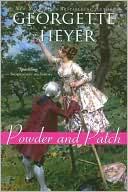
"Powder and Patch," by Georgette Heyer

The Chick: Cleone Charteris. While she loves her childhood sweetheart Phillip, she wishes he would at least make an effort to her impress her with superior dress and manners.
The Rub: She gets her wish when Phillip leaves for Paris and returns, six months later, a changed man - one she doesn't necessarily like - and she has no one to blame but herself.
Dream Casting: Emma's Louise Dylan.

The Dude: Phillip Jettan. When his ladylove rejects him on the basis that she could never marry a country bumpkin, he sets out to turn himself into a refined man of fashion.
The Rub: He hasn't completely forgiven Cleone for her rejection, however, and he intends to give her a taste of her own medicine and see how attractive a fop truly is.
Dream Casting: Andrew Lee Potts.

The Plot:
Phillip: Hey Cleone!

Cleone: Oh, hi...

Bancroft: Salutations, fair Cleone! Your eyes sparkle like stars!

Phillip: What a douche. Nobody talks like that--

Cleone: *all aflutter* Why can't you be more like Bancroft?

Sir Maurice, Phillip's Dad: YEAH, why can't you be more like Bancroft?

Phillip: ... SCREW YOU GUYS. I'm out! I'll show them, I'll show them ALL!

Tom, Phillip's Uncle: I'll help! *MAKEover, makeOVER, MAKEover, makeOVER- MAKEOVER! (for you and meeeeee)*

Phillip: *Dandy-ized!*

Cleone: WOW, Phillip, I've never seen you look so--

Phillip: Bored, now. *leaves*

Cleone: How - how DARE you follow my instructions to the letter and make me rue my own decisions! I HATE YOU! *runs off and does foolish things*

Phillip: Aw c'mon, don't be like that. Let's get married.

Cleone: I have a couple more stupid things to do, first. *gets engaged to two dudes*

Phillip: You done?

Cleone: Yup.

Phillip: *breaks engagements with a DUEL!* Let's get married.

Cleone: HOORAY!

Romance Convention Checklist

2 Duels over a Woman's Honour

3 Romantically Lacklustre Rivals

1 Makeover

Several Yards of Brightly Coloured Silks

1 Pair of Stockings Clocked with Hummingbirds

2 Unruly French Servants

2 Broken Engagements

2 Rejected Marriage Proposals

Several Examples of Terrible Poetry

The Word:
Georgette Heyer has a lot of good things going for her as a writer - she has a superb eye for historical detail and literary convention, a fun grasp of manners and humour, and a lively writing style. What she tends not to have, however, is a good sense of pacing. Many scenes in her novels are wasted on conversations that, while oftentimes funny and superficially amusing, have the depth and relevancy of a meringue. Her dialogue often meanders, as many of her characters tend to be easily distracted and amused by the fripperies of their time, and many of them have particular idiosyncrasies that usually involve repeating the same expression over and over and over and over (Rupert, from These Old Shades, for example, exclaims "Stap me if it didn't!" every third sentence).

Perhaps that's why, of the three Heyer novels I've read before this one (These Old Shades, Devil's Cub, and False Colours), I've only really liked one of them (Devil's Cub). The other two sprawled all over the place and even though the stories at the heart of those novels were often interesting, I usually ended up having to wade/skim through so much literary padding and whipped-cream conversations to get down to the meat of the narrative. And even Devil's Cub sagged in the final act with a tiresome and repetitive chase sequence.

When I received Powder and Patch in the mail from the wonderful people over at Sourcebooks Casablanca, I was heartened, rather than disappointed, by the novel's brevity (it's only 183 pages long). As it turns out, I was right in this instance to judge a book by its word count, for Powder and Patch is a delightful romp - thankfully streamlined around a central narrative focus.

The novel quickly introduces us to two sweethearts who've grown up together in the country village of Little Fittledean: Phillip Jettan and Cleone Charteris. While they love each other dearly, Cleone can't help but wish that Phillip was a little more polished. Despite the urbanity of his father (Sir Maurice) and his rakish uncle (Tom), Phillip is a country gentleman at heart. While honest and goodhearted, he bears his personal appearance no mind at all - he refuses to wear a wig, apply even the smallest dash of face powder, or wear clothes tailored more for fashion than practicality.

When Mr. Bancroft, a fashionable dandy, stops by in the village, his elaborate flattery charms Cleone and makes Phillip look twice as clumsy and boorish in comparison. Cleone despairs of Phillip's bumpkin ways, but her distaste isn't as superficial as it seems - she senses that Phillip assumes their relationship is a given, and she wants him to make at least some effort to please and flatter her instead of taking her affection for granted.

Phillip, meanwhile, challenges Bancroft to a duel and has his bumpkin ass handed to him. To pour salt on the wound, Cleone rejects his angry and awkward marriage proposal, saying she cannot marry him the way he is. Trapped in the worst day ever, Phillip goes home to find an unsympathetic father who actually agrees that his son could do with some polish.

Poor ol' Phil is honest and plainspoken to a fault - he cannot comprehend why his father and girlfriend cannot just accept him as he is, or how slapping a bunch of powder on him would make any difference. However, he decides to turn their instructions into their own revenge, and hies off to Paris for six months with his uncle Tom to turn himself into the ultimate dandy. Phillip, using his considerable intelligence and determination, learns French, trains in fencing, outfits himself in costly jewels and silks, and becomes massively popular amongst the Parisian set for his wit and sophistication. During the months of his transformation, Cleone and his father receive no word from him and quickly come to regret their judgment of him.

The skeazy Bancroft arrives in Paris after six months to discover Phillip's become a sensation. To recover his pride, he starts bandying Cleone's name and the story of Phillip's botched duel about. Phillip, his swordsmanship much improved, repays Bancroft for his humiliation in spades by soundly defeating him and forbidding him from saying Cleone's name again. He then decides the time has come to return to England.

News about his duel travels faster, though, and Cleone overhears the gossip that Phillip and Bancroft came to blows in Paris over an unknown woman, and sheds many self-recriminating tears at her harsh rejection of his honest advances six months before. When Phillip arrives and hears of this, he decides not to inform Cleone that she is the unknown woman. Even after half a year, he hasn't completely forgiven her, and wants to find out once and for all if she loves him for who he really is, or who he now pretends to be.

I adored this novel as much as Devil's Cub, maybe even more than Devil's Cub, for it has a much more cohesive narrative structure that lets little go to waste. In this instance, Heyer's penchant for meticulous descriptions of clothing and accessories makes sense within the narrative. Fashion and outward appearances are the central theme of the story, and I enjoyed reading how Phillip comes to develop his own sense of style (he prefers sapphires over rubies).

As for characters, I feel I should deal with Cleone first since it's too easy to dismiss her character as vain, shallow and silly. It is true that she makes a lot of foolish decisions in an effort to spite Phillip, but the reader never forgets that beneath her anger at Phillip's affected demeanor, she's more angry at herself. While Phillip may have taken her feelings for granted at the start of the novel, she discovers she took Phillip's honesty and straightforwardness for granted and many of her antics are merely attempts to provoke Phillip out of his self-imposed mask of flippant wit.

There's also an examination of the nature of the Alpha Male interspersed throughout the narrative. Phillip definitely fits into that category - he's confident in himself and his own powers and feels no need to change for anyone. Cleone initially mistakes this confidence as self-importance - as a sign that Phillip cares only about himself and his comfort than in acknowledging her preferences - but by the end of the novel she misses his strength. She doesn't want Phillip to obey her. She wants Phillip to fight her and win, rather than just acquiesce.

While Cleone spends most of this novel eating heaping servings of humble pie, Phillip comes into his own as well. Narrow-minded and possessive, he never thought he'd actually have to, you know, work to keep Cleone. Throughout the novel, he not only has to strive and fight to win Cleone back, but he also discovers that she's worth fighting for.

Sweet and witty, detailed and colourful, often very funny, and this time to the point, Powder and Patch is a lovely romantic comedy that highlights the best of what Georgette Heyer has to offer.
A

Monday, February 01, 2010

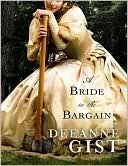
"A Bride in the Bargain," by Deeanne Gist


The Chick: Anna Ivey. Orphaned and looking to escape a violent suitor, she takes up Asa Mercer's offer to travel by boat to Seattle and seek a position as a domestic.
The Rub: Asa Mercer may have offered women positions as cooks, nannies and teachers - but in Seattle he's promised the men suitable wives. Anna, however, believes her tragic history has rendered her incapable of marriage.
Dream Casting: Return to Cranford's Jodie Whittaker.

The Dude: Joe Denton. Having received 640 hectares of land in a Land Grant, he stands to lose half of that if he doesn't marry by the judge's deadline. Too bad the bride he bought has no interest in marriage.
The Rub: He keeps Anna on as a cook for his lumber crew, hoping in the meantime to woo her into changing her mind. However, if he can't manage it within six weeks, then he can kiss his land and his livelihood goodbye.
Dream Casting: Simon Baker.

The Plot:

Asa Mercer: Wives, here - get your fresh, hot wives!

Joe: I'll take one!

Asa Mercer: Jobs here - get your nice, easy jobs!

Anna: I'll take one!

Joe: Great! Now that we're getting married, my lumberjacks will be safe!

Anna: Wait, HOLD UP. I can't marry!

Joe: Why not?

Anna: I kill people. With my mind. I think bad thoughts and then they die.

Joe: Holy crap! You're Jean Grey?

Anna: No - I mean my family all died in a tragic fashion because I was petulant and insubordinate.

Joe: ...Were you dropped on your head as a child? Wait, don't answer that question. Marry me!
Anna: But you only care about your land! *suspicious cough*

Joe: Aaaagh! My beloved has consumption! We're moving to Texas!

Anna: Guess that solves my problem. Too bad I have consumption.

Random Doctor: It's not consumption!

Anna and Joe: HOORAY!

Romance Convention Checklist

1 Big Misunderstanding

1 TSTL Martyr Heroine

Several Burly Lumberjacks

1 Case of *Cough, Cough* Fake Convenient Consumption

Several Semi-Poisonous Mushrooms

2 Pairs of Flimsy, Obsessed-Over Undergarments
1 Romantically Lacklustre Rival

1 Surprise Allergy

1 Alluringly-Displayed Watchpin

The Word:
I picked this book up at the library because I'd attended Deeanne Gist's panel at RWA 2009 and really, really liked the covers of her books. Inspirational (Christian) romances, as a rule, tend to have pretty awesome covers precisely because they tend not to rely on sex in their narrative, and thereby do not want to advertise sex on the cover with an oh-so-tiresome Naked Male Torso image, or the increasingly popular Beautiful Woman In Gorgeous Dress that Gapes Open At the Back image. Anyway, I come from a religious family and am religious myself so I thought it was high time to try an Inspirational Romance and see what I thought.

What I got: a mixed bag. A really mixed bag - some parts of this story surprised me with how much I appreciated them, while others were so bone-headed I wanted to throw this book against a wall.

The story starts in 1860s Seattle. A wild, gorgeous and untamed land, the Washington territory is still a disappointing sausagefest of lumberjacks and gold-diggers, with nary an unmarried woman in sight. Real-life historical figure Asa Mercer promises the men Eastern brides of good character in return for a measly $300. On the other side of the continent in New York, however, he offers young women (orphans and widows of the Civil War, mostly) positions as domestics, cooks, and schoolteachers in the great unexplored West - in return for a fee, of course.

Joe Denton has no intention of buying a bride - until his very livelihood depends on it. Ten years ago, he was given 640 hectares of forest in a Land Grant that required all recipients to be married men. His young wife died after he received the Grant but before she could make the trip to Seattle, and now a competitor's suing for half his land on the basis that Joe is a bachelor. Joe can't prove his marriage to the ornery judge - his wife's death certificate went up in smoke along with the courthouse and the judge (who's distantly related to the competitor) says Joe's marriage certificate isn't enough proof. He gives Joe an ultimatum - either come up with that death certificate, marry by a certain deadline, or lose half his property.

Back on the East Coast, Anna works as a cook while fending off the very unwelcome advances of an abusive suitor. When his overtures become violent, she flees to New York and takes up Asa Mercer's offer of employment in the West. She can't pay for her passage, though, but Asa (rightfully suspecting a pretty girl who can read, write and cook is Lonely Lumberjack catnip) agrees to let her come on the grounds that her new employer will pay the $50 for her passage once they arrive.

So Anna thinks she's going to be a cook and Joe thinks he's getting a bride. Needless to say, their meeting doesn't go very well. Anna, for personal problems of her own, flat-out refuses to marry and Joe, in a fit of desperation, proposes instead to another one of "Mercer's Girls" - a 60-year-old widow whose intended cried off when he discovered she'd vomited her sole pair of false teeth into the ocean during the voyage. Of course, their happy nuptials will have to wait until another pair of teeth are made.

Anna, meanwhile, consents to be Joe's cook and housekeeper in order to work off the $50 debt of her passage, thinking she's safe because Joe's already affianced himself to Seattle's First Cougar. Unfortunately, when Toothless McGee's husband turns out to be alive, Joe's engagement comes to an end, leaving Anna as his only option. However, he knows that if he tells her his engagement's off she won't continue on as his cook, so he continues to let her believe he's betrothed - hoping he'll be able to woo her into wedding him before the deadline.

Okay, so let's start with the good, shall we? A Bride in the Bargain takes place in a relatively unusual setting for an historical romance - 1860s Seattle - and Gist does a good job of creating the atmosphere of a burgeoning town, the rough-and-tumble camaraderie of the logging crew, as well as the clothing and lifestyles of the characters. While Joe is well-off, there are no Dukes or Lords or kowtowing footmen in the Washington Territory and most people have to do things themselves. I enjoyed how Gist mentions that Anna has to sew all of her own clothes and the massive amount of work she does preparing hearty meals for Joe's lumberjacks.

As well, I appreciated the depiction of Joe's love of the land - how he came to depend upon it while he was separated from his wife, to the point that when she died back in Maine, he didn't feel as much grief as he thinks he should have. The prospect of losing his land terrifies him, and, near the end of the story when Joe decides he has to let it go for Anna's sake, it's not a "hang the obstacles! I love you, darlin'" moment, but a genuinely painful decision that cuts him very deeply.

This being an Inspirational Romance, there are no sex scenes but that doesn't mean that lust and physical attraction are absent from the story. They're definitely present, if downplayed - one of the ways in which Joe woos Anna is his insistence on washing up and shaving in the kitchen while she cooks, giving her ample opportunity to ogle his muscular goodies. He's not immune to her physical charms, either - throughout the novel he's singularly fascinated with her watchpin, which always happens to be conveniently pinned just above her right breast. After accidentally catching her in her underwear, he's often possessed by thoughts of those threadbare unmentionables. Gist does an excellent job demonstrating that Joe and Anna find each other very sexy, without tiresome and repetitive mentions of throbbing manhoods and pebbling nipples.

However, these Good aspects of the novel wage a pitched battle with the almost overwhelming forces of the Bad, namely - the heroine and the pacing. Our heroine, Anna Ivey, well - let's just say she probably took the short horse-drawn buggy to the schoolhouse. To put it bluntly: she's a moron. An idiot. TSTL (TooStupidToLive). She feels she can't marry anyone or be a good mother because she was responsible for her entire family's death when she was 15. How responsible, you might ask?

1) She knocked over her 10-year-old brother's paper soldiers, which apparently enraged him enough to run away and join the Union troops as a drummer boy, where he subsequently died of disease.

2) Her mother dies of a broken heart thanks to her son's flight, which (are you following?) Anna caused because of her cruel prejudice against paper soldiers - but before passing, Mommie Dearest blames Anna for everything wrong in the world ever

3) Her father's last letter to her said that every fight she picks with her brother brings the rebel bullets closer to his heart, and guess which day he dies on?

Okay, so I guess you could say that her parents are partially responsible for her beliefs, being manipulative and foolish to the point of cruelty, but really. It's bad enough she blames herself for her mother's depression and her brother's stupidity, but it's her conviction that she's directly responsible for her father's death in the Civil War A THOUSAND MILES AWAY that makes me wonder why the space between her ears doesn't whistle in a high wind. If she'd received that letter, say, when she was six or seven years old, I might have bought that she carried an embedded belief that she was responsible for what happened. But she was told when she was fifteen and running the household - she should have known by then that bullets don't work that way. Does she figure that Civil War snipers don't even aim, they just fire off bullets willy-nilly knowing that Fathers with Rotten Children will attract them like magnets?

What makes this worse is that this is pretty much Anna's sole reason for refusing marriage, which means the plot is drawn out thanks to the unbelievable stupidity on Anna's part. It also doesn't help the believability of the plot when ONE page of conversation with a person with common sense completely cures this conviction of hers two thirds into the novel. While she continues to do other dimwitted, martyrish things (like when, upon discovering Seattle's damp climate's given her TB, Anna refuses the offer of a ride home in favour of walking home in the rain), this is her Big Deal and it completely undermines her as a realistic character.

Which brings us to the flimsy pacing. Most of the story is propelled by contrived and unbelievable circumstances rather than the actions of the characters. We have the first two-thirds of the book where the only thing keeping Anna and Joe apart is Anna's misguided notion she's that creepy kid from the infamous Twilight Zone episode who can kill people with her mind. However, both that, Joe's falsehood about his engagement, and the missing death certificate are dealt with and out of the way with 80 pages remaining. Even though Joe's already proven he loves Anna more than his land by proposing after his land is already safe, we're treated to a protracted, needless health-scare plotline at the 11th hour where Anna contracts tuberculosis and has to move to Texas. By this point, it's all so much excruciatingly boring padding.

So while this novel didn't achieve depths of wall-banging badness (although Anna certainly tried her hardest), it never managed to be completely enjoyable. There was some excellent world-building and research, an endearingly straightforward hero, nice description and secondary characters - but hampered by an unrealistically boneheaded heroine and uneven, contrived pacing. Averaging the good with the bad, I'd say it rates somewhere in the middle.
B-

Sunday, January 31, 2010

January Round-Up

It's that time again - time to hilariously poke fun of and lampoon all the books I've read this month. I think my skills are improving because I managed to finish a lot of novels this time around (13 in all, counting the non-romance). Not as many as, say, Katiebabs (who seems to average one romance novel every 12 hours), but I do okay.

For Heroines, we got:
  • 2 Self-Hating Redheads with Low Self Esteem
  • 1 Independent Pastry Chef
  • 4 (!) Plucky Orphans Who Fleece Aristocrats to Survive
  • 1 Psychic Amnesiac
  • 1 Secret Authoress
  • 1 Intrepid Reporter
For Heroes, we got:
  • 1 Fake Highwayman
  • 1 Sexy Superhero
  • 1 Broody Angsty King
  • 1 Broody Angsty Fake Duke
  • 1 Broody Angsty Reformed Rake
  • 1 Broody Angsty Soon-To-Be-Reformed Rake
  • 1 Non-Psychic Amnesiac
  • 1 Lovable Gargoyle Bookworm
  • 1 Lonely Science Nerd
  • 1 Haughty Aristocrat
For Romantic Obstacles, we got:
  • "I can't love her - she's got an Evil Mole of Evil on her boob!"
  • "I can't love him - he's just like my abusive, now-dead husband!"
  • "I totally love her - but she might think I'm ugly and weird!"
  • "I can't love her - she works with her hands! Gross!"
  • "I can't love her - I'm wanted for forgery!"
  • "I can't love him - the sex is just too tempting!"
  • "I can't love her - I'm trying to solve the Case of the Murdered Sheep!"
  • "I can't love her - for all I know, I could be married already!"
  • "I can't love her - she made my best friend commit suicide!"
  • "I can't love her - I'm too busy micromanaging my estates!"
In Miscellaneous Oddities, we got:
  • 1 Vanishing Bull
  • 4 Happy Hookers
  • 1 Elephant (Metaphorical and Literal)
  • 1 Vengeful Ghost
  • Several Hardcore Guilt Trips
  • 1 Seven-Hour, Magically-Induced Orgy
  • 2 Unwelcome Stalkers
  • 1 Stolen Hair Ribbon
  • 2 Cases of Amnesia

*January Pick* The Wild Road, by Marjorie Liu. A+
Winner of the "Better Make Mine Beta" Hero Award
Liu's novel impresses - we have a gripping narrative, a tough but vulnerable heroine, an absolutely adorable gargoyle hero (described as a "creature of books and tea"), great worldbuilding and description, a self-contained story - and it's the eighth book in a series, if you can believe it. It's difficult to find anything wrong with this story - but the best aspect is undoubtedly Lannes, our sweet-natured bookworm hero who has to hide his gargoyle face under a glamour for fear he'll be rejected by the heroine, whom he saves from bullets and magic even though he'd rather be safe at home in Maine with his books and a nice cup of Green Chai.

Lessons in French, by Laura Kinsale. A
Winner of the Best Reason To Learn a Foreign Language Award
Many readers around the blogosphere are doing jumps for joy at the prospect of the legendary Laura Kinsale returning to writing after a five-year absence. I've only become a rabid, foaming-at-the-mouth fangirl within the last year, and have so far only managed to devour three of her excellent novels, Lessons in French included, but the rest (except for the frustratingly hard-to-find Dream Hunter) are on my TBR, I swear! I just feel the need to parcel them out, to spread out the joy of discovering them over a long period, like a squirrel with nuts over the winter. Lessons in French doesn't disappoint, even as it represents a departure from her signature dark-drama style. And hey, if you're interested in more - be sure to check in when I interview her on February 16th!

Scandal, by Carolyn Jewel. A-
The "Holy Crap" Surprise Death Award
Scandal surprises with a slow, delicate narrative where the rake is already reformed - he just needs 300 pages to help the damaged, heartbroken love of his life realize it. The story may seem familiar at first, but Jewel works it from a different angle and doesn't pull the usual narrative punches while doing it (hence the award - be warned, my review contains serious spoilers).

A Rake's Guide to Pleasure, by Victoria Dahl. A-
Winner of the Eloisa James Award in Historical Sexual Education
I opened this book expecting a run-of-the-mill Cold-Rake-Seduces-Damaged-Heroine story, but discovered so much more. With beautiful writing and graphic but relevant sex scenes, Dahl presents an insightful and developed examination of lust, the rules of morality society applies to it, and ultimately the damage loathing one's own sexuality can inflict.

Slightly Sinful, by Mary Balogh. A-
Winner of the "Which Award?" Medal in Amnesiac Characters
Ah, consistently good and prolific mainstay Mary Balogh, where would I be without you? I'd be without interesting amnesia plotlines and a well-written turnaround of the Distant Evil Uncle cliche, that's where! This second-to-last book in the Bedwyn series finds our second-youngest Bedwyn, Alleyne, trying to find love and recover from a memory-erasing head injury at the same time.

Proof By Seduction, by Courtney Milan. B+
Winner of the "I'm So Ronery" Hero Award
Making her full-length novel debut, Milan gives us a con artist heroine, an elephant, several oranges, and a hero who longs for friendship but has all the social skills of a Ken doll. The best part of this novel is watching Gareth struggle to express his feelings without insulting people (sometimes failing, but in failing, remaining endearingly earnest), and the second-best is encountering a heroine who demands respect as well as love from her significant other.

Before the Scandal, by Suzanne Enoch. B-
Winner of the Lamest Pay-Off Award
Enoch writes a pretty good mystery in this novel, where a soldier returns to his brother's estate only to discover a mysterious conspiracy to vandalize the land, but she forgets to add in a credible romance and a full-fleshed out female protagonist. Add to that a half-hearted climax at the end, and you have a solid novel that nevertheless feels lacking.

Lady of Light and Shadows, by C.L. Wilson. C+
Winner of the Gold Medal in FeminismFAIL
Fantasy-wise, this second novel in the Tairen Soul series is a definite improvement from its predecessor - it has better pacing, better drama, more world-building, good description. However, character-wise, it still suffers from two lame protagonists and a dearth of female characters who a) contribute to the story and b) aren't conniving, vain, whorish shrews.

Karma Girl, by Jennifer Estep. C+
Winner of the "Where's the Beef?" POV Award
This novel, about a reporter who, after building her career unmasking superheroes, is attacked by supervillains and forced to rely on the very people she persecuted, suffered from the most common problem in Paranormal Romance today: great world-building, great science-fiction/fantasy, but boring writing and underdeveloped characters. It didn't help that the story is told entirely from the woman's POV, giving us little to no character development in the male protagonist, a sexy superhero named Striker.

*January Dud* Secret Desires of a Gentleman, by Laura Lee Guhrke. C+ (Note: While technically Lady of Light and Shadows and Karma Girl received the same letter grade, LoLaS skips ahead by virtue of the fact that it is an improvement over its previous novel, and KG had some good worldbuilding and action - so in this case, SDoaG and its Asshat hero sink to the bottom of the pile)
Winner of the Heathcliff Lifetime Achievement Award in Asshat Heroism
In the third book in Gurhke's Girl-Bachelor series, strong, independent Maria falls for a man who first ignores her, than insults her, then says they can never be together because they are too different, then insults her again, then has sex with her, and then somehow convinces her to give up her entire life's work to be with him. It's essentially Twilight with pastry, and twice as dull.

Non-Romances I Read This Month:

Beastly, by Alex Finn A-
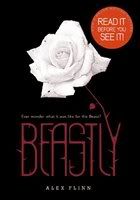
Okay, I'll admit I read this book for the movie adaptation which is due out in July, but I found I really enjoyed this modern YA retelling of Beauty and the Beast, told from the Beast's point of view. In this case, our monster is Kyle Kingsbury, a popular but vicious high-school Adonis who pisses off the wrong witch by giving her a bogus invite to prom. In revenge, the witch turns him into a hideous beast - with two years to fall in love and be loved in return. Kyle's experiences as a beast, especially after being abandoned by his selfish and vain news anchor father, are evocative, painful, and incredibly sad - Finn does a great job capturing Kyle's voice, which is at times immature but often unwittingly perceptive. When he ends up falling for Lindy, an honours student from a severely broken home, the result is unsurprising but emotionally satisfying nonetheless. How many months until July again?

In the Company of the Courtesan, by Sarah Dunant A
Dunant's lushly-described historical novel about a 16th century courtesan and her dwarf companion Bucino who flee the sack of Rome for the safer shores of Venice, doesn't have much of a central plot line but doesn't really need one. Simply reading about Bucino (the narrator) and his efforts to restore his courtesan's career, all the while surrounded by gorgeous descriptions of Venice and its colourful inhabitants, is a satisfying read.

Iron Khan: A Detective Inspector Chen Novel, by Liz Williams. C+
How do demon seneschals, evil Mongolian war leaders, jolly British ghosts, giant cranes, insane Heavenly Empresses, and magical fetuses combine to make a story? Read my take from The Green Man Review.