Showing posts with label Commentary. Show all posts

Tuesday, September 17, 2013

AnimeJune's All-Natural, All-Positive Alternative Reviewing Method

Things have been getting very stressful on the internet lately. I've noticed a lot of conflict, a lot of name-calling, a lot of negative energy. Especially surrounding authors and bloggers of negative reviews.

Negative energy can be a very destructive force to the delicate creative constitutions of authors. The slightest stiff breeze of criticism can wilt a lovely novelist in the bud! Dozens of authors have cried foul (and just plain cried - salty, literary tears onto their university editions of Jane Eyre) over being "assaulted" and "bullied" by the pure non-positiveness of the internet. Who could have guessed that the internet would become so positivity-challenged, the complete opposite of how the real world is?

Since bullying in schools has now reached the point where children are killing each other and themselves because of it, you can tell how seriously these authors feel when they appropriate this word to describe their emotions when they voluntarily read words on a screen.

I used to be one of those careless people producing that negative energy that is so destructive to creative freedom. But I've seen the light, I've learned from my errors, and I've changed my ways.

I've now become an Alternative Reviewer. Alternative Reviewers use positive and symbolic reinforcement to convey an opinion on a novel that encapsulates one's reaction to it while still protecting the delicate membrane of sensitivity that protects an Author from Bad Feels.

Let me show you some examples of my new Alternative Method:


My positivity-challenged review for Can't Hurry Love by Christie Ridgway was a D. Such a thoughtless, negative letter - and a hard consonant to boot! Hard consonants bruise! Using my new Alternative Reviewing Method, my verdict is now Pineapple.

Can't Hurry Love was a totally pineapple book. You can tell from the obvious symbolic connotations of pineapple what I think of this novel. It is really so pineapple - it's practically a kumquat. Part pine, part apple. It says it all, really - and everything is conveyed without any nasty negative energy.


Or how about my review of Jackson Pearce's Fathomless? I originally gave it a C-. Such an ineffective reviewing method! So unnecessarily and painfully exact! I lived fast and hard back in ... May 2013. I was running with a rough crowd, throwing bolded letters at people with no regard to how hurtful alphabetical symbols in emphasized fonts could be. Truly, letter grades are the flaming bags of dog poo on the front porch of the soul.

Now, as a newly-licensed Alternative Reviewer, I can confidently grade Fathomless with a Downward Facing Dog.

Opinions can be prickly and hurtful and wrong - especially when over-enthusiastic, wickedly articulate, and predominantly female bloggers without Master's Degrees in Literature have them.

So Alternative Reviewing is not so much about expressing an opinion, as expressing a visual feeling. And if you squint a little, you can pretend you got an A. Oh, wait - letter grades! Crap! Does this mean I have to retake that online Alternative Reviewer Course? Aw man, the last time I took it I clicked the wrong link and became an ordained minister... Never mind! Time and place, AnimeJune, time and place!

Remember, when you read a novel that represents women, LGBT individuals, or racial minorities in careless or offensive ways, responding to that with negative energy solves nothing. Okay, so their words might pass blanket judgements on whole swaths of diverse people, but angry capslock is not the answer!  Do you have any idea the emotional toll all-caps arguments have wrought upon the author community? It's gotten to the point where some authors can't even handle acronyms anymore - all they can read are e. e. cummings and ruth weiss! A capitalized letter is not a toy! 

I've learned from my mistakes, and after studying the calming, conflict-free ways of Alternative Reviewing and the Ancient Eastern art of Stock Photos, I changed my review of Jennifer Rush's Altered from a D+ to a Weird Fucking Moustache, instead.
Isn't this better for everyone? Isn't this a much more wholesome, positive, and author-friendly way to talk about facial hai-- I mean books? It's so easy.

Why, even Judith McNaught's Whitney, My Love can be reviewed with this method. It now rates an Elephant Sitting on a Slide. Why?
Because it goes nowhere and it's full of shit! Waka Waka! 

AnimeJune's Alternative Reviewing Method - Placating Entitled, Privileged Whiners with "Artistic" Temperaments Since 2013. 

Tuesday, May 07, 2013

So You're Going to BEA (A Handy Guide)

Book Expo America is only a few (three!) weeks away. All the authors! All the exhibitors! All the events and parties and friends! 

Now that you've registered, half of you may be feeling:

But the other half of you is probably going:

Because BEA is BIG. It is monstrously huge and overwhelming and crowded with lots of people.

Plus, with the cost of registration, flights/transportation, hotels, and walking around money, your budget at the end of the trip is pretty much:

But do you need to worry?

And why not?

ANIMEJUNE'S BEGINNER'S GUIDE TO BEA!

Getting There

At BEA, the dress code is business casual. In layman's terms: slacks instead of jeans, comfy shoes instead of neon-coloured sneakers, nothing with holes or tears (artistically-intended or otherwise), all your relevant creases and crevices should be covered, and you're good to go. You won't be turned away at the door if you do otherwise, but remember, Book Expo is a trade show and publishing is a business. People are working as well as playing and dressing appropriately is a sign of respect. 

As for packing tips:

Some things to bring with you that will help on your trip:

1) Comfortable Shoes. Your feet are going to hurt after Book Expo. This isn't a spoiler, but an established fact.
They will hurt whether you wear stiletto heels or sandals woven from the floppy curls of a thousand boyishly shy YA love interests. But the more comfortable shoes you wear, the longer you'll last on the exhibition floor before you inevitably break down and drag your bloody ankle stumps and prodigious Expo swag onto the shuttle back to your hotel. Keep this in mind.

2) A smaller, empty suitcase (I'll explain in a moment).

3) Business Cards - the very best way to keep in touch with your new friends and associates!

4) A data roaming plan from your cellphone provider. Why?

Paying for Wi-Fi at the Javits Center:
It suuuuuuuuucks.
The reception is notoriously bad as well, but it's still better than the WiFi. And believe me, you'll want to keep in touch with your friends via Twitter/Facebook/texting because the Javits centre is a huge place.

5) Handy, portable snacks. Why? Well, with all the wonderful stuff that goes on at BEA, there's really little to no time to leave the Javits and sit down for a decent lunch. Unfortunately:

Food at/near the Javits Center:
Although it doesn't exactly suck, you shouldn't have to pay $8.00 for one slice of pizza unless it's topped with ostrich meat and Terry Deary's delicious, delicious tears. This, Terry, is what's really taking money out of authors' pockets. 

6) A Priority List. You may not want to plan everything, but in order to keep from being overwhelmed, it's always good to make a list of things you really, especially want to see at BEA. Your favourite books. Your favourite authors. The publishers of your favourite books. Where are they? When will they be there? Will you need tickets? The BEA website has very detailed schedules, as will the publisher websites - and publishers will often hand out flyers with giveaway times while you're there. 

Being There

Yay! You made it to the Javits! Now what?

Here's where the previously mentioned Empty Suitcase comes in handy. The Empty Suitcase has two purposes:

1) It stores your swag! Yup - there are places at the Javits where, for a few dollars, you can check your bag for the entire day. Large bags and rolling suitcases aren't allowed on the exhibition floor (and for good reason), but your accumulating ARCs can get heavy. But it's the matter of a few minutes to pop out, empty your goody bags into your checked suitcase, and float back onto the exhibition floor without ever having to leave the center!

2) It ships your swag! If you're like me, and you live outside the U.S. or A Hella Long Way From NYC, shipping your BEA books back to your place of residence can be pricey. Last year, I packed my smaller, empty suitcase inside my regular one and when the time came to return to the Great White North, I put all my swag into both my suitcases and simply checked an extra bag onto my flight. It costs anywhere from $25-$50 to check an extra suitcase - which is still way cheaper than the $100 or more it would have cost to post them. Plus, I didn't have to wait three weeks to glom onto my hard-won ARCs.

Like a boss.

Another thing about being at the Javits Center - you likely won't be there all day for each day.

It's true. Most of the action happens in the morning, although publishers will schedule the occasional galley drops throughout the day. There's a million things to see and do - but eventually you may find yourself at 2:00 in the afternoon with nothing new to see and no interesting galleys or authors scheduled for the afternoon. It's okay to take a break. Rest your feet. Take a nap. Or better yet - go out and sightsee New York!

Behaving There

It goes without saying, but Book Expo can get extremely crowded. That's not necessarily a bad thing, so long as people respect each other and the publishers, authors, business people who are putting this exposition together for them. On that note - my handy list of Do's and Don'ts:

DO Take ARCs -- provided they are being offered. Lots of books in the booths are for display so it never hurts to ask. 

DON'T Take Every ARC - sure, they're free - until you factor in the physical cost of carrying them everywhere and the financial cost of shipping them home and the temporal cost of having to actually read them. What I mean is: don't take ARCs just because they're free. If the cover blurb is only so-so or you hated the author's previous book or the genre is one you tend not to like, don't take it. The people working the booth won't be offended - supplies are limited and this could very well be someone's Holy Grail of BEA Swag. 

I know, it's hard to resist the idea of Free! Books! - but that little greedy voice in your ear isn't doing you any favours.

DON'T Be a Little Bitch About ARCs.
Let's get this out of the way: you are not entitled to ANYTHING at Book Expo America. These galleys, ARCs, free finished copies, and goodies are gifts, separate from the cost of your registration. They are produced for marketing purposes, and supplies are not infinite. 
This means, no, you can't take five copies of a particular ARC in order to host a giveaway on your blog. 
This means, no, you have no right to bitch or moan or complain if the galley drop is late or cancelled or they run out while you're still in line. 
This means, no, ARC-hunting is not a competitive sport and getting more ARCs than anyone else doesn't make you a Better Blogger - it makes you a Braggart, and a wasteful one at that if you're not personally excited about or interested in every single one you snagged. 

DO Be Polite
You'd think this goes without saying.
You'd be wrong.

Remember how BEA's dress code is Business Casual? Let's go ahead and assume that BEA's behaviour code is also Business Casual - as in, people want you to have fun, relax, meet great people and have great conversations, but if you wouldn't be able to get away with certain behaviours at your workplace, you shouldn't try to do so here. 

DO Meet Your Favourite Authors!
You know who fans love running into at BEA? Their favourite authors! You know who authors love running into at BEA? Their fans! It's a match made in heaven!


There are many opportunities to meet your favourite authors - at panels, at their publisher booths, at their breakfasts, at their autographing tables - even sometimes on the exhibition floor, just chillin' (how I met John Green!). It's a great way to introduce yourself and tell them how much you loved their book, and even ask them questions (if there's time - if you're in a long line, please use your discretion).

DON'T Stalk Your Favourite Authors
Keep in mind, though, that authors go to BEA to network and have fun, too. Don't follow them around the exhibition floor unless they've stolen your totebag with your Rose Under Fire ARC inside. If you meet them on the floor but they're deep in conversation with someone else, don't barge in and interrupt. Keep it all in the Javits - if you have to follow them to the bathroom, in a cab, to their hotel room for a chance to talk to them, you've gone too far. 

Last but not least,

DON'T TREAT BOOK EXPO AMERICA LIKE A WRITER'S CONFERENCE
Do. Not. Pitch. Your. Book. To. Anyone.

Book Expo America is about Publishing, not Writing. It'd be like trying to sell eggs at a fried chicken expo - BEA is more focused on the finished product. Actual books, and getting them in the reader's hands. I mean, if an editor asks you for a pitch or to submit something, you're a Special Snowflake. But this is neither the time nor the place to pimp your manuscript on your own. You will not make a good first impression. You will only annoy very powerful people in publishing.

And that leaves:

Leaving There
Upon returning home from Book Expo America, take care to perform the following two steps:

Step One

Step Two

And that's about it! Any other questions or tips? Leave them in the comments!

Friday, March 15, 2013

Epistolary Identities and Perspective: Similarities between "Gone Girl" and "Code Name Verity"

HOLD UP. Before you starting reading this essay, I need to warn you that the post contains extremely detailed and important spoilers for both Gone Girl by Gillian Flynn and Code Name Verity by Elizabeth Wein. Both these novels are excellent, and I highly, HIGHLY recommend you read them first before reading this commentary. Believe me, the joy of surprise is pretty important to how you read these novels (at least for the first time). If you've already read them, or don't care, read on. But you've been warned. 

In terms of actual story and tone, Gone Girl and Code Name Verity couldn't be more different. Gone Girl is a twisted, contemporary thriller about a truly disturbed married couple. Code Name Verity is a heart-tugging historical YA about a unique friendship between a lower-class pilot and an upper-class spy.

However, the plots of both novels depend on the use of epistolary narratives and the manipulation of perspective to fuel the element of surprise and the theme of identity.

In fact, their narrative structures are nearly identical. The first halves of Gone Girl and Verity rely on the epistolary narratives of one of the protagonists - with Girl it's Amy's diary and with Verity it's the story Queenie writes down for her Nazi interrogators.

Both of these written narratives are intrinsic to the reader's perception of the protagonists' identities. The first words Queenie writes are, "I am a coward." Her narrative, despite the occasional sharp jab of gallows humour, is fraught with guilt, fear, and shame. She is a collaborator, after all. The other tortured prisoners mock and spit on her as a traitor, for trading her eleven wireless codes for the return of her clothes and a warm blanket.

Throughout the first half of Verity, the reader has to reconcile Queenie's personal account of her daring escapades with the cowardly result. For all her cheeky wit and ambition, when faced with real conflict, with real torture, Queenie cannot measure up. Through Queenie's writings, we see a reckless girl who is, at heart, unprepared for the true darkness of war.

In Gone Girl, Amy's innocence and naiveté in the face of a darker world also come through in her writings. Her diary entries detail her headlong tumble into love with her husband Nick, as well as her struggle to maintain her optimism as lay-offs, financial troubles and relocations strain their marriage and turn Nick into a stranger. She just wants to make her husband happy. She just wants them to be a family again. So why is Nick suddenly becoming violent with her?

However, the second halves of the novels both focus on the deconstruction of these initial narratives - as well as the false identities they create. Oddly enough, both novels achieve this with the introduction of the perspective of a believed-dead character who turns out to still be alive. In Gone Girl, we realize Amy has faked her own death in order to frame her husband. In Code Name Verity, we discover Queenie's best friend Maddie survived the plane crash that brought them both to France, and is aiding the French Resistance.

These sudden changes in perspective pose an important question: who were these initial epistolary narratives written for? Initially, we're to believe they're for the protagonists themselves, for their own mental survival and well-being.

However, the second parts of these novels indicate otherwise. As a not-dead Amy reveals in Gone Girl's second half, her entire diary is a ruse, meticulously researched to correspond with important dates, and left in a place where the police can easily find it. Brilliant, sociopathic Amy intentionally uses the social construct of diary writings to create an irrefutable condemnation of her husband - after all, why would Amy lie in her own diary? No one else is supposed to read it!

Amy's mere existence reveals the lie behind her epistolary identity. She's not the naive, optimistic, sheltered victim with an abusive husband as depicted in her diary - instead, she's a monstrously vindictive genius with both the will and the intelligence to punish those who scorn her in truly horrifying ways.

The second half of Code Name Verity is a little more uplifting - well, okay, not uplifting. Queenie dies, after all - and at Maddie's hand, to protect her from being maimed and dragged off to a concentration camp for experimentation. However, after Queenie's death, Maddie gets her hands on her written confession.

Only then do we discover Queenie's true identity - that of Lady Julia Beaufort-Stewart, or "Julie," as Maddie calls her. Just as Amy's diary was an intentional construction intended to fool the police, so was Queenie's "cowardly" confession intended to fool the Gestapo, delay her execution, and help the Allies. Those eleven wireless codes she gave up in return for a sweater and a blanket? Fake. The names and locations of the airfields in her reminiscences? Made-up and incorrect. Those weird lined passages and strange combinations of letters and numbers at the start of every chapter? Codes allowing the Resistance to sneak past Nazi security and take over the prison.

This reveal is the essential emotional gut-punch behind Code Name Verity - that Lady Julia Beaufort-Stewart is the absolute opposite of a coward. She not only sacrifices her freedom, her physical comfort, and ultimately her life for the cause - but also her integrity, by creating such a convincing epistolary identity of a weak, cowardly collaborator that even her fellow prisoners mistreat her. She preys on the Nazis' belief that women are too delicate for true warfare, while remaining utterly true to herself and her country until the very end.

The subtext beneath Queenie's confession is also extremely poignant - for the Nazis, she frames her narrative with her "cowardly" intention to stay alive. However, once Maddie reads through her confession with new eyes, she (and the reader) recognize through Julie's use of metaphor, symbolism, and tone that Julie did not and probably never intended to survive the ordeal. While the military information she provides is worthless, her depictions of her friendship with Maddie are true, and the paradigm shift is truly tearjerking. Her retelling of the best years of her life were not written for her own comfort - but for the comfort of those she knew would be reading this confession after her death.

It truly is fascinating how two very different novels use the same narrative device and story structure to tell two very different stories.

Sunday, January 20, 2013

The Weekly Wanting (22) and the Power of Blogging

I thought I would turn this particular Wanting into a bit of a post on the importance of blogging.

Not all blogs are created equal - if they were, I would have no time to eat, sleep, or tentatively type a few words of my novel before fleeing in terror. I'd just be blog-hopping all the time.

I realize that blogging, for many people, is a personal activity. And it should be - you should blog about what you want because you want to. But it does mean that the standard of writing in blogs can vary widely. This also means that different readers react differently to different types of writing.

Over the years, I discovered I gravitated the most towards blogs that were exceptionally well-written. The blogs that read as if someone spent time considering what to write about a particular book instead of spewing their raw opinions across their keyboards.

I recently had to unfollow a longtime blogger because her reviews were just terribly written - garbled syntax, non-specific blanket statements, lazy descriptions. And she's actually an author! That boggled my mind - why wouldn't you apply the same standard of writing to your blog that you do to your books?

I realize writing well doesn't come easily to everybody. I feel this is the point where I should clarify that this isn't a post about how bloggers should write, but rather an explanation of the type of blogging I prefer to read. I am a pretty insignificant person in the larger scheme of things and writing does come very easily to me so I tend to take the ability to write well for granted. I also realize that other people prefer blogs with clearly effusive or condemning writing styles. They feel passionately about books and they want reviews that demonstrate how out of their mind AWESOME a book was. Capslock-awesome! Glitterfont-awesome! 

And "good writing" can vary. For me, good writing means that it falls under the hazy categories of "easy to read," "fun to read," and "effectively gets the point across." To me, that means I actually enjoy the occasional .gif-using review because hey, it's funny, and it very clearly gets the point across so long as it's not overused.

And all of this is a roundabout explanation of why I finally decided to add this novel to my Wishlist:


This novel was mentioned freakin' everywhere and wound up on a huge number of Best of the Year Lists and for the longest time I just couldn't bring myself to give a crap about it. I read review after review, and I got to the part about "angsty girl with a musical secret plus dragons" and a switch in my head would just go "nope nope not interesting at all nope." 

So the more reviews that came out about this novel, the more I skimmed over them. Nothing about them really explained to me why I should find this novel interesting. Even reviews from other bloggers I love and admire! It just didn't hit my buttons.

Until Janine's review from Dear Author. Somehow, the way she explained the intricate worldbuilding and the gorgeous writing, and the way the heroine's musical talents actually related to the dragon plot instead of being some random Mary Sue affectation, parted the clouds, removed the scales (heh) from my eyes, and made me realize that yes, this is a book I must have. Now. At any price. Please please?

Now, this isn't a wagging-finger at the other bloggers who loved this book. This is just an indication of how important writing and blogging can be - that even one review, one special review, can sell a book to a reader where dozens of others have failed. And I just thought it would be meaningful to try and explain that this week instead of going with my usual format.

What books are you eagerly wanting this week? And which bloggers have changed your life and made you want a book you'd never thought of before?

Monday, December 24, 2012

I'm over at the Booksmugglers today!

I'm over at The Booksmugglers today for their annual Smugglivus celebration - whereupon I reveal myself as the President of the Secret Society of Evil Ladies Bent on World LadyDomination! 

Go forth and read, minions! 

Friday, July 20, 2012

Return to Neverland: Bullies, Stalkers and the Huffington Post

I know it seems that, to those of us in BookBloglandia, every day for the past couple of weeks has brought a new crop of hair-pulling, foot-stomping rage. A new self-congratulatory post from the Stop The Good Reads Bullies page will arrive, patting itself on the back on how selflessly it devotes itself to Internet!Justice. Or several smug and obsequious comments from one of the owner's many sockpuppets will pop up like new mushrooms out of the pile of - well, what people commonly put on mushrooms. Or an intelligent Dear Author post will develop a comments section that slowly spirals down into the pits of madness over whether or not reviews "should" use dirty words like - well, what people commonly put on mushrooms.

Today, blogland exploded when the Huffington Post Books page posted an anonymous Op-Ed article from the Stop The Good Reads Bullies Page - giving STGRB national coverage and validation. Bloggers flew to their keyboards to vent their simultaneous, vitriolic outrage that the Huffington Post would so irresponsibly drive traffic to a website that's endangering and stalking women. It then posted a somewhat troubling apology that admitted they'd solicited an interview with the site weeks ago - and yet somehow never picked up on STGRB's blatant, acidic language and stalking behaviour. While the magnificent Foz Meadows wrote a stirring response that was posted on the Huffington Post Books blog afterward, I discovered something wrong on the Stop the Good Reads Bullies site.

Now, we already know that the STGRB, like a crazed Pocahontas, paints with all the colours of the wrong. But now they've stepped in it. In their comments section of their latest post, an anonymous commenter asked:

  
"The claims the posters are making in the comments of that article [meaning the HuffPo one] are untrue. This site is not posting personal information about people. Do you see any names and addresses? I don't."
 
This prompted Site Administrator "Peter Pan" to reply (the orange emphasis is mine):
 As you can see, "Peter Pan" openly declares that the reviewers who've opposed this site are dishonest, and have made "stuff up without any evidence" and are, moreover, "pretending" to be stalked in order to to "play the victim."

Gee, that's awful! What a horrendous lie! Most especially since now that one peruses the site, there is a remarkable absence of the damning personal information we reviewers have been raging about. Sure, the insults are still there, but we're all for free speech, aren't we? See, STGRB is all about discussing bullying, and the bully culture, and demonstrating slightly out-of-context situations of bad reviews. Clearly, the Mean Girl Reviewer Bullies just made up all that stuff about being stalked and having their privacy invaded because they were afraid of STGRB exposing their evil.

Except nothing completely disappears on the internet. Even stuff that you thought you removed.

 For instance, I conveniently took a couple of screenshots of the times STGRB administrators admitted to stalking people (orange emphasis mine):

Such as here:
And here:
Those are just silly off-the-cuff remarks, right? STGRB wasn't doing the stalking.

Except other people took screen caps, too. 
Note the use of Real Name and Location. The orange squares to the right of the screen indicate the date this cap was taken - proven not only by the calendar but by the existence of the anti-bullying organization banners - meaning this stuff was up before each and every one of those Anti-Bullying organizations demanded the removal of their banners.

But would you look at that same page today:
Where did the Real Name and Location go? 

And it wasn't just for Kat Kennedy. Take this screencap of their old page on The Holy Terror:
Her personal information has been obscured, but it's still perfectly clear how much they posted about her (such as her name, her husband's name, her favourite restaurant, and where she can be found at certain times of day) for everyone to read. The orange squares highlight pertinent phrases and evidence of the post's date. The pink square indicates irony. 

And look at her page now:

As well, there is this page on Lucy:
 Note they indicate her real name, her location, and also where she works in real life, to earn a living.

Here is where they indicate their active search for even more personal real-life information on Lucy:
Once again, the pink is for irony.

Here is their old page for Ridley:
Note how they give her real location and note how they are actively searching for her real name in order to post it on the website. 

Here's how it looks now:

And here is a cap of the STGRB folks commenting about Ridley being concerned about her personal information being posted:

Here is a screencap of their interview with Kenya Wright of Two Fantasy Floozies, in which Kenya asks them about their outing practices:

Here, Kenya asks STGRB about whether they're concerned about the possible dangers that come from being outed:

As you can see, the evidence speaks for itself. No snark or bad language required.

However, you might ask: why bother getting angry, and posting these screencaps, now that the STGRB website has removed the dangerous information? Isn't this what you wanted?

For that, I'll direct you back to the first screencap on my post - you know, the one where Site Administrator "Peter Pan" claims that STGRB never posted personal information, and accused the bloggers victimized on the website of fabricating the fear and unrest and harassment they endured for attention and sympathy. 

This proves beyond a doubt that the removal of this information wasn't an olive branch gesture and it wasn't due to the site administrators suddenly realizing what they were doing was wrong. It was a deliberate posterior-covering measure - likely in preparation for the flood of traffic gained by the Huffington Post article. 

STGRB stalked four women (at least) and posted their personal information online with an admitted disregard for their personal safety - and once the Huffington Post Books article opened the website to more scrutiny, they edited their posts, lied about it, and blamed the bloggers for it. They have offered no apology and demonstrated no remorse.

I'll leave it up you to tell me if you think these are the actions of an honest, righteous organization that is motivated only by a desire for a safe, friendly reading community for all.

My deepest thanks go out to the several awesome people (who shall remain anonymous, unless they let me know otherwise) who took the greater part of these screencaps.

Sunday, July 15, 2012

In All Seriousness...

Let's talk about negative reviews. And authors' reactions to negative reviews.

I'm sure by now most of you have heard of the Stop The GoodReads Bullies website and how it's been stalking and terrorizing bloggers known for writing snarky reviews, under the misguided belief that bloggers of that stripe are bullies and harass innocent authors.

Now, while the Stop The Good Reads Bully site is run by one woman and her stable of sockpuppets (not unlike an angry, unstable, literary-minded Sherry Lewis), she is not the only author with this sort of opinion about GoodReads.

And they insist over and over again that their anger is not simply about negative reviews. Oh no! We know how things are! Everyone is entitled to their opinion! We respect negative reviews so long as they're professional!

So, what are these authors really complaining about, if it's not simply negative reviews? Well, from what I can gather, their main problems are with:

1) Snark 
Now, I can sort of get this argument. It's hurtful enough to get a bad review, but one that reviews your book negatively in a comedic way can pour salt on a wound. But just because a review is funny, doesn't mean the reader wasn't paying attention to your book. Bloggers are writers, too. That's the difference between a blogger and the average reader, because when we're done a book, we're compelled to write about it. And for many of us (myself included), it's not enough to write something that covers all the basic points - it also has to be entertaining and easy to read.

I, myself, prefer blogs with a lively and entertaining writing style - not just ones that mirror my particular taste. I have to want to read what they've written, otherwise I just skim to the rating at the end, taking in the relevant bits along the way. Just like authors, we have to be honest to our writing style because that's what makes us want to write. We don't write like that to be mean, it's not a personal attack on you, we write like that to express ourselves.

I do think that snark can be taken too far - but everyone has their own snark saturation point, so it's unfair to set some sort of arbitrary standard for it. If you find it hurtful, STOP READING IT AND AVOID THEIR BLOG. It's that easy.

2) Freedom of Speech
Well, isn't that interesting! Authors complaining about freedom of speech! Specifically, I'm referencing the arguments made on the Bully site and elsewhere that authors have a right to comment on their reviews. Authors are readers, too, you know, and it's not fair that they should be "silenced" and "treated like second-class citizens" while their precious babies are being dragged to the literary pillory.

And, as a matter of fact, they do have that right. However, the general belief that "authors shouldn't comment on their reviews" doesn't come from the idea that they aren't allowed to do so, but rather from the fact that it won't make a difference. The book is already read. The opinion has already been formed. There's no way to retroactively change a person's opinion. So when we say that authors shouldn't comment on reviews, we say it for their own benefit, because at best it will waste their time and energy and at worst will tarnish their public image and damage their fanbase.

Authors shouldn't comment on their reviews, even if the blogger allegedly gets something wrong in their review. Yes, even then. Why? Because "getting something wrong" is so incredibly subjective that you'll be stepping in a minefield just by bringing it up. To paraphrase Joss Whedon, one of my favourite screenwriters - your writing isn't your pet, it's your kid. It's going to grow up and start talking back to you. Meaning - people are always going to get things out of your story that you didn't expect or intend. 

Now, while these two points bring up common author complaints, neither of them constitutes bullying. Bullying constitutes being continually harassed, in such a way that you feel unsafe and cannot escape.

Which is why these first two reasons are bullshit - firstly, the internet is such a vast place, that it's a fairly easy thing to avoid the blogs that don't like your stuff. This blog hated your book? Don't visit it again! This tumblr negatively reviewed your novel? Blacklist it! Block it! Block the users! It's that easy!

Secondly, how in HELL does a bad review or snarky remark on GoodReads make you feel physically unsafe? How in HELL do negative words make you feel "assaulted"? I'd love to see you mosey on down to a battered women's shelter and explain how assaulted and harassed you felt when you voluntarily read a hurtful book review on the internet.

Now comes the third part:

3) Fan Response
Book bloggers, as a whole, are an expressive bunch. Now, as bloggers like Katiebabs have pointed out, when an author misbehaves and the story of this behaviour goes public, bloggers tend to react quickly and furiously and the author often finds herself with an avalanche of negative feedback that may or may not be proportional to the inappropriateness of her behaviour.

This, I think, is where the idea of "blogger bullying" comes from. The author feels like she's being ganged up on. She thinks she's only expressed her own opinion, or tried to correct a misconception about her book, or simply tried to point out with helpful links that other people reacted positively to her novel - and the result is a bunch of harshly-worded comments on GoodReads by complete strangers who then vow never to read her books.

Some authors have interpreted this as harassment and mob mentality, when really, the reason for this reaction is that bloggers are still considered (and even consider themselves) to be lower on the literary foodchain than authors. Authors are high on the literary foodchain - they're the creators, the shapers, those who can fashion sophisticated stories from the raw materials of their imaginations. Without authors, there would be no books to blog about.

So when an author bitches out a blogger, to other bloggers, that's the equivalent of a 200-pound-wrestler picking on a 90-pound weakling. That's a person in a superior position picking on someone in an inferior position, which gives bloggers an urge to defend their own. And that's why we react this way. Now, is this professional? Probably not. And two weeks ago I would have said that an author can't really do anything to a blogger except spew bad words, and bad words are easily blocked, deleted, or ignored, which would be the more mature response (that, and never buying the author's books again).

But the creator of the Stop the GR Bullies website demonstrated a desire to cross the line of professionalism into downright crazy and illegal.

So while I will commiserate with authors that the bottom of a sweaty, martini-drenched book blogger pile-on is probably a shitty place to be, bloggers are in no way restricting their rights, singling them out for punishment because they didn't like their book, or making them feel physically unsafe in their homes.

But despite all the GR Bullybashers' protestations, deep down at the heart of things, it really is all about negative reviews. You don't see authors getting mad at people giving them five-star reviews despite not reading their book (some of them do just that with sockpuppet reviews). You don't see authors bitching out five-star reviews that said their hero was a pirate when he was clearly a privateer. I've yet to see an author question the professionalism, education, upbringing, or literary success of a reviewer who gives her a good review.

Honestly, authors? You will lose more readers through acting like a jackass on the internet than by getting a negative review on the internet.  Danielle Steel's books have been critically pissed on for years and yet she still sells enough books to afford the ballgowns in which she poses on their back covers. Why? Because her fans love her. And last time I checked, there were about 150 million blogs on the internet. One negative review is a drop in the fucking ocean.

Are there examples of blogger misbehaviour? Sure. Reviews that insult the author's personal life are unprofessional. Reviews made without reading the book (or that aren't transparent about not finishing a book) are unethical. Ironically, a blogger who was targeted by the GR Bully Site for inciting "lynch mobs" against authors by publicizing their misbehaviour also broke the news on blogger misbehaviour - specifically, the story of the blogger who got in a snit about an author's misinterpreted Tweet and proceeded to give her book a scathing one-star rating without actually reviewing the book or finishing it. That's dishonest, and the worst thing a blogger can do is be dishonest, because our business is all about opinions and the readers who trust ours.

So yeah, if you're a blogger who gives five-star reviews because you're being compensated for it, or you're giving one-star reviews without reading the book because of a personal grudge against an author, you're not a blogger I want to know or associate with. 

But even so, the very worst a blogger can do is spew bad words. Sticks and stones.What do you think? Are there ways in which bloggers have been unprofessional? Are there ways in which authors can respectfully respond to reviews without criticism? Please discuss in the comments!

Thursday, July 12, 2012

Responding to Negative Reviews: Do's and Don'ts

This little post is in response to a recent scandal involving a way-cray-cray website created by a spiteful writer in order to revenge herself anonymously upon snarky reviewers by stalking them, going so far as to post their addresses and personal information online. And all of it in the name of "stopping bullying" (except for *cough* the fact that all the legitimate anti-bullying organizations she linked to refused all association and demanded the removal of their banners from her page). But the fact remains - how should authors react to negative or snarky reviews?

Well, search no more, because AnimeJune has the answer.

So, let's imagine you're a crispity-cool magic-fantastic writer of published novels, and let's say you're innocently surfing the internet when...

EGADS!

 A negative review of your CRISPITY-COOL MAGIC-FANTASTIC NOVEL!

A lot of emotions might be going through your head right now. 

Your first instinct might be depression, because someone didn't like all the cool things you wrote, which means they don't think that you're cool, which makes you start to doubt if you were ever crispity-cool and magic-fantastic to begin with.

Your second instinct might be rage. After all, rage is more productive, right? This reviewer clearly didn't even read your novel, at least not the way it was meant to be read - and he or she is telling everyone how to read it THE WRONG WAY. They're threatening your career! They're spreading lies and misconceptions about how your book isn't crispity-cool and magic-fantastic - WHEN IT CLEARLY IS, BECAUSE YOU WROTE IT!

 Decisions, decisions. What would a truly crispity-cool magic-fantastic author do in this situation? It's not like there's a guide on the internet.

WELL, NOW THERE IS! THE ULTIMATE DO'S AND DON'TS FOR RESPONDING TO A NEGATIVE REVIEW:

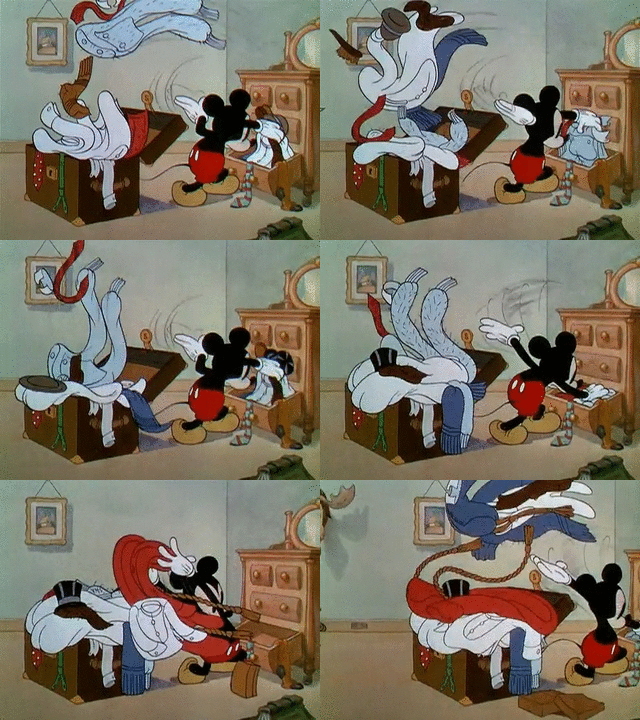
DO eat your feelings.

So many magic-fantastic feelings...

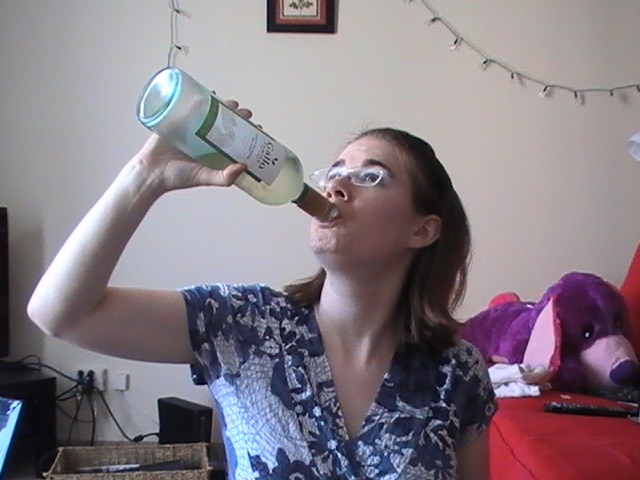
DO drink wine. It's nature's Control-Z! And it helps you live longer, like the French do, because we read it somewhere in a magazine. We think.

DO call your mum. DO call your friends. They're your very first fans, after all! They'll understand and listen to what you're going through!

DO cry in the bath. You are an artiste! You are not a machine! Your passionate heart is wounded!

The bathtub of an artiste is a judgement-free zone.

An artiste's feelings are very exhausting. 

DON'T write nasty posts or e-mails to the reviewer. You are an artiste! Your work must be engorged with love, not with hate!

DON'T use the Internet to track down that reviewer's personal information, credit rating, or address.

DO use the Internet to find pictures of kittens!

DON'T go after your reviewer with a knife...

...unless it's to offer them chicken in a gesture of peace! Dark meat or white meat?

Mmmmmm, chicken. The anguished, hungry goddess of vengeance is appeased.

DO keep writing. Writing is YOUR passion, and YOUR dream - you don't do it for the reviewers, after all. You do it for yourself, because you are a crispity-cool magic-fantastic author.

The writing-space of an artiste is also a judgement-free zone. And Mama's gotta make her deadline.

 Lasty, DO remember that you are a crispity-cool magic-fantastic author. If people are reviewing your book, that means people are also reading your book. And the more people are reading and talking about your book, the more people will find out about and start reading your book. And that is awesome.