Showing posts with label Movies. Show all posts

Saturday, July 16, 2016

MOVIE REVIEW: "Ghostbusters" (2016)

The smartest move this film makes is that it doesn't try to replace the original Ghostbusters. It's not a remake: the plot is different, the characters are original, and it explores other themes. It's not supposed to be The Better Ghostbusters. It's supposed to be Hey! Great! More Ghostbusters! You could easily watch both films back to back without feeling like you experienced the same story.

This Ghostbusters is a more character-driven comedy. Abby (Melissa McCarthy) and Erin (Kristin Wiig) used to be best friends and paranormal scientists, but Erin abandoned their research and denied her ghost-hunting past to pursue academic credibility.

The sudden appearance of powerful malevolent spirits in New York causes them to reunite, and with the assistance of some awesome new friends - wild card engineer Holtzmann (Kate McKinnon) and history expert Patty (Leslie Jones) - they uncover an insidious paranormal threat to the Big Apple.

It takes a delicate hand to write an effective comedy about the need to be taken seriously, but Ghostbusters pulls it off. The desire to be heard, understood, believed, and appreciated drives all four of our Busters in different ways.

Erin does this initially by conforming to thankless and ultimately fruitless standards. Her arc has such a strong and empathetic feminist streak in it as she rebels (in an increasingly hilarious fashion) against the ways in which society dismisses and disbelieves her.

McCarthy's Abby - played with her trademark sweet-and-sour delivery (with a stronger emphasis on sweet this time) - wants to stick to the science, believing objective results and personal fulfillment trump social status. McCarthy plays it pretty low-key, as the emotional rather than comedic centre of the group.

Jones' Patty - the lone non-scientist - represents the self-made, self-educated woman. She reads like a fiend, knows the city inside and out, and knows her way around people - and she soon proves that she's a worthy Ghostbuster, degree or no degree.

And McKinnon's Holtzmann? A lesser movie and a lesser actress would have just labelled Holtzmann as "the kooky one" and played her with a combination of obnoxious, unrelated comedic traits that are barely tolerated by the rest of the cast. Instead, Kate McKinnon absolutely steals the entire movie as an unorthodox, confident, wildly charismatic, and unrepentantly unfettered genius who just wants to make wild, crazy science with whomever will let her.

And, oh yeah, this movie is also funny! Alongside these four comedic powerhouses, Chris Hemsworth does an outstanding job as their Hot Dumb Blonde Receptionist Kevin, and the movie is littered with well-deployed nostalgic references that should please Ghostbuster aficionados without excluding viewers unfamiliar with the franchise.

All told, Ghostbusters is a well-written paranormal comedy that combines wit and slapstick with emotional resonance and keen social commentary. I highly recommend.
A

Wednesday, June 01, 2016

MOVIE REVIEW: "Love and Friendship" (2016)

What.

Even.

Is this movie?

When I received free passes to see Love & Friendship (based on Jane Austen's novella Lady Susan), I was excited. I loves me some Austen costume drama, and as I hadn't yet read Lady Susan, I was looking forward to being surprised.

Well, I was a little surprised, but I spent most of the film feeling super confused. While the film is occasionally charming and funny (truly funny at moments), the pacing is absurdly drawn out, the staging is dull, and the plot is an incomprehensible mess.

The story (such as I could make out) is this: Lady Susan (Kate Beckinsale) - an impoverished widow with a scandalous reputation - comes to stay with her in-laws after being kicked out of her last domicile for tarting around with a married man. Once her last suitcase is unpacked, she precedes to spend the next two hours gaslighting hot dudes, ruining her daughter's life, and bitching with her sardonic BFF Mrs. Alice Johnson (Chloe Sevigny).

I think we're meant to root for Lady Susan, the sly and cynical outsider who offers clever observational quips about the follies of gentry life. But she really is The Worst, and what's more, there's no real explanation for her behaviour. She just seems to like messing with people with no apparent end goal or motivation. You might think she's out to catch herself a meal ticket, but she throws away every romantic attachment she appears to make, seemingly on a whim. Perhaps she's determined to secure her daughter's future - except for those long stretches of time when she forgets her daughter exists because she's too busy convincing hapless dudes that Up is Down and Black is White.

What does Lady Susan want? Why does she do what she does? I've never read Lady Susan, so I had no context to understand her myriad changes of heart. Nearly every character in the movie actively hates her and with good reason.

On top of that, despite some truly hilarious moments, the movie is boring and clumsy. Characters are introduced by name (with personalized title cards, even), only to vanish after a single scene without leaving any impact on the story. Several scenes go nowhere or end abruptly.

The filmmakers make no effort to frame the novel's events in a visual context. Instead of showing what happens, the filmmakers have the characters sit down and tell each other what happens - staging that's fine in a novel but glaringly dull on film. Compare that to the Mansfield Park adaptation that starred Frances O'Connor - despite being a wretched representation of the novel, as a film it was visually dynamic and the story was told through an even mixture of action and dialogue.

The actors do the best that they can - Kate Beckinsale, in particular, gives a breezily cunning performance that convinces the viewer she's a misunderstood snarky outcast even as her actions reveal her to be an amoral, manipulative sociopath. It's not enough to save the movie, however.

Perhaps I might have enjoyed this movie more if I'd read the book first. But as a film on its own merits, Love and Friendship is a hot mess. Give this one a pass.
C-

Tuesday, February 16, 2016

Movie Review: "Deadpool" (2016)

I used to think of Ryan Reynolds as the Sriracha of comedic actors.

A small amount of hot sauce can improve and even save a meal, but you wouldn't want to eat an entire bowl of Sriracha. To me, the distinctive rapid-fire silliness that made Reynolds so utterly delicious in supportive roles (Blade: Trinity, The Proposal, Adventureland), rendered him nigh-unbearable as a leading man (Green Lantern, Van Wilder, Just Friends).

Deadpool has proven me wrong. Instead of trying to cram Reynolds' sarcastically-edged peg into a hole rounded smooth by G-rated studio conventions and merchandising, the filmmakers carved out their own jagged, self-referential, unrepentantly crude film to fit Reynold's talent.

Reynolds was born to play Deadpool. His indefatigable energy, rat-a-tat delivery, and pure maniacal glee radiate from the screen. He's remarkably light-footed for a man carrying an entire movie on his shoulders. Don't get me wrong, the film rocks a solid supporting cast (except Ajax, a villain so cookie cutter I'm beginning to wonder if his blandness was intentional), but you would have no movie without Reynolds.

The plot is refreshingly simple compared to the superhero films that came before - there's no time travel, no alien invasions, no magical hot tubs of electrical prophesy. Just a merc with a mouth on a mission. Reynolds plays Wade Wilson, an impulsive, violent, vulgar soldier for hire who finds himself diagnosed with terminal cancer. A shady agency offers him a miraculous cure, but the process mutates him and messes up his face, so the impulsive, violent, vulgar supersoldier calls himself Deadpool and vows to track down the villains responsible.

The revenge-and-rescue plot is as old as time itself, but it's effective - instead of wearing itself out trying to convince a jaded audience that the entire universe is (once again) in danger, Deadpool relies on a relentless barrage of expertly-delivered and utterly inappropriate humour, interesting characters, and relatable stakes.

Even better - despite supporting appearances from a couple of third-string X-men characters, Deadpool works excellently as a stand alone film. I walked into this movie with little to no knowledge of the character and I understood the film perfectly. As much as I admire the work and planning that goes into the consistency of Disney's Marvel universe, the later films rely on so much pre-existing narrative that few of them are enjoyable on their own anymore.

Don't see Deadpool if: you can't stomach gratuitous violence, nudity and profanity; cannot tolerate humour based upon gratuitous violence, nudity and profanity; you're frightened of baby hands; the sound of Ryan Reynolds' voice induces seizures; you hate meta humour and fourth-wall breaking.

Otherwise, I cannot recommend Deadpool enough. It's a finely-balanced, perfectly paced, action-packed, relentlessly funny and respectfully-disrespectful movie.
A+

Saturday, June 29, 2013

Movie Review: "The Heat" (2012)

I wasn't especially excited about The Heat when I first saw the trailer, but when my sister asked me to come along, I figured - why not? I like buddy cop movies. I like Melissa McCarthy and I have occasionally liked Sandra Bullock, in movies that don't involve football. Or people in comas. It shouldn't be that bad.

Well, you guys, I saw The Heat, and I loved it. It gave me feels - and not just any feels. Feminist feels. Bechtel-Test-passing feels.

The film opens on both protagonists doing what they are best at: the tightly-laced analytical FBI agent Sarah Ashburn (Sandra Bullock) uncovers drugs and guns in a house her male colleagues have already searched and deemed clean, and wildcard Boston cop Shannon Mullins (Melissa McCarthy) takes down a misogynistic john and a neighbourhood drug dealer.

It's that drug dealer who brings Ashburn and Mullins together - Ashburn, gunning for a promotion, has been tasked with tracking down Boston's most notorious drug kingpin, and Mullin's perp is one of his lackeys. Naturally, this means Ashburn and Mullins must work together to solve the case, and in terms of storytelling, it follows the formula of odd-couple buddy cop movies pretty faithfully - first they don't understand each other, then they bond as their partnership becomes more effective, then they royally screw up and lose their superiors' support and have to fix things on their own, and so on and so forth.

It's pretty much just like any other buddy cop movie, with a lot of really effective humour and dialogue, even if the pacing does sag a bit in the middle. And that's why I liked it.

The Heat gave me seriously awesome feminist vibes for several reasons. First off, while the film is full of jokes, absolutely none of them are about Melissa McCarthy's weight. None. Her body size isn't even mentioned, by the good guys or villains. Now, while I'll admit that I've laughed at fat jokes and even laughed at McCarthy intentionally being the butt of fat jokes, it was refreshing to be able to laugh at something else about her for a change - like how her character is a trigger-happy, fast-talking slob who is a weapons violation waiting to happen.

Second, while there is a very light flirtation between Ashburn and an adorably restrained FBI officer played by Marlon Wayans, neither heroine is overtly sexualized. There is a scene in a nightclub where Mullins tries to "sex up" the buttoned-down Ashburn's wardrobe with a pair of scissors and some imagination, but the result winds up cannily parodying the "DIY makeover" trope so common in romantic comedies.

As well, neither heroine is threatened with gendered or sexual violence. They are shot at, tackled, hit, stabbed, sure, but these are pretty standard-issue cop-movie injuries. There are no rape threats. There are no scenes where the villain sniffs the heroine's hair and says he'll have his way with her before killing her. There is a comment where a torturer who likes to use an oyster shucker asks if the subdued heroines would like "their oysters shucked," but that's the extent of it.

Lastly, both Ashburn and Mullins start out the film as pretty unpleasant people. Ashburn is a straight-laced, by-the-book character who is very aware of her own strengths, and thus comes off as condescending, detached, and abrupt in social situations. At the beginning of the film, her director admits he's not sure she's a good fit for the promotion because none of her coworkers like her. She's received dozens of complaints for arrogance and showboating.

Mullins, meanwhile, is extremely vulgar, immature, violent and crass. She lobs insults and profanities at anyone who annoys her for so much as a moment. When the FBI horns in on her case, she spends a solid ten minutes reaming out her police captain in front of the entire precinct and dumps out the contents of Ashburn's briefcase in a childish rage. She's also promiscuous - several times in the film she runs into heartbroken one night stands and she's not shy about letting them down less-than-gently.

And yet, what's awesome about The Heat is that these female characters are allowed to be unpleasant. Hollywood movies have no shortage of heroines who start out mean or nasty - but the healing power of Love and/or Friendship is quick to teach them the importance of opening up, learning to express their feelings, making friends, and smiling more. Hell, look at Bullock's resume - in both Miss Congeniality and The Proposal, she starts out as a lone wolf who does things her own way and is disrespected by her peers, but thanks to learning that Beauty Pageant Contestants are Nice People and Ryan Reynold's Abs Are Magic, she learns the error of her unladylike/ice queen ways.

Of course, both Ashburn and Mullins learn and change in this movie - they develop respect for the others' policing methods, they learn to recognize their own self-destructive behaviours, and they do end up as close friends - but they also don't suddenly become nicer people. At the end of the movie, Ashburn is still as straight laced and confident as ever - and if her hilarious stunts with the villains are any indication, she won't be giving up "showboating" anytime soon. And one of the film's final scenes shows Mullins casually pulling a gun on a nurse in a hospital so she can still talk on her cellphone.

I loved this and the fact that the movie makes us think about this. Yes, Ashburn is disliked by her colleagues for her "arrogance" and "showboating" - but neither of these complaints have anything to do with her skills as a FBI agent, just her behaviour while using those skills. Her colleagues are all men over whom she has authority and the film's first scene involves her chewing out her all-male FBI taskforce for their carelessness in searching a drug den. So her (male) coworkers hate her because she's abrasive, rude, and superior - and yet the Male Authority Figure Who Is Loud, Rude, Abrasive, and Never Satisfied is such a popular cop procedural trope that the movie Last Action Hero made fun of it. In 1993.

The fact is, when it comes to traditional storytelling, male protagonists have to be interesting, but female protagonists have to be likeable. During my time in the romance novel community, I learned that readers tended to be harder on the heroines' behaviour than the heroes' - heroes could get away with being seducers, pirates, kidnappers, convicts, even rapists; while heroines could be dismissed for being merely cold or emotionally distant.

This comes from a deeply ingrained societal expectation that women should be nice. They can do anything a man can do - of course they can - but there's nothing wrong with being polite and respectful about it! And of course men are expected to be polite and respectful, too - but when the chips are down and the clock is ticking and lives are on the line, sometimes a man has to take drastic measures!

When The Heat begins, Ashburn and Mullins are already supremely talented members of law enforcement - they're just not very humble or nice about it. And the film allows them to remain that way. They learn more about themselves, and learn more about each other, and learn to search beyond their own perspective and prejudices - but none of this results in them toning down their personalities or being more modest about their skills or being more polite to their colleagues.

Which is pretty much how their male counterparts in buddy cop movies are allowed to operate. Sure, Axel Foley learned a few things about Beverly Hills, but he never stopped being an arrogant wiseass.

So, as weird as it sounds, the best part of The Heat as a buddy cop movie was that it was just like every other buddy copy movie - with great jokes, hilarious chemistry between the leads, and a fair amount of explosions and flying bullets.
A-

Saturday, April 20, 2013

Film Review: "42: The True Story of an American Legend"

Baseball is my all-time favourite sport. My friends like hockey. My parents and sister like football (the actual kind you use your foot with, in Europe). But me, I love baseball.

I should probably be clear - I don't watch baseball. I don't have a favourite team. I don't follow the stats and couldn't name you a famous player beyond Babe Ruth, Jackie Robinson, and Sammy Sosa.

Nah, baseball is my favourite sport because baseball inspires my absolute favourite type of sports movies. Don't bother me with your Mighty Ducks or your Rudys or your Wimbledon.

Give me The Sandlot, Angels in the Outfield, Rookie of the Year, A League of Their Own, Field of Dreams.

You can keep Moneyball, though. Yeah, let's make a movie about baseball! Only we'll take out all the baseball scenes and just show people arguing about MATH. Brilliant!

There's just something about baseball. The hats and the hotdogs and the peculiar limitations of the game that allow each player to face an entire opposing team on their own as the lone heroic batter, as well as coordinate as a group when working defensively. It's the American Dream, where the game lets you be an individual as well as part of a team.

These aspects of the game help structure the plot of 42, the Jackie Robinson biopic that came out last week. Jackie Robinson (played to perfection by an electric Chadwick Boseman), is hired by Branch Rickey (Harrison Ford) to eventually play for the Brooklyn Dodgers as the first African-American in major league baseball.

At first, he stands alone at the plate. Half his teammates don't want to play with him and the other half worry that the constant racism he's subjected to will make him an emotional liability. And through it all, Jackie has to endure it silently. From the very beginning he's expected to serve as an example for all potential African-American athletes - any fighting back on his part would only serve to demonstrate that Negro players are unstable, violent, and unfit for major league sports.

However, Robinson is a talented player - he bats .625 and steals bases from under the noses of gimlet-eyed, bigotted pitchers with the rakish grin of Robin Hood. Robinson spends the first half the film proving himself as an individual player - then spends the second half proving he's part of the team, as his teammates start to respect, defend, and play alongside him - or else get traded to Pittsburgh if they fall short of the mark on the moral yardstick.

Chadwick Boseman carries this movie on his shoulders and he makes it look easy, which is a good thing, because the second most important character in this film is also the film's greatest liability. Harrison Ford, defiantly mumbling every line after gargling it in the wad of phlegm in his throat, portrays Rickey without an ounce of subtlety. He's there to wield that Moral Yardstick and rap it against as many racist knuckles as possible while regurgitating Bible quotes and inspirational slogans. His performance is jowly - does that make sense? As if he has more physical old-man jowls around his face than he actually does. He utters every line with an expression that indicates you're expected to hear authoritative folds of aging flesh softly slapping together in agreement or wobbling with fury. Unfortunately, with Ford, it only makes him sound like he's perpetually choking on a chicken bone.

The baseball scenes are excellently paced and shot, and the supporting players (particularly Nicole Beharie as Jackie's wife Rachel and Alan Tudyk as Uber-Racist Phillies manager Ben Chapman) perform admirably. However, the tone of the film too closely follows Harrison Ford's performance - there are several moments where the too-obvious emotional manipulation reveals the man behind the curtain trying to pluck at my heartstrings.

At least two child actors are called in to demonstrate How Our Actions Influence The Next Generation and a dogged string and clarinet section are quick to interject with This Scene Has Historical Significance music. I dislike it when a movie pulls me out of the experience by making it too obvious why its particular pieces and scenes are arranged a certain way. We get it, Racism is Bad, but movies are meant to be magic - we don't want to see the hand inside the puppet or the strings on the flying saucers.

42 is still a brightly shot, well-paced movie with crackerjack sports scenes, a solid supporting cast, and a charismatic lead. If you can tolerate some over the top moralizing, Ford's masticated line reads, and some overt emotional manipulation, you're in for a pleasant trip to the ballpark.
B

Monday, February 04, 2013

"Warm Bodies" - Film and Adaptation Review

So, despite some misgivings (such as with the whitewashing of a secondary character), I went and saw Warm Bodies at the theatre on Friday, and found I was pleasantly surprised.

Warm Bodies is the rare instance of a film adaptation being better than the book. It's far more cohesive, establishes the same general plot points quicker and more effectively, and moves along at a faster, funnier pace.

It does softball some of the book's elements and themes and works with a far more optimistic tone, but I found I preferred that. It made the Redemption-With-The-Power-Of-Love solution at least look more probable than it seemed in the novel.

The general story is still the same - R (Nicholas Hoult, borrowing some of Edward Scissorhands' gruesome-cute awkwardness) is a zombie who falls in love with a human girl named Julie (played by Teresa Palmer) after he eats her boyfriends' brain and absorbs some of his memories. He rescues Julie and in the process, awakens a reaction that starts bringing him back to life - and other zombies, too.

And, like in the novel, R and Julie's quest to cure the zombies is opposed by Julie's totalitarian father (John Malkovich) and the Boneys - zombies-skeletons who have atrophied to the point of shedding their skin and their humanity at the same time.

The Main Character
I found I enjoyed the film-R much more than the novel-R. The Film Version of R is skewed more towards a younger, teen audience. He shuffles around in a hoodie and listens to 80s indie rock while his  novel counterpart wears a suit and tie and prefers Frank Sinatra. The Film portrays R as a zombified college student, while the Novel suggests R was a young, successful professional in a former life. Even as a zombie, Novel-R is more of an adult - he even has a "wife" and "kids" in the zombie society.

Film-R is also on his own, epiphany-wise, while the Novel-R is frequently visited by the spirit of Perry, the boy he killed whose brains were full of juicy Julie memories. Novel-R and Perry have a lot of dream-like discussions and Perry even helps him out of a few jams. Perry's role in the film is sadly relegated to flashbacks and was the one element of the story I was genuinely sorry to lose in the adaptation.

Neither of these interpretations is better or worse, but Film-R is funnier. Like Novel-R, Film-R has a running inner monologue that is far more intelligent and articulate than he has the power to convey to others. However, while Novel-R was a dreary, navel-gazing sad-sack who spent a lot of words Thinking Deep Thoughts about the nature of Life, the Universe and Everything, Film-R is way more of a smart-ass. He still considers the same themes, but in a more succinct and entertaining way - but, to be fair, he's also supported by a visual medium that helps impart the themes of aimlessness and mediocrity in a more immediate, symbolic fashion.

The Antagonists
In both the film and the novel, the antagonists are General Grigio (Julie's father) and the Boneys. However, the film humanizes the General and dehumanizes the Boneys.

In the novel, the Boneys were inhuman skeletons who had abandoned their humanity, but they were also capable of higher thought and reasoning - their reasoning was just wholly focused on maintaining the status quo, regardless of the cost. The Boneys in the novel actually functioned as the Elders of the zombie "society" - even going so far as to perform primitive marriage ceremonies. Their opposition towards R and Julie's quest was symbolic: the zombies symbolize tradition, stagnation, and hopelessness, and R's quest threatened that sameness with the power of change.

In the film, the Boneys are just mindless monsters who will attack literally anything with a heartbeat. Therefore, their opposition to R and Julie's quest comes from the fact that zombies who start undergoing a positive change thanks to R and Julie start looking like prey to the Boneys.

Yes, some of the more sophisticated symbolism in the novel was lost in the film adaptation of the Boneys, but they did maintain their basic narrative function - they served as examples of humans who had relinquished their humanity. By reconnecting with humanity, R and his friends are able to regain it. By abandoning their humanity, zombies become gruesome feeding skeletons impervious to change.

However, General Grigio undergoes the biggest change in the adaptation. In the novel, the General is single-minded, emotionless, ruthless, and has dedicated his life to protecting humanity at any cost - even though he doesn't believe humanity is even worth the effort anymore. He isn't just an antagonist, he is a villain. By the climax of the novel, he is revealed to be insane - and threatens to shoot his own daughter after she and R present proof of the zombie cure.

In the novel's most effective use of symbolic imagery, at the end of the novel he's bitten by a zombie and immediately turns into a Boney (a process that normally takes a zombie much longer) - revealing that he was no different from the worst of the zombie horde - he was already living a life without hope or humanity.

In the film, well, he's softened up quite a bit. He's still an antagonist, but it comes from a much more emotional place. He doesn't want to believe in the zombie change - but not because he ultimately doesn't believe in change, but because he's afraid to lose what he loves most by risking it. By the end of the film, his daughter finally convinces him that change and hope are both possible and he stands down, reconciling with his daughter. This is a pretty significant change in character, and I honestly wondered why they went in that direction. It reminded me a lot of the change they put Skeeter's mother through in the film adaptation of The Help - where she went from a racist, unhappy nitpicker to a happy, supportive nitpicker.

I think perhaps this ties in to the film's overall attempt to aim for a younger audience than the book - it portrays R and Julie more as teenagers than as young twentysomethings, and it also promotes the ultimately beneficial support of parents by humanizing the General and jettisoning the original ending where he tries to kill his own daughter.

The Love Interest
Julie, out of all the film's characters, hews the closest to her Novel counterpart. A lot of her dialogue is word-for-word from the novel. However, this works as both a blessing and a curse. For instance, her interactions with her father are very similar to the scenes in the novel - she believes the war to protect humanity has ultimately stripped her father of his essential humanity. However, her father is portrayed as far more reasonable in the movie, so Julie's treatment of him seems overblown and childish.

As well, Julie's darkness (her history of self-harm and prostitution) is never mentioned, but to be honest, I never felt it played a huge role in the ultimate story anyway and would have felt out of place in the film - in fact, I thought it felt out of place in the novel, too. It seemed a rather hokey way to add depth to the love interest.

Sure, some parts of the film seemed abbreviated and certain things didn't make sense. But ultimately? I really enjoyed Warm Bodies the film - it was efficient, enjoyable, and thoughtful without being completely bleak or pretentious. As a result, it was a little more shallow, but that's not always a bad thing.
B+

Saturday, August 04, 2012

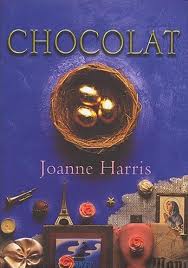
Book-To-Film Review: "Chocolat," by Joanne Harris

The Protagonist: Vianne Rocher. She and her daughter have lived a nomadic, string-free existence - until they arrive in a small, backwater French town and decide to set up a chocolate shop.
The Rub: Vianne's decision to start her business in the middle of Lent incurs the wrath of the parish priest - can she stand her ground against real authority?

The Secondary Cast:

Anouk: Vianne's six-year-old daughter. Loves her mother and the travelling, but has an imaginary friend named Pantoufle to help with the loneliness of being uprooted.

Pere Reynaud: A rigid and arrogant parish priest who sees Vianne as a threat to his community to be rooted out, no matter the cost.

Armande: An elderly town resident who recognizes Vianne as a witch and befriends her immediately.

Josephine Muscat: A troubled woman sneered at by the town and stuck in an abusive relationship - until Vianne offers her assistance.

Guillaume: A gentle old man who is greatly attached to his old dog, Charley, despite the priest's insistence that caring for a creature with no immortal soul is a waste of time.

Roux: A red-headed member of the travelling river people who set up camp in the small French town, despite the hatred and suspicion of the townsfolk.

The Word: I picked this book up because, thanks to the brilliant Gentlemen and Players blowing my everlovin' mind, I've been trying to read more of Joanne Harris. So far, her books have been pleasant, mouthwatering, with lots of detail - but they never reached the agony and ecstasy I had reading her novel about the politics rife within a boy's prep school.

Vianne Rocher grew up living an itinerant existence with her mother, travelling all over the world, living different lives, working different jobs, yet still hanging on to the family tradition of magic. Vianne's mother read tarot cards, predicted the future, brewed tisanes and made good-luck charms - even as her premonitions grew increasingly dark as her own death loomed closer and closer.

Vianne was raised in a life of change and chaos, and she's lived a similar life with her now-six-year-old daughter Anouk, but the nomadic existence is starting to tire. When she and her daughter move to the tiny French village of Lasquenet and set up a chocolaterie, Vianne sees a potential place to actually settle down. However, when she runs afoul of the rigid and obsessive town priest, Vianne learns that her heritage of change and chaos might be just the thing this town needs.

The novel is told in chapters of alternating viewpoints between Vianne and her ultimate opponent, Pere Reynaud, the priest who grows increasingly unhinged by the defiance and sensuality Vianne and her chocolate shop represent. However, I wouldn't interpret Chocolat as a condemnation of the church or Catholicism - but rather the particular method this priest applies to his people.

Reynaud, who was raised in town but left for his education, holds himself above his flawed, stupid, petty flock and preaches down to them with law, theory, and rhetoric, trying to appeal to the mind. Vianne, meanwhile, is the outsider who wants to belong within the community as a part of them, and with her casual dialogues with them over a cup of chocolate, appeals to the heart and the senses with empathy and compassion. The novel demonstrates how you cannot seek to change the hearts and minds of people by holding yourself apart from them.

In this way, Vianne wins over many of the townsfolk, which prompts Reynaud, terrified of losing control over the town, to take ever-more irrational measures.

As usual, the writing and descriptions are sumptuous, and I quite enjoyed the magical realism (Vianne possesses a mild mind-reading ability which gives her insight). I've found myself comparing Joanne Harris to Alice Hoffman rather frequently (although on average I've enjoyed Hoffman's books more), and here, Chocolat reminded me very strongly of Hoffman's Practical Magic. In both, the magical element is subtle, subdued, and may or may not exist solely in the protagonist's head, but imbues both books with a spice of something special and different.

That being said, I found some elements of Chocolat to be a little unclear and haphazard (particularly the ending and some "shocking" reveals). And despite having much of her POV, I found I had trouble connecting to and understanding the motivations of Vianne.
B

The Film:  *warning: book and film spoilers ahead*
It's interesting to compare the novel Chocolat to the novel Practical Magic - because I had a similar reaction when watching both of their film adaptations. Both films differed wildly (wildly) from the source material, but the films themselves were so interesting that I enjoyed both versions. In fact, *lowers voice to a whisper* I may have enjoyed the film Chocolat more than the book.

Is it a faithful film adaptation? Oh Hell no. They add stuff, they change stuff. Most of the characters only bear mild resemblances to their literary counterparts - although Josephine Muscat (Lena Olin) remains startlingly faithful to the original.

But is it an enjoyable movie - and does it have a good story on its own? Yes and yes. I could detail all the stuff they change from the book, but then this list would go on forever. Instead, I will speak about the three main differences and how they affected the story and my reaction to the film.

1. Vianne's Origins.
In the novel, there is no real specific reason for why Vianne and her mother, and consequently Vianne and Anouk, keep moving around from town to town and changing their identities. The implication is that it's because Vianne and her mother are witches, as well as an ingrained fear on her mother's part that staying too long in one place will allow "The Black Man" (an archetypal symbol of the church and the authorities) to take Vianne away. We later learn in an almost throw-away scene that Vianne's mother may have actually snatched an infant Vianne from another woman's pram, which gives a wholly different context to their frantic travels.

In the film, Vianne reveals she's the daughter of a French pharmacist and a South American woman who belonged to a tribe of wanderers duty-bound to follow the summons of the north wind and dispense sacred cocoa-themed remedies from town to town. Vianne grew up following the wind and learning the ways of chocolate from her mother, but has trouble continuing that tradition with her lonely, sullen daughter.

To me, I liked this element. Aside from the chocolate-flavoured-Mary-Poppins vibe, I loved the romanticism and  magical realism of this backstory as well as how cleverly, effectively, and efficiently it explained Vianne's motivations, intentions, and the importance of chocolate in her life.

2. The Time Period.
In the novel, the story is set in more or less modern times, early nineties at the earliest. The town of Lasquenet is just such a small, out-of-the-way backwater that it still maintains an old-fashioned, timeless quality. Vianne, who's travelled all over the world, is depicted as a force of modernity in a forgotten town that somehow missed 60 years of social development.


In the film, the story is explicitly set sometime in the late 1950s-early 1960s. The townsfolk are still very much affected by both the world wars and Elvis music is filtering in very slowly (thanks to the town's adorable baby-faced parish priest). I love period pieces so I enjoyed this.

As to why the filmmakers decided to take a modern novel and make it a period piece, I suspect it might involve the suspension of disbelief. Modern audiences (particularly North American ones) might have had trouble believing a modern town would still remain so conservatively religious and socially antiquated that they needed Chocolate Mary Poppins to remind them that breaking Lent isn't the end of the world and that beating your wife is Wrong.

Do I believe there are still towns in Europe and North America that actually are still like that? Definitely, but moviegoers as a whole tend to watch films with an idealistic and naive bent and want to believe that modern society is no longer like this - therefore, it's more comforting to encounter this type of story in an historical setting where the time period can explain it away.

3. The Antagonist.
In the novel, Vianne is opposed in all things by Pere Reynaud, a controlling, arrogant, contemptuous and theologically-rigid priest. It's not just the notion of serving chocolate during Lent that offends him, or that by doing this Vianne weakens Pere Reynaud's iron-clad moral control over the town. Vianne's very presence is the ultimate threat because it's distracting and colourful and indecent and sensuous - Pere Reynaud thrives on control, and Vianne threatens his control over himself. That's not to say Pere Reynaud is a cartoon, but from his POV we can clearly see he is a megalomaniac whose lust for power is so heavily swaddled in religious rhetoric that even he doesn't recognize it. As the novel progresses and he loses more ground, he eventually descends into complete insanity.

In the film, the filmmakers decided to sidestep possible religious controversy by rewriting Vianne's antagonist as the Comte de Reynaud, the town mayor (played by Alfred Molina, one of my favourite actors). In the film, the Comte is very much an antagonist rather than a villain, and a far more sympathetic figure. While he is still arrogant and a bully (the brand-new baby-faced priest is so terrified of him that he lets the Comte "revise" all of his homilies beforehand), his good intentions and his attempts to lead by example are more evident. He genuinely cares about his town and its people but he bitterly resents Vianne's usurpation of his role as authority figure.

Pere Reynaud and the Comte share very little in common, character-wise, beyond a desire for denial - not only of the corporeal pleasures for Lent, but of the truths that are too painful to accept (the Comte hides his heartbreak over his wife leaving him by telling people she is merely "vacationing" in Italy, and Pere Reynaud glosses over the teenage trauma of discovering his mother in flagrante delicto with the parish priest who was his religious mentor).

There is actually one major scene that both antagonists share - in the novel, when Vianne decides to hold a chocolate festival on Easter, an enraged Pere Reynaud finally snaps and breaks into her shop to sabotage her work. After weeks of futile self-denial, Pere Reynaud has a complete mental breakdown at the sight of so much delicious food and he gorges himself, completely abandoning his evil plan, his dignity, and his Lenten fast to shove sweets into his face instead - only to be humiliatingly woken up by his parishioners the next morning, covered in melted chocolate.

However, because of the different ways these antagonists were developed, this scene has a different context in the film. In the novel, Pere Reynaud's breakdown is Vianne's ultimate triumph, it's a glorious chocolate-coated scene of Schadenfreude as he gets his just desserts in the most delightfully literal and public way possible, after which he flees into the night, never to return.

In the film, this scene comes across as tragicomic and sympathetic, a proud man finally admitting to weakness. He's spent the entire film believing he can control, change and better everything if he just believes and works hard enough - only to discover he's just as human and fallible as his townsfolk.

In the novel, Harris uses pig imagery to describe Reynaud's breakdown - he squeals and keens as he eats the chocolate. The breakdown in the novel turns Reynaud into an animal, to be laughed at and hated. The breakdown in the film makes the Comte de Reynaud seem more human - to be sympathized with and forgiven. The Comte is actually saved from public humiliation by the quick thinking of Vianne and the parish priest, who finally gets to give a stirring Easter homily in his own words, and a grateful Comte befriends Vianne.

I actually loved the film's antagonist way more than the incredibly creepy Pere Reynaud. Yes, I'm a sucker for Alfred Molina, and even more of a sucker for redeemed-antagonist storylines.

Yes, I still liked the novel, and acknowledge that the film changed a great deal of the storyline. However, from a purely objective perspective - I enjoyed the film's story more than the novel's.

Saturday, July 07, 2012

Who Did It Best? Spider-Man vs. The Amazing Spider-Man, Review and Comparison

Spider-Man is my favourite superhero. Bar none. Full stop. Sure, I love other superheroes and their comics, TV shows, and movies, but Spider-Man is my ultimate favourite.

And I loved Sam Raimi's first two Spider-Man movies. They were fun. They were exciting. They were hilarious. Even though the third film crashed and burned, I felt iffy about Sony deciding to reboot the series. It seemed horribly premature - merely five years between movies - and it looked like an overhasty and desperate attempt to pump artificial life into the series before it faded from the cultural zeitgeist. I went in expecting a rushed and subpar attempt.

As a result, I was pleasantly surprised. I'm still very attached to the first films, so for my review, I decided a compare-and-contrast was in order, between the very first Spider-Man and this newer Amazing Spider-Man.

The Peter
SM: Played by Tobey Maguire, Peter Parker is a hapless, bumbling, clumsy, shy nerd who's given enormous power. He's very earnest and determined to do the right thing, but that can often be difficult when he has the world's worst luck.
ASM: Played by Andrew Garfield, Peter Parker is an introverted, scientifically brilliant, but naive teenager who's never quite understood who he is and still deeply misses the presence of his parents in his life.
Similarities: Weird crying (Garfield's "huuoooaughghgh" sound when Uncle Ben dies almost made me snort my Coke), an unfortunate tendency to breakup with one's girlfriend during/directly after a funeral, using wrestlers as costume inspiration, tendency to go "whooooooooo!" after discovering powers.
Advantage: Amazing Spider-Man. Now, I like Tobey Maguire, I really do, and I think he did a great job as Spider-Man. His film called for Peter to be a hapless schmuck and Tobey gives very good schmuck. However, his character is never really deeply explored beyond his immediate origin story. He also graduates from high school and is already working an adult job halfway through the movie! 

What I loved about Spider-Man as a character was that he was a teenager. He wasn't some confident adult with a stable job or trust fund like Superman or Batman. He didn't have years of experience/daddy's alien crystals/a Ph.D in Mutant Child Psychology. SM only kept Peter in high school long enough to make some bullying jokes and then quickly transferred him into an adult environment.

ASM's Peter remains in high school - not only that, but Garfield (despite being more or less the same age as Maguire was when he had the role) plays the role much younger. He's quirky and tongue-tied and emotional and curious. His high school isolation is depicted as being an aspect of his personality - he doesn't know how to act around people because he's still trying to understand who he is - rather than just the fact that He's A Nerd. By the end of the movie, once he has a better hold on his identity, he has more social confidence.

He also has a character arc that's separate from his superhero arc (initially anyway), which I appreciated. SM's Peter never mentions his dead parents and doesn't reflect much on Uncle Ben's death beyond how it motivates his heroics. ASM's Peter misses his parents terribly and doesn't know how to construct his identity without them - he inherited his father's scientific genius while being raised by the blue-collar Ben and May. In the end, he discovers he's a mixture of the two - he has his father's brilliance, but it's wisely tempered by his uncle's strong moral influence.

While the result of this is that we get fewer scenes of actual Spidey, as an origin story of an already-popular and well-known character, I approve.

....and also Andrew Garfield is cute. Like, way cute. Very very cute. And a much more realistic teenager than Tobey Maguire.

The Spider-Man
SM: Bigger, more muscular, with organically-produced webbing.
ASM: Skinnier, more agile, with specially-designed webshooters.
Similarities: Same suit, essentially. Looked down on by authorities but admired by the public. They also take their masks off in front of people ALL THE DAMN TIME, are you serious, Spider-Men? DON'T TAKE YOUR MASKS OFF!
Advantage: Spider-Man. Mainly, because we see way more of Spidey and Spidey's social influence in that film. As well, as much as I liked the web-slinging scenes in ASM - SM did them first, when they were still thrilling and ground-breaking. Yes, there were a few Gumby scenes, but overall, Spider-Man is far more kick-ass with Tobey in the tights.

To be fair, ASM's Spidey is closer to the comic version, with the webbing being an invention of Peter's rather than a natural mutation. But really, if they'd been shooters in the original, we would never have had the gloriously goofy "Go, web, go! Fly! Shazam!" scene.

The Love Interest
SM: Mary-Jane Watson (Kirsten Dunst), the girl-next-door turned whiny-failed-actress/model.
AMS: Gwen Stacy (Emma Stone), genius lab-intern at Oscorp and the first in her class (Peter Parker is second. Yes. Second).
Similarities: They are both very pretty. Peter likes them but has trouble talking to them.
Advantage: OMG AMAZING-SPIDER MAN SO HARD. This isn't even a contest. Gwen Stacy mops the floor with Mary-Jane's bony ass. Firstly - she's awesome and smart in her own right, and yet still dresses gorgeously in the go-go way like Gwen did in the comics. Yes! Nerdy brilliant girls can like wearing cute boots!

Secondly, she's an actual character. Mary Jane was always more of an object to move the plot forward. In the first film, she's there to be kidnapped and produce Suspense and Tension. Even in her narrative high point (Spider-Man 2), where she became a crazy-successful model and actress, she was mainly there to a) be successful enough to hammer home how much of a loser Peter was and b) serve as a goal for Peter to strive towards during his mid-super-hero-life crisis.

However, Gwen actually contributes to the plot - Peter tells her his identity about two-thirds through the movie, which makes her a partner and confidante, not just a Pretty Girl to hide his True Identity from. She even has an arc, albeit a lesser one, as she herself learns that those with the power to do good have the moral obligation to do it. And, my favourite part, SHE IS NEVER HELD HOSTAGE BY THE VILLAIN. She is attacked by the villain, and she defends herself until the villain goes away. She then gets out of harm's way to let Spider-Man do his job instead of hanging around to get killed or kidnapped again.

Okay, yes, she is a lesser character - more like Pepper Potts in Iron Man. But the key here is that she is a character, not an object, and she is depicted as being desirable for her intelligence and ingenuity as well as her incandescent hotness. Her romantic scenes with Peter are also ADORABLE.


The Supporting Cast
SM: Aunt May (Rosemary Harris), Uncle Ben (Cliff Robertson), J. Jonah Jameson (JK Simmons), Betty Brant (Elizabeth Banks!), Flash Thompson (Joe Manganiello).
ASM: Aunt May (Sally Field), Uncle Ben (Martin Sheen), Flash Thompson (Chris Zylka), Captain Stacy (Dennis Leary, who cleans up surprisingly well).
Similarities: Well, they're all people who mean a lot to Peter.
Advantage: Spider-Man. Honestly, both Aunt Mays are pretty useless drippy martyrs, but it's more understandable with Rosemary Harris because she plays the role far older. Both Bens are pretty good, and, to ASM's credit, their Flash Thompson is more well-rounded and turns out to be a nicer guy - but mainly I'm wondering if Chris Zylka will eventually go on to play Big Dick Richie in the reboot of Magic Mike ten years down the road.

Ultimately, of course, ASM loses because they simply do not have the utter pinnacle of brilliant dream casting that was JK Simmons as JJ Jameson. JJ Jameson was hilarious and a consistent comedic highlight through ALL THREE Spider-Man films. SM used its secondary characters far better (especially for comedy) than ASM does, primarily because ASM has a very Peter-centric storyline.

The Villain
SM: Norman Osborn (Willem Dafoe), a brilliant scientist and CEO who tests his serum on himself to save his company and turns into the Green Goblin.
ASM: Dr. Curt Connors (Rhys Ifans), a brilliant scientist who tests his serum on himself to stop his shady partner from illegally testing it on innocent patients at a veterans' hospital, and turns into the Lizard.
Similarities: Both are green, both make the ridiculously short-sighted decision to test their projects on themselves, both are taunted by insane inner voices, both figure out who Peter is pretty easily.
Advantage: Spider-Man. Partly, this is because I feel bad for Dylan Baker (the actor who played pre-Lizard Connors in Spider-Man 2 and 3 only to be jettisoned once the series drove Sam Raimi insane). But mostly it's because the Lizard in ASM is such a been-there, done-that villain. He really offers nothing new in terms of character - a misunderstood but well-intentioned scientist brought low by his own scientific hubris? That's never happened before! Frankly, his character was done before, and performed far better, by Alfred Molina as Dr. Octopus in Spider-Man 2.

But is he better than Green Goblin? Yes, the Goblin had the Power Ranger suit. And the silly voices. And the split personality. But he edges past the Lizard because his character came first and established the theme of scientific responsibility before it became a cliche, and made him a fun character - sure, he's mostly fun because he's silly and Willem Dafoe can chew scenery like nobody's business, but he's entertaining as hell to watch. Also, unlike the Lizard, his character doesn't look like a knock-off of Batman's Killer Croc.

The Movie Itself
Advantage: Even. Spider-Man was a fun movie - entertaining and joyful on a visceral, instinctive level. I had more fun watching SM the first time in theatres than ASM. However, it's not as consistent or thoughtful as ASM. It's still a pretty close race, though, because both movies have such different tones. To me, SM is an external, plot-driven movie and ASM is an internal, character-driven movie. SM places more focus on the outward heroics, visual jokes, funny quips, dazzling fight scenes and dramatics. In that way, it's a much faster, brighter, happier movie.

ASM, on the other hand, focuses more on the characters' emotions and inner struggles. ASM's Peter is a far more emotional and emotionally conflicted character. Because of this, ASM is a slower, more low-key film, more organic and less structured - which can be refreshing or frustrating, depending on your tastes. In a way, ASM is to SM the way Batman Begins was to Tim Burton's Batman - as in, a deeper and more realistic take on a character whose previous appearance was in a film focused on being visually and narratively stylistic.

To put it simply, SM's focus was on Spider-Man - the bright, flashy, exciting super hero. ASM's focus was on Peter Parker - the complex boy underneath the tights. So both films are equal in my mind, just in different ways. I enjoyed Spider-Man more, but more guiltily, and it hasn't aged well (Spider-Man 2 still kicks both movies' asses).

Monday, June 25, 2012

Film Review: Pixar's "Brave"

Pixar's Brave is an excellent example of a movie that improved in my mind as I reviewed it. My first reaction after watching this movie was disappointment. While it was a good movie when compared to other movies in general, as a Pixar film it didn't seem to measure up. It seemed - predictable. Most other Pixar films sweep you along on an exploratory journey of astoundingly original worlds and ideas. Monsters. Bugs. Toys. Rats in Paris.

This story dealt with - princesses with red hair who don't follow society's rules. Didn't I watch this one before?

However, after letting the movie sink in and really analysing the aspects of the plot, I realized it simply had a different focus. While Pixar movies, in general, are idea- or setting-based, Brave is a personal, character- and emotion-based story. This may seem like a Disney Princess movie, and you would be right - but it's a Disney Princess movie as done by Pixar, and the result is a subtly different creature.

The main character, Merida, shares a great deal in common with Disney's first modern princess, The Little Mermaid's Ariel. She's headstrong and good-natured with fantastic hair but also naive, selfish, and politically short-sighted.

In this kingdom, there are four major clans, and tradition dictates that the princess of a clan must marry a prince of one of the others, provided he's able to win her hand through a series of competitions. Merida is NOT happy with this turn of events at all, and her defiance of tradition sparks a terrible argument with her mother, the queen. When she accidentally happens upon a witch's cottage, Merida decides the only way to change her fate is to muck about with someone else's - and she buys an enchanted cake intended to change her mother's mind about marriage.

To absolutely no one's surprise, this plan backfires spectacularly when the spell winds up turning her mother into a bear. With only two days before the spell becomes permanent, Merida and her now-ursine mother must team up and find out how to mend the rift between them.

The movie wins most of my appreciation for the following three points:

1. The story not only has a female protagonist, but a plot that is centered entirely around the relationship between two women. 
A princess with a surviving mother figure is already a rare thing in the Disney canon, but for a princess to have a significant relationship with her mother, and for it to be the main focus of the film, is entirely unheard of. Yes, Mulan, Tatiana, and Rapunzel all had mums - but they were always relegated to the background.

In Brave, the film is all about how Merida and her mother the Queen come to terms with their differences in perspective. Merida is a classic tomboy skilled at horseback riding, archery, and outdoorsmanship, and the queen is an exceedingly proper politician and diplomat who clearly means for Merida to follow in her footsteps, if only she would give up her pointless and unladylike interests. 

Once the spell deprives the queen of her voice and her agency, and she must rely on Merida's aid, the queen comes to learn that her daughter's unorthodox passions and talents are valid and useful aspects of her personality. Meanwhile, Merida must accept how her selfish actions can have repercussions, and just how important her mother is to her life. The film explores both viewpoints equally and gives both sides equal weight - I especially liked how the film takes the time to explain why Merida's betrothal is such a political necessity.

2. The heroine's actions have consequences - and she learns the importance of those consequences.
In this instance, Merida edges out past The Little Mermaid's Ariel. Ariel is also a rebellious princess character who runs afoul of a witch when she tries to change her fate - but she never really grows up or learns her lesson by the end of the movie. She abandons her family and sells her soul for a nice pair of gams and it's all fun and games until Ursula comes to collect. Her powerful daddy and resourceful boyfriend are fortunately on hand to bail her out, and at the end of the movie she's got her gams, her dude, and her father's approval and absolutely no understanding of how her own actions endangered all three. Let's face it, Ariel got lucky.

Merida is a character cut from the same redheaded cloth as Ariel, but in the film she's forced to come face to furry face with the consequences of her actions as she comes perilously close to losing her mother forever. It's a message both good and bad - she learns her words and actions have power, but they also have the power to affect other people's lives in a negative way.

3. There is NO romantic subplot at all. NONE.
You read that right. There is no handsome prince. There is no platonic male friend who becomes something more. The closest thing to a male main character is Merida's father and her three baby brothers. I seriously wish screenwriters would realize the storytelling time they could save if they just stopped trying to wedge a romance into a story that doesn't need one. Brave does not need a romance and I never noticed its absence.

That being said, did the writers use their time wisely? No. I felt the pacing of Brave was off - Merida's mum doesn't turn into a bear until nearly half the movie is gone thanks to filler scenes and overelaborate narrative setup.  I felt the movie would have been more effective if the transformation had come sooner, allowing for more scenes of Merida and her mother bonding.

Also ... well, although the film does inject refreshing elements into the narrative, it's still a familiar narrative (girl doesn't want to marry, constrained by society) in a familiar setting (Medieval Western Kingdom). I don't know - Pixar films usually find a way to offer something new, from an angle or setting or story we've never thought of before, and so Brave felt a little too familiar.

My grade? Good, very good, but not great.
B

Saturday, March 24, 2012

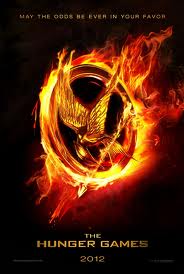
"The Hunger Games" - Film Review and Analysis

Well, I saw The Hunger Games - in a full theatre, popcorn and pop, the whole nine yards. To review it, however, I feel like I have to review each aspect of the film individually, because even 12 hours later, it's still hard for me to examine the film as an artistic creation independent from the novel itself. When you watch a film that's based on a book you've read and enjoyed, you're not exploring, you're waiting - for that one scene, and then the scene after that, and then for that special character's appearance. I watched this movie differently because I'd read the book and remembered it so well. WARNING: FILM AND BOOK SPOILERS AHEAD.

The Adaptation:
Honestly? Full marks. In terms of overall accuracy to the source material and conveying it in an understandable way, the film did an excellent job. What pieces were cut from the film, like Madge's character or Peeta's prosthetic leg, made sense and didn't detract or distract from overall story (honestly, Madge never had a huge impact on the series, and Peeta's fake leg is much like Luke Skywalker's fake hand - mentioned once and then never again). What scenes were added contributed to the story and to its place as first in a series (more on that later). A.

The Katniss:
Also very good, which surprised me, since Jennifer Lawrence was easily the weakest link in the acting chain in X-Men: Gay Mutants In Love. Lawrence underacts and plays it close to the vest, which is in keeping with Katniss' character. Katniss isn't a screamer or a maker of speeches - she's private, she's introverted, and she's focused. Jennifer Lawrence embodied her perfectly. A

The Peeta:
I'm sorry, Josh Hutcherson, but you are really, really silly. He's not a terrible actor, and Hutcherson does a decent job when he's playing it up for the Capitol audience, but his serious acting just can't compete. It's not even about how he overacts, but more like the tone he sets with his character is off. He acts like someone in a far less perilous situation - like a person who wants to win the Boston Marathon, whatever it takes, not someone who's fighting to the death with a bunch of other kids. The audience actually erupted into unintentional laughter at the scene where Katniss finds him all painted up at the stream. C

The Gale:
He's pretty and not annoying, which is all that was asked of him for this movie, really. A

The Supporting Cast:
A mixed bunch, to be honest. Haymitch was decent but not outstanding. Elizabeth Banks channeled Bette Midler from Hocus Pocus for most of the movie as Effie Trinket. Lenny Kravitz was excellent as Cinna - but his portrayal also raised a lot of questions about Cinna's character and his motivations, and why he works for the Hunger Games if he clearly doesn't support them.

Every other kid in the Hunger Games (especially the Careers) was terrible. I mean, just awful. Similar to Peeta, they didn't set the right tone. There's a scene where the Careers are chasing Katniss, and the way they acted wasn't menacing at all. It felt like they were going to corner her and tease her about her jacket and throw beer cans at her like a bunch of hicks. They were acting like bullies when they should have been acting like predators. When they murder the tribute who starts a fire (off-screen, of course), afterward, they're giggling and snarking like they TP'd her house. With a film already hampered by a PG-13 rating, it was up to them to pick up the slack and inject some legitimate menace and suspense into the film, and they failed royally. C-

The Love Triangle:
One of my favourite aspects of the novel was the ambiguity surrounding Peeta and Katniss' relationship. We think Peeta is faking his love for Katniss for audience support, so Katniss goes along with it, maybe starting to feel the real thing, if only a little. The big discovery at the end of the novel is that Peeta's feelings for Katniss are actually real, and his heart is broken when he realizes that Katniss is still very much ambivalent. Granted, the subtlety of their relationship would be tough to translate onto the big screen, but the film still failed on that score, and I think it failed especially with the viewers who haven't read the books, because at least we know what they're trying to do.

Firstly - the whole background between Katniss and Peeta with the burned bread was really clumsily filmed. In a recurring flashback, it's raining, Peeta sees a sad Katniss lying against a tree and throws a loaf of bread at her. It lands in a puddle. She never picks it up. Discussing this past in the cave, she never mentions her family's starvation or how important that bread was to her, just that Peeta gave it to her. While the books' readers would understand, I think the new viewers would just be puzzled as to why this was such a big deal.

Secondly, while the film tries to imply that Katniss is fabricating feelings for Peeta, it's not followed up on, and there's no scene at the end where it's established her feelings for Peeta are not exactly on the level. I understand to some extent that that is a subtlety that just can't be easily filmed, and it looks like they're jettisoning that whole ambiguity and going for the full I-Love-Two-Guys thing that only slowly developed in the books. But while I may understand it, I don't like it. C.

The Extra Stuff:
By extra stuff, I mainly mean, the introduction of other points of view. While books can have a first person POV, movies are pretty much entirely 3rd person, with a few incredibly rare, artsy exceptions. With The Hunger Games I loved it - it still followed the story, but it gave us something new to look at and think about. My biggest frustration with the Hunger Games trilogy is how, with Katniss' limited POV, we end up missing a lot of the important rebel actions, but here we get a taste of it, in five important ways:
  1. Seneca Crane's scenes. As the Games go on, we see the head Gamemaker managing the game with his crew. He's a producer, and he's producing a television event, and it's fascinating to watch how he manipulates the board and why. I would have liked to have seen how he censored or tampered with Tribute footage to ensure it toed the Capitol party line, but it was still interesting watching the very Truman Show-esque manipulation going on behind the curtain.
  2. The commentators: Toby Jones and Stanley Tucci set a very satirical tone as cheery commentators for the Hunger Games, and serve as an incredibly effective Exposition Device to explain things to the newbies without intruding on the story.
  3. Haymitch's wheelin' and dealin': Haymitch manages to smuggle in medicine and food to Katniss during the Hunger Games. We never see how he does this in the novel - again, Katniss' limited POV. In the movie, however, we see him negotiating, making alliances and coming out of his shell in order to get Katniss and Peeta the items they need. This was great - we actually got to see how Haymitch could interact and sell himself to other people, and just how far he was willing to go out of his comfort zone to help his tributes.
  4. The rebellion scene from District 11: While we don't get the bread-gift scene in the film, we do watch as members of District 11 lash out against the Peacekeepers in a violent uprising as a reaction to Rue's death. I don't think this happened in the books, but it was an excellent early indication of the significance of Katniss' actions. I was also caught by the racial symbolism - both District 11 tributes are black, and District 11 is shown to have a higher black population than the Capitol or District 12, and the Peacekeepers eventually put down the rebellion with high-pressure water hoses. I wondered if this was an intentional invocation of Civil Rights Movement imagery.
  5. President Snow. In the first novel, he's more an impending menace than an actual one, but here, we get scenes of him voicing his concerns about Katniss and the significance of keeping the districts under control. I liked this - it gives Katniss' actions a far-reaching impact that connects the Hunger Games to the rest of the series. It also clearly establishes Snow as the central antagonist even if he only meets Katniss is person once.
Overall, these scenes were an A.

The Violence:

Of course, the hardest aspect of this adaption is doubtless the violence. It is a story about teenagers killing each other - but it is also a story written for and aimed at teens. Recently, outrage erupted over the MPAA's decision to give the anti-bullying documentary Bully an R-rating for profanity - thereby barring the film from the very audience (school-age adolescents) it had been expressly intended for.

So I get the PG-13 rating for The Hunger Games - it would hardly be fair to adapt a film from a book beloved by teens and make them unable to see it without their parents. However, let's just say I'm really glad the MPAA has never had anything to do with books.

In this case director Gary Ross uses the tried-and-true Walt Disney method for gruesomely dispatching villains in a family-friendly way: imply, imply, imply. During the scenes of the most intense violence (the initial scene at the Cornucopia) he uses lightning-quick flash-cuts and a jittering camera to give us a sense of violence without showing it. We see weapons slash down, we see the resulting corpses and splashes of corn-syrup blood, but we don't see any of the blows or weapons connect with an actual person.

For the most part, it works. The Cornucopia scene was based on mad chaos and mob mentality in the novel, and the swift, jagged editing of the film's scene gives us that tone while disguising the gore at the same time. The three most disturbing deaths in the actual movie are:
  • Glimmer's death by Tracker Jackers (props to the Foley artists for mastering the perfect sound effects as Katniss pries the bow out of her enemy's swollen, dead fist)
  • Rue's death by spear (the only time we actually see the bloody results of a weapon connecting)
  • Random Tribute's neck-snapping at the hands of Cato (this by far got the biggest audience reaction)
These choices in deaths are interesting because - in both the novel and film - these deaths aren't just gory, they're important. Glimmer is the first person to actually die as a result of Katniss' actions. Rue is the most tragic death, the death of an innocent. Random Tribute's death very clearly established Cato's character and bloodthirstiness as Katniss' most immediate antagonist. The fact that these deaths got special attention definitely shows an understanding of the source material.

With one noticeable and disappointing exception: Cato's death (which is one of the most disturbing in the novel) is reduced to a pale rip-off of Scar's demise from The Lion King. I get that they couldn't show him getting slowly eaten over a nine-hour period, but his death is meant to have an impact, and they could have found a better way to imply that then with the very quick and superficial death scene he does receive. He also gets an out-of-character moment of self-awareness before his death that didn't ring true and seemed manipulative. B+

Overall? I had a good time. I don't think it was my favourite movie of all time, but it was interesting and it did the novel justice. Even now, I still can't pin down how it works as an independent movie, so I don't think I can review it just as a film. What do you guys think? Comments are open!

Sunday, September 18, 2011

Book-To-Film Review: "The Help," by Kathryn Stockett

The Principal Cast:
Aibileen Clark: A maid of considerable experience, particularly in the area of raising babies. She currently works for a white woman who neglects and emotionally abuses her 2-year-old daughter.
Minny Jackson: A maid with an unfortunate tendency to sassmouth her employers who goes to work for a social outcast when a vengeful former boss blacklists her among the more respectable members of society.

Skeeter Phelan: A privileged young white woman who recently graduated with a degree in journalism and is eager to write something meaningful as well as publishable - and winds up in something way over her head.
The Supporting Cast:
Charlotte Phelan: Skeeter's ambitious, disapproving, rigidly conservative mother.

Elizabeth Leefolt: A high school friend of Skeeter's, and Aibileen's employer. A weak-willed social climber who looks to Hilly Holbrook for advice.

Hilly Holbrook: Another soon-to-be former friend of Skeeter's, and the novel's principal antagonist. Founder of the Home Help Sanitation Initiative, a program that requires people to install separate bathrooms for their coloured servants.

Celia Foote: A busty blonde rejected by Hilly and her friends for being a white-trash girl who married up. Slovenly and incapable of cooking, she hires Minny in secret in order to convince her husband she's capable wife material.

Constantine Jefferson: Skeeter's family's former maid who was fired under mysterious circumstances.

Stuart Whitworth: The son of the state senator who takes a shine to Skeeter.
The Word:
In many ways, I found The Help to be a lot like Room by Emma Donoghue, in the sense that a lot of my enjoyment with this novel came from the novel's use of changing perspectives, and all of their various limitations.

The novel starts from the perspective of the two black maids living in Jackson, Mississippi, Aibileen and Minny. We read their stories first (or rather, listen to their stories, as Ms. Stockett uses a surprisingly effective dialogue-type of writing style for their POV chapters that cannily captures their voices). Aibileen tends the house of Miss Leefolt and tends her employer's two-year-old daughter, Mae Mobley, whom she loves and coddles in an attempt to make up for her mother's neglect and indifference.

Minny, meanwhile, is a maid with a reputation for heavenly cooking whose reputation is ruined when prominent Jackson socialite Miss Hilly Holbrook lies about Minny being a thief in order to hire her at a cheaper wage. When Minny retaliates by giving Miss Hilly her just desserts in the most appallingly literal way possible, the only work she can find is as a maid to an isolated, ostracized housewife the other wives in Jackson spurn for being white trash.

Through their eyes, we see the ignorance and weakness and cruelty and indifference of the people they work for, so that it comes as an interesting change of perspective when we get to Skeeter's first chapter. Skeeter, just returned from university, is friends with both Hilly and Miss Leefolt. Through her, we see the other sides to their characters, the shiny, public faces they show to their friends and their neighbours - not the private angers and pettiness they demonstrate in front of their help.

Skeeter, however, does not agree with her friends' treatment of their maids. She recently discovered that her own family's beloved maid, Constantine, apparently quit - although the circumstances are shrouded in secrecy. When the only journalism job she can find is as the writer of a housekeeping advice column, she goes to Aibileen for advice and comes up with the idea of writing about society from the perspective of the help. An editor in New York is tentatively interested in the idea, but Skeeter discovers that actually getting the maids to talk is another obstacle entirely.

As the book proceeds, the changes in perspective set an engaging tone. While on the one hand, I appreciated Skeeter's determination and drive to write an important book, her initial ignorance of the possible consequences of her actions (as viewed from Aibileen's and Minny's POVs) made me cringe. It's also worthy of note that I cared about each character's problems equally, even if in the larger scheme of things, Skeeter's problems (a disapproving mother, self-esteem issues) seemed woefully paltry in comparison to Aibileen's and Minny's.

Second to the perspectives, The Help's best element is its pacing. I started reading slowly, then sped up, then basically drag-raced through the book to the end. Stockett peppers her book with different mysteries and questions (why did Constantine leave? What's wrong with Minny's new boss, Celia?) that, along with the central plot, keep the tension high and the pace swift.

At the same time though, certain scenes and characters seemed a tad exaggerated - Miss Hilly foremost among them. Maybe this is my own ignorance and naivete, but I find it hard to believe a person as repulsive and yet cartoonishly comical as her could exist. She had some nuance in the first half of the novel (from her positive friendship with Skeeter), but in the second she was just an out and out villain, evil in pretty much every way it was to be evil.

But ultimately, I found the story immensely entertaining. I loved the differences in perspective and the sparks of humour and the excellent setting, atmosphere and dialogue.A.

The Help (2011, tarring Emma Stone, Viola Davis, and Octavia Spencer)

WARNING: FILM AND NOVEL SPOILERS AHEAD
Not long after I finished the book, I had the opportunity to watch the movie with my sister. And I was pleasantly surprised to discover that, aside from a few changes, the movie was actually a pretty close, accurate, and entertaining adaptation from the novel. Having only recently finished the book, I recognized entire passages and pages of dialogue being spoken or enacted nearly word for word. I hadn't encountered that close of an adaptation since Sin City and the HBO television series Game of Thrones.

That being said, there were a few things the movie did change, and this is where my discussion comes in.

What did the movie change?

1. Skeeter's Ostracization
In the novel, after Skeeter revenges herself on Hilly by arranging for people to deposit old toilets on her front lawn (don't ask), Skeeter is ostracized by the white society women in Jackson at the behest of their humiliated Queen Bee. In the film, however, this shunning of Skeeter is never shown. We are told at the end of the movie that Skeeter lost all her friends, and there's one scene where Hilly removes Skeeter as editor of their League's newsletter, but we don't get to see how outcast she became, where even her longtime friends wouldn't speak to her for fear of enraging Hilly.

I was actually a little bothered by this, because Minny and Aibileen encounter the same repercussions they got in the novel, but we don't get to see Skeeter's. While I chalk this up to not enough screen time, I would have liked at least one scene where someone like Miss Leefolt refuses to talk to Skeeter.
2. Stuart's Dick-Ification
In the novel, Stuart and Skeeter get together after a number of mishaps and false starts. While politically conservative and indecisive, Stuart's a pretty decent guy. When Skeeter reveals she spent the last two years writing a book about the lives of black maids, Stuart breaks up with her, albeit respectfully, saying that he doesn't really know her.

In the film, an unshaven and tousled Stuart yells at Skeeter, "How could you do this to us?" and tells her she's better off alone, before flouncing off to his truck, never to be seen again. I disliked how the filmmakers used what time they had to make him selfish, petty and cold - which he isn't in the book. In one scene, everyone in Skeeter's house is watching JFK's funeral on the TV and weeping - except for an impatient Stuart, who leaves early so he can go to work. This scene was never in the novel, but was added in the film to clue the viewers in to what a dick he is before the ultimate reveal.

But he isn't a dick in the novel. Yes, he breaks up with Skeeter after learning she wrote Help, but it wasn't in a "how dare you care about black folk, Skeeter! You deserve to die a spinster!" way but more of a "I don't think I can marry you because I clearly don't know you," way. This is further supported in the novel by his troubled romantic past, where his last relationship before Skeeter, to his high school sweetheart and fiancee, ended with her cheating on him. It made sense that after enduring one woman lying to him, that he would be unwilling to marry another who had also hidden something important from him about herself.

But objectively I can understand that with the time limit of a movie, the filmmakers didn't have enough time to put this across, so they just decided to make him an easy villain instead. Doesn't mean I like it, though.
3. Skeeter's Mama's Sentimentalization
With Skeeter's mum, however, the filmmakers went in an entirely different direction. In the novel, she's a minor character, albeit one with a large influence on her daughter's life. She's critical, conservative, and obsessed with appearances and connections. She loudly disapproves of nearly everything in Skeeter's life - her physical appearance, her literary ambitions, her romantic life. She starts suffering from stomach ulcers midway through the book, and Skeeter only learns that her mother actually has cancer near the end. She's not a capital-E Evil person, but she's not really a positive force in the book at all.

In the film, however, her character openly lives with her cancer from the very beginning. It's an important aspect to her character and influences a lot of what she does in the film. Moreover, her sniping at Skeeter is toned down - it's depicted in the film as comical henpecking rather than the constant barrage of disapproval it is in the novel. In fact, in the film, she actually finds out that Skeeter wrote Help and praises her for it, saying she's proud of her, something the rigidly segregationist Charlotte Phelan in the novel would never have done. She also finds out about what Minny made Miss Hilly eat and makes fun of Miss Hilly for it - which, again seems incredibly out of character. I love Allison Janey (who plays Skeeter's mum in the film) but I couldn't help but wince at this cliched adaptation.

They significantly changed her character a lot in order to give Skeeter a supportive mother figure and once again I do not understand why. Skeeter suffered consequences and took a lot of risks in the novel to write Help - not only did she go against everything her friends believed in, she went against everything her mother believed in. But instead, the movie removes nearly every significant consequence to Skeeter's actions - her ostracization never happens, and her mother instead supports her work. How come Minny and Aibileen come under threat for Help in the film but Skeeter doesn't?

The Sentimentalization continues with the crucial scene in which Skeeter's mum fires Constantine, as mentioned below:
4. Constantine's Daughter's Backstory
In the book, Constantine's termination is a mystery for nearly the entire book. Skeeter comes home from university to discover that the beloved maid who helped raised her is gone, but her mother refuses to tell her what really happened and so does Aibileen (who went to Constantine's church group).

Eventually, it's revealed that Constantine gave birth to a light-skinned daughter, and later abandoned her at an orphanage because she didn't know how to raise a baby who looked white. While Skeeter was away at university, Constantine made contact with her now-grown daughter, who came down to see her - party-crashing Mrs. Phelan's DAR party in the process. Appalled at the idea of a black person infiltrating a white social event, Mrs. Phelan not only fired Constantine but revealed to her daughter the truth about how her mother abandoned her. It's an interesting mystery that's uncovered slowly, and it's a reveal that fits perfectly with Skeeter's mum's characterization.

In the film, however, Constantine's daughter Rachel is not only dark-skinned, but a family friend who accidentally walks in on Mrs. Phelan's DAR party at the wrong time. Mrs. Phelan "is forced" to expel Rachel and fire Constantine in order to impress her DAR friends, although the direction of the scene and how Mrs. Phelan reveals the story to Skeeter strongly imply that Mrs. Phelan is deeply ashamed and remorseful of what she did.

In this instance, I do understand the drastic change - the novel's reveal is a serious doozy of a backstory, but the book has the page count required to properly tell the chapters-long mystery. The movie does not have that kind of time, and they're trying to make the mum a good guy to boot, so I understand the streamlined mystery that makes Mrs. Phelan look somewhat less heinous.