Showing posts with label books to film. Show all posts

Saturday, August 04, 2012

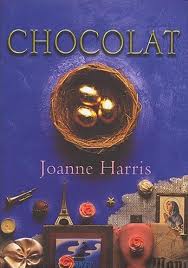
Book-To-Film Review: "Chocolat," by Joanne Harris

The Protagonist: Vianne Rocher. She and her daughter have lived a nomadic, string-free existence - until they arrive in a small, backwater French town and decide to set up a chocolate shop.
The Rub: Vianne's decision to start her business in the middle of Lent incurs the wrath of the parish priest - can she stand her ground against real authority?

The Secondary Cast:

Anouk: Vianne's six-year-old daughter. Loves her mother and the travelling, but has an imaginary friend named Pantoufle to help with the loneliness of being uprooted.

Pere Reynaud: A rigid and arrogant parish priest who sees Vianne as a threat to his community to be rooted out, no matter the cost.

Armande: An elderly town resident who recognizes Vianne as a witch and befriends her immediately.

Josephine Muscat: A troubled woman sneered at by the town and stuck in an abusive relationship - until Vianne offers her assistance.

Guillaume: A gentle old man who is greatly attached to his old dog, Charley, despite the priest's insistence that caring for a creature with no immortal soul is a waste of time.

Roux: A red-headed member of the travelling river people who set up camp in the small French town, despite the hatred and suspicion of the townsfolk.

The Word: I picked this book up because, thanks to the brilliant Gentlemen and Players blowing my everlovin' mind, I've been trying to read more of Joanne Harris. So far, her books have been pleasant, mouthwatering, with lots of detail - but they never reached the agony and ecstasy I had reading her novel about the politics rife within a boy's prep school.

Vianne Rocher grew up living an itinerant existence with her mother, travelling all over the world, living different lives, working different jobs, yet still hanging on to the family tradition of magic. Vianne's mother read tarot cards, predicted the future, brewed tisanes and made good-luck charms - even as her premonitions grew increasingly dark as her own death loomed closer and closer.

Vianne was raised in a life of change and chaos, and she's lived a similar life with her now-six-year-old daughter Anouk, but the nomadic existence is starting to tire. When she and her daughter move to the tiny French village of Lasquenet and set up a chocolaterie, Vianne sees a potential place to actually settle down. However, when she runs afoul of the rigid and obsessive town priest, Vianne learns that her heritage of change and chaos might be just the thing this town needs.

The novel is told in chapters of alternating viewpoints between Vianne and her ultimate opponent, Pere Reynaud, the priest who grows increasingly unhinged by the defiance and sensuality Vianne and her chocolate shop represent. However, I wouldn't interpret Chocolat as a condemnation of the church or Catholicism - but rather the particular method this priest applies to his people.

Reynaud, who was raised in town but left for his education, holds himself above his flawed, stupid, petty flock and preaches down to them with law, theory, and rhetoric, trying to appeal to the mind. Vianne, meanwhile, is the outsider who wants to belong within the community as a part of them, and with her casual dialogues with them over a cup of chocolate, appeals to the heart and the senses with empathy and compassion. The novel demonstrates how you cannot seek to change the hearts and minds of people by holding yourself apart from them.

In this way, Vianne wins over many of the townsfolk, which prompts Reynaud, terrified of losing control over the town, to take ever-more irrational measures.

As usual, the writing and descriptions are sumptuous, and I quite enjoyed the magical realism (Vianne possesses a mild mind-reading ability which gives her insight). I've found myself comparing Joanne Harris to Alice Hoffman rather frequently (although on average I've enjoyed Hoffman's books more), and here, Chocolat reminded me very strongly of Hoffman's Practical Magic. In both, the magical element is subtle, subdued, and may or may not exist solely in the protagonist's head, but imbues both books with a spice of something special and different.

That being said, I found some elements of Chocolat to be a little unclear and haphazard (particularly the ending and some "shocking" reveals). And despite having much of her POV, I found I had trouble connecting to and understanding the motivations of Vianne.
B

The Film:  *warning: book and film spoilers ahead*
It's interesting to compare the novel Chocolat to the novel Practical Magic - because I had a similar reaction when watching both of their film adaptations. Both films differed wildly (wildly) from the source material, but the films themselves were so interesting that I enjoyed both versions. In fact, *lowers voice to a whisper* I may have enjoyed the film Chocolat more than the book.

Is it a faithful film adaptation? Oh Hell no. They add stuff, they change stuff. Most of the characters only bear mild resemblances to their literary counterparts - although Josephine Muscat (Lena Olin) remains startlingly faithful to the original.

But is it an enjoyable movie - and does it have a good story on its own? Yes and yes. I could detail all the stuff they change from the book, but then this list would go on forever. Instead, I will speak about the three main differences and how they affected the story and my reaction to the film.

1. Vianne's Origins.
In the novel, there is no real specific reason for why Vianne and her mother, and consequently Vianne and Anouk, keep moving around from town to town and changing their identities. The implication is that it's because Vianne and her mother are witches, as well as an ingrained fear on her mother's part that staying too long in one place will allow "The Black Man" (an archetypal symbol of the church and the authorities) to take Vianne away. We later learn in an almost throw-away scene that Vianne's mother may have actually snatched an infant Vianne from another woman's pram, which gives a wholly different context to their frantic travels.

In the film, Vianne reveals she's the daughter of a French pharmacist and a South American woman who belonged to a tribe of wanderers duty-bound to follow the summons of the north wind and dispense sacred cocoa-themed remedies from town to town. Vianne grew up following the wind and learning the ways of chocolate from her mother, but has trouble continuing that tradition with her lonely, sullen daughter.

To me, I liked this element. Aside from the chocolate-flavoured-Mary-Poppins vibe, I loved the romanticism and  magical realism of this backstory as well as how cleverly, effectively, and efficiently it explained Vianne's motivations, intentions, and the importance of chocolate in her life.

2. The Time Period.
In the novel, the story is set in more or less modern times, early nineties at the earliest. The town of Lasquenet is just such a small, out-of-the-way backwater that it still maintains an old-fashioned, timeless quality. Vianne, who's travelled all over the world, is depicted as a force of modernity in a forgotten town that somehow missed 60 years of social development.


In the film, the story is explicitly set sometime in the late 1950s-early 1960s. The townsfolk are still very much affected by both the world wars and Elvis music is filtering in very slowly (thanks to the town's adorable baby-faced parish priest). I love period pieces so I enjoyed this.

As to why the filmmakers decided to take a modern novel and make it a period piece, I suspect it might involve the suspension of disbelief. Modern audiences (particularly North American ones) might have had trouble believing a modern town would still remain so conservatively religious and socially antiquated that they needed Chocolate Mary Poppins to remind them that breaking Lent isn't the end of the world and that beating your wife is Wrong.

Do I believe there are still towns in Europe and North America that actually are still like that? Definitely, but moviegoers as a whole tend to watch films with an idealistic and naive bent and want to believe that modern society is no longer like this - therefore, it's more comforting to encounter this type of story in an historical setting where the time period can explain it away.

3. The Antagonist.
In the novel, Vianne is opposed in all things by Pere Reynaud, a controlling, arrogant, contemptuous and theologically-rigid priest. It's not just the notion of serving chocolate during Lent that offends him, or that by doing this Vianne weakens Pere Reynaud's iron-clad moral control over the town. Vianne's very presence is the ultimate threat because it's distracting and colourful and indecent and sensuous - Pere Reynaud thrives on control, and Vianne threatens his control over himself. That's not to say Pere Reynaud is a cartoon, but from his POV we can clearly see he is a megalomaniac whose lust for power is so heavily swaddled in religious rhetoric that even he doesn't recognize it. As the novel progresses and he loses more ground, he eventually descends into complete insanity.

In the film, the filmmakers decided to sidestep possible religious controversy by rewriting Vianne's antagonist as the Comte de Reynaud, the town mayor (played by Alfred Molina, one of my favourite actors). In the film, the Comte is very much an antagonist rather than a villain, and a far more sympathetic figure. While he is still arrogant and a bully (the brand-new baby-faced priest is so terrified of him that he lets the Comte "revise" all of his homilies beforehand), his good intentions and his attempts to lead by example are more evident. He genuinely cares about his town and its people but he bitterly resents Vianne's usurpation of his role as authority figure.

Pere Reynaud and the Comte share very little in common, character-wise, beyond a desire for denial - not only of the corporeal pleasures for Lent, but of the truths that are too painful to accept (the Comte hides his heartbreak over his wife leaving him by telling people she is merely "vacationing" in Italy, and Pere Reynaud glosses over the teenage trauma of discovering his mother in flagrante delicto with the parish priest who was his religious mentor).

There is actually one major scene that both antagonists share - in the novel, when Vianne decides to hold a chocolate festival on Easter, an enraged Pere Reynaud finally snaps and breaks into her shop to sabotage her work. After weeks of futile self-denial, Pere Reynaud has a complete mental breakdown at the sight of so much delicious food and he gorges himself, completely abandoning his evil plan, his dignity, and his Lenten fast to shove sweets into his face instead - only to be humiliatingly woken up by his parishioners the next morning, covered in melted chocolate.

However, because of the different ways these antagonists were developed, this scene has a different context in the film. In the novel, Pere Reynaud's breakdown is Vianne's ultimate triumph, it's a glorious chocolate-coated scene of Schadenfreude as he gets his just desserts in the most delightfully literal and public way possible, after which he flees into the night, never to return.

In the film, this scene comes across as tragicomic and sympathetic, a proud man finally admitting to weakness. He's spent the entire film believing he can control, change and better everything if he just believes and works hard enough - only to discover he's just as human and fallible as his townsfolk.

In the novel, Harris uses pig imagery to describe Reynaud's breakdown - he squeals and keens as he eats the chocolate. The breakdown in the novel turns Reynaud into an animal, to be laughed at and hated. The breakdown in the film makes the Comte de Reynaud seem more human - to be sympathized with and forgiven. The Comte is actually saved from public humiliation by the quick thinking of Vianne and the parish priest, who finally gets to give a stirring Easter homily in his own words, and a grateful Comte befriends Vianne.

I actually loved the film's antagonist way more than the incredibly creepy Pere Reynaud. Yes, I'm a sucker for Alfred Molina, and even more of a sucker for redeemed-antagonist storylines.

Yes, I still liked the novel, and acknowledge that the film changed a great deal of the storyline. However, from a purely objective perspective - I enjoyed the film's story more than the novel's.

Sunday, September 18, 2011

Book-To-Film Review: "The Help," by Kathryn Stockett

The Principal Cast:
Aibileen Clark: A maid of considerable experience, particularly in the area of raising babies. She currently works for a white woman who neglects and emotionally abuses her 2-year-old daughter.
Minny Jackson: A maid with an unfortunate tendency to sassmouth her employers who goes to work for a social outcast when a vengeful former boss blacklists her among the more respectable members of society.

Skeeter Phelan: A privileged young white woman who recently graduated with a degree in journalism and is eager to write something meaningful as well as publishable - and winds up in something way over her head.
The Supporting Cast:
Charlotte Phelan: Skeeter's ambitious, disapproving, rigidly conservative mother.

Elizabeth Leefolt: A high school friend of Skeeter's, and Aibileen's employer. A weak-willed social climber who looks to Hilly Holbrook for advice.

Hilly Holbrook: Another soon-to-be former friend of Skeeter's, and the novel's principal antagonist. Founder of the Home Help Sanitation Initiative, a program that requires people to install separate bathrooms for their coloured servants.

Celia Foote: A busty blonde rejected by Hilly and her friends for being a white-trash girl who married up. Slovenly and incapable of cooking, she hires Minny in secret in order to convince her husband she's capable wife material.

Constantine Jefferson: Skeeter's family's former maid who was fired under mysterious circumstances.

Stuart Whitworth: The son of the state senator who takes a shine to Skeeter.
The Word:
In many ways, I found The Help to be a lot like Room by Emma Donoghue, in the sense that a lot of my enjoyment with this novel came from the novel's use of changing perspectives, and all of their various limitations.

The novel starts from the perspective of the two black maids living in Jackson, Mississippi, Aibileen and Minny. We read their stories first (or rather, listen to their stories, as Ms. Stockett uses a surprisingly effective dialogue-type of writing style for their POV chapters that cannily captures their voices). Aibileen tends the house of Miss Leefolt and tends her employer's two-year-old daughter, Mae Mobley, whom she loves and coddles in an attempt to make up for her mother's neglect and indifference.

Minny, meanwhile, is a maid with a reputation for heavenly cooking whose reputation is ruined when prominent Jackson socialite Miss Hilly Holbrook lies about Minny being a thief in order to hire her at a cheaper wage. When Minny retaliates by giving Miss Hilly her just desserts in the most appallingly literal way possible, the only work she can find is as a maid to an isolated, ostracized housewife the other wives in Jackson spurn for being white trash.

Through their eyes, we see the ignorance and weakness and cruelty and indifference of the people they work for, so that it comes as an interesting change of perspective when we get to Skeeter's first chapter. Skeeter, just returned from university, is friends with both Hilly and Miss Leefolt. Through her, we see the other sides to their characters, the shiny, public faces they show to their friends and their neighbours - not the private angers and pettiness they demonstrate in front of their help.

Skeeter, however, does not agree with her friends' treatment of their maids. She recently discovered that her own family's beloved maid, Constantine, apparently quit - although the circumstances are shrouded in secrecy. When the only journalism job she can find is as the writer of a housekeeping advice column, she goes to Aibileen for advice and comes up with the idea of writing about society from the perspective of the help. An editor in New York is tentatively interested in the idea, but Skeeter discovers that actually getting the maids to talk is another obstacle entirely.

As the book proceeds, the changes in perspective set an engaging tone. While on the one hand, I appreciated Skeeter's determination and drive to write an important book, her initial ignorance of the possible consequences of her actions (as viewed from Aibileen's and Minny's POVs) made me cringe. It's also worthy of note that I cared about each character's problems equally, even if in the larger scheme of things, Skeeter's problems (a disapproving mother, self-esteem issues) seemed woefully paltry in comparison to Aibileen's and Minny's.

Second to the perspectives, The Help's best element is its pacing. I started reading slowly, then sped up, then basically drag-raced through the book to the end. Stockett peppers her book with different mysteries and questions (why did Constantine leave? What's wrong with Minny's new boss, Celia?) that, along with the central plot, keep the tension high and the pace swift.

At the same time though, certain scenes and characters seemed a tad exaggerated - Miss Hilly foremost among them. Maybe this is my own ignorance and naivete, but I find it hard to believe a person as repulsive and yet cartoonishly comical as her could exist. She had some nuance in the first half of the novel (from her positive friendship with Skeeter), but in the second she was just an out and out villain, evil in pretty much every way it was to be evil.

But ultimately, I found the story immensely entertaining. I loved the differences in perspective and the sparks of humour and the excellent setting, atmosphere and dialogue.A.

The Help (2011, tarring Emma Stone, Viola Davis, and Octavia Spencer)

WARNING: FILM AND NOVEL SPOILERS AHEAD
Not long after I finished the book, I had the opportunity to watch the movie with my sister. And I was pleasantly surprised to discover that, aside from a few changes, the movie was actually a pretty close, accurate, and entertaining adaptation from the novel. Having only recently finished the book, I recognized entire passages and pages of dialogue being spoken or enacted nearly word for word. I hadn't encountered that close of an adaptation since Sin City and the HBO television series Game of Thrones.

That being said, there were a few things the movie did change, and this is where my discussion comes in.

What did the movie change?

1. Skeeter's Ostracization
In the novel, after Skeeter revenges herself on Hilly by arranging for people to deposit old toilets on her front lawn (don't ask), Skeeter is ostracized by the white society women in Jackson at the behest of their humiliated Queen Bee. In the film, however, this shunning of Skeeter is never shown. We are told at the end of the movie that Skeeter lost all her friends, and there's one scene where Hilly removes Skeeter as editor of their League's newsletter, but we don't get to see how outcast she became, where even her longtime friends wouldn't speak to her for fear of enraging Hilly.

I was actually a little bothered by this, because Minny and Aibileen encounter the same repercussions they got in the novel, but we don't get to see Skeeter's. While I chalk this up to not enough screen time, I would have liked at least one scene where someone like Miss Leefolt refuses to talk to Skeeter.
2. Stuart's Dick-Ification
In the novel, Stuart and Skeeter get together after a number of mishaps and false starts. While politically conservative and indecisive, Stuart's a pretty decent guy. When Skeeter reveals she spent the last two years writing a book about the lives of black maids, Stuart breaks up with her, albeit respectfully, saying that he doesn't really know her.

In the film, an unshaven and tousled Stuart yells at Skeeter, "How could you do this to us?" and tells her she's better off alone, before flouncing off to his truck, never to be seen again. I disliked how the filmmakers used what time they had to make him selfish, petty and cold - which he isn't in the book. In one scene, everyone in Skeeter's house is watching JFK's funeral on the TV and weeping - except for an impatient Stuart, who leaves early so he can go to work. This scene was never in the novel, but was added in the film to clue the viewers in to what a dick he is before the ultimate reveal.

But he isn't a dick in the novel. Yes, he breaks up with Skeeter after learning she wrote Help, but it wasn't in a "how dare you care about black folk, Skeeter! You deserve to die a spinster!" way but more of a "I don't think I can marry you because I clearly don't know you," way. This is further supported in the novel by his troubled romantic past, where his last relationship before Skeeter, to his high school sweetheart and fiancee, ended with her cheating on him. It made sense that after enduring one woman lying to him, that he would be unwilling to marry another who had also hidden something important from him about herself.

But objectively I can understand that with the time limit of a movie, the filmmakers didn't have enough time to put this across, so they just decided to make him an easy villain instead. Doesn't mean I like it, though.
3. Skeeter's Mama's Sentimentalization
With Skeeter's mum, however, the filmmakers went in an entirely different direction. In the novel, she's a minor character, albeit one with a large influence on her daughter's life. She's critical, conservative, and obsessed with appearances and connections. She loudly disapproves of nearly everything in Skeeter's life - her physical appearance, her literary ambitions, her romantic life. She starts suffering from stomach ulcers midway through the book, and Skeeter only learns that her mother actually has cancer near the end. She's not a capital-E Evil person, but she's not really a positive force in the book at all.

In the film, however, her character openly lives with her cancer from the very beginning. It's an important aspect to her character and influences a lot of what she does in the film. Moreover, her sniping at Skeeter is toned down - it's depicted in the film as comical henpecking rather than the constant barrage of disapproval it is in the novel. In fact, in the film, she actually finds out that Skeeter wrote Help and praises her for it, saying she's proud of her, something the rigidly segregationist Charlotte Phelan in the novel would never have done. She also finds out about what Minny made Miss Hilly eat and makes fun of Miss Hilly for it - which, again seems incredibly out of character. I love Allison Janey (who plays Skeeter's mum in the film) but I couldn't help but wince at this cliched adaptation.

They significantly changed her character a lot in order to give Skeeter a supportive mother figure and once again I do not understand why. Skeeter suffered consequences and took a lot of risks in the novel to write Help - not only did she go against everything her friends believed in, she went against everything her mother believed in. But instead, the movie removes nearly every significant consequence to Skeeter's actions - her ostracization never happens, and her mother instead supports her work. How come Minny and Aibileen come under threat for Help in the film but Skeeter doesn't?

The Sentimentalization continues with the crucial scene in which Skeeter's mum fires Constantine, as mentioned below:
4. Constantine's Daughter's Backstory
In the book, Constantine's termination is a mystery for nearly the entire book. Skeeter comes home from university to discover that the beloved maid who helped raised her is gone, but her mother refuses to tell her what really happened and so does Aibileen (who went to Constantine's church group).

Eventually, it's revealed that Constantine gave birth to a light-skinned daughter, and later abandoned her at an orphanage because she didn't know how to raise a baby who looked white. While Skeeter was away at university, Constantine made contact with her now-grown daughter, who came down to see her - party-crashing Mrs. Phelan's DAR party in the process. Appalled at the idea of a black person infiltrating a white social event, Mrs. Phelan not only fired Constantine but revealed to her daughter the truth about how her mother abandoned her. It's an interesting mystery that's uncovered slowly, and it's a reveal that fits perfectly with Skeeter's mum's characterization.

In the film, however, Constantine's daughter Rachel is not only dark-skinned, but a family friend who accidentally walks in on Mrs. Phelan's DAR party at the wrong time. Mrs. Phelan "is forced" to expel Rachel and fire Constantine in order to impress her DAR friends, although the direction of the scene and how Mrs. Phelan reveals the story to Skeeter strongly imply that Mrs. Phelan is deeply ashamed and remorseful of what she did.

In this instance, I do understand the drastic change - the novel's reveal is a serious doozy of a backstory, but the book has the page count required to properly tell the chapters-long mystery. The movie does not have that kind of time, and they're trying to make the mum a good guy to boot, so I understand the streamlined mystery that makes Mrs. Phelan look somewhat less heinous.