The Chick: Brenna Shane Kincaid. After her changeling wolf pack rescued her from a sadistic psychic killer, she's struggled to recover from the tortures she endured - but her family's overprotective antics aren't helping. The only person to treat her with respect is Judd Lauren, a renegade Psy. The Rub: The trouble is, he refuses to respond to her overtures. Can't he see they're meant to be? Dream Casting: Elisha Cuthbert.
The Dude: Judd Lauren. Before he escaped the PsyNet, he was an Arrow - a secret government Assassin capable of killing with his mind. Now he helps the SnowDancer pack, although he's not really accepted as a member by anyone other than Brenna. The Rub: Brenna obviously wants to bone him, but his brain's trained itself to punish emotion with pain - because too much emotion means he could lose control of his killing powers. But - but Brenna is so pretty! Dream Casting: Christian Bale.
The Plot: Brenna: Be my boyfriend!
Judd: No.
Brenna: That's NO WAY TO SPEAK TO YOUR GIRLFRIEND!
Judd: Uh...sorry?
Brenna: Let's have sex!
Judd: No. I could kill you by accident.
Brenna: So you're just going to live in fear?
Judd: Fear of killing you by accident? Yes, that sounds about right.
Brenna: Grr! Men! *is almost killed several times*
Judd: Well, I suppose I could actually TRY to break silence. *breaks Silence* Huh. Easier than I thought.
Brenna: Hooray!
Romance Convention Checklist
1 Emotionally-Constipated Hero
Several Bloody Muuuuuuurders
2 Magical Dreams
1 Magical Weave
2 Overprotective Siblings
1 (Literal) Broken Heart
1 Secret Psy Terrorist
Several Pieces of Broken Furniture
The Word: Okay, so this was supposed to be my Second Chance Challenge - Wandergurl from Bookthingo asked me to give Nalini Singh another try (in return, at some point she will read Prince of Midnight by Laura Kinsale). Now, my last attempt to read Nalini Singh didn't go so well. But - as many other blogger friends of mine have told me - her series is supposed to get better as it goes along. I decided to bypass Visions of Heat and go for Caressed by Ice, mainly because the Booksmugglers (who agreed Slave to Sensation wasn't all that) gave Caressed by Ice a perfect 10. A perfect 10! Everyone I meet seems to love Nalini Singh, and I'll admit, I was pretty eager to find a book of hers I liked so that I could join this large and boisterous fanclub.
And it's not like second chances never work - I found Julie Anne Long that way. So did I succeed this time?
It's a good thing that I read Slave to Sensation, because it does give me more insight into the third book in the series, Caressed by Ice. In the Psy-Changling universe, the world is controlled by three races - humans, changelings (werecreatures) and the Psy (powerful psychics). For the last century or so, the Psy have enforced Silence upon their people: a complete repression of all emotion in an effort to curb their race's tendency towards violent insanity. In Sensation, wolf changeling Brenna Shane Kincaid was kidnapped by Santano Enrique, a sadistic telekinetic Psy who murdered changeling women - after torturing, mind-raping, and performing horrendous experiments on them first. Thankfully, the DarkRiver leopards and the SnowDancer wolves managed to rescue Brenna, but not before she'd endured unthinkable horror and abuse.
By the time of Caressed By Ice, Brenna has come a long way along the road to recovery, but she's not (and might never be) completely healed. The loving but stifling overprotectiveness of her brothers is beginning to take its toll, and she's tired of being "poor Brenna." Everyone continues to handle her with kid gloves, but she longs to regain her role in the Pack, even as she has to deal with the humiliating secret that Enrique's torture has left her unable to shift into her wolf form.
The only one who treats her with any degree of normalcy is Judd Lauren, a member of the Psy family the SnowDancer pack unofficially adopted. As mentioned back in Slave to Sensation, the Lauren family, when sentenced to rehabilitation (lobotomies) by the Psy Council, found a way to drop out of the PsyNet (the mental life-support-and-infosharing-network all Psy belong to), and break Silence. However, Judd continues to embrace Silence - without emotions, he lacks the instinct to coddle Brenna and she prefers this. She's attracted to his strength and to the fact that he refuses to baby her. Trying for some independence in her life, she decides to pursue her attraction.
Unfortunately for her, Judd cannot afford to break Silence. Unbeknownst to her, before he dropped out of the PsyNet, he used to be an Arrow - a supersecret assassin for the Psy council, chosen because he has a specific type of telekinesis that allows him to kill with a thought. Silence protects him from losing control of his powers and accidentally killing someone in a rage, and his embedded Arrow training causes his mind to inflict pain on itself whenever he feels emotion. On top of all these science-fictional obstacles is his understandable conviction that Brenna needs someone warm, loving, and untainted by blood and death. Furthermore - he's sure that if she finds out about his special brand of telekinesis (the same form her torturer had) she'll want nothing to do with him.
We have all the building blocks of a great story - obstacles both emotional and physical, intricate world building, two very damaged characters. This should be great, right?
If Linnea Sinclair had written this book, I would have loved it. If Kate Elliott had written this book, I would have adored it. As it was, Nalini Singh wrote this book and reading Caressed by Ice only confirmed for me that I just plain don't like her writing.
It's blunt. It's unimaginative. It's a pounding hammer that tells, tells, TELLS us what's going on in declarative, Captain-Obvious statements instead of showing us. You could boil down her romantic plotting to this: Take two romantic protagonists. Add one Really Big Obstacle. Have characters repeat Really Big Obstacle a million, gajillion times until they eventually tire of saying it, which is usually when they discover - wow! - a totally simple solution to their Really Big Obstacle that was there all along!
As for her worldbuilding, she prefers to distribute it with generous infodumping. Her regular sentence structure is: Line of dialogue - infodump about world. Line of dialogue - more redundant or irrelevant explanation about world. Line of dialogue - here's the author telling us something about Brenna or Hawke or any of the other characters instead of showing us so we can figure it out for ourselves. Rinse and repeat. There's actually a hilarious scene where Brenna gets into the shower to clean away her feelings of being dirty after what Enrique did to her - and then we get an infodump about the water purifying systems the changelings and Psy use. How is that relevant? Why do we, the reader, need to know this? Laughably - why is Brenna thinking about this as she's trying to wash away the taint of her abuser?
A lot of the infodumpery is stuff that, while occasionally interesting, isn't relevant to the story at hand. I prefer my worldbuilding to be expressed through the decisions, actions, thoughts, and dialogue of the characters - not parcelled out every three lines. I appreciate that Nalini Singh created a wonderfully realized and detailed world - I also appreciate the urge to tell the readers all about her awesome new world even if it has no bearing on the story. It doesn't mean she has to, or even that she should.
When it comes right down to it, I appreciated more than enjoyed this story, and way more than I bought the romance. For instance, I appreciated why Brenna decided to go after Judd. However, I also saw that a lot of what she liked about Judd was thanks to the Silence Protocol - he didn't baby her like her brothers did, but that was thanks to the fact that he didn't experience the crushing guilt/anger/relief her brothers did that influenced their decisions.
Brenna also got on my nerves with the way she just decides she and Judd are a couple - without giving Judd a chance to approve, consent, or even return her feelings. Then she throws shitfits at Judd for not living up to her expectations of the relationship she's suddenly decided they have - bitching at him for not taking her side in an argument, or for going somewhere to do his own business without telling her. I never understood where her sense of entitlement with Judd came from.
I'd almost feel sorry for Judd - if Nalini Singh ever bothered to give me a reason to care for him. Again, I think this is mostly due to Singh's tell-over-show writing style, but I felt continually at a distance while reading about Judd. He never really feels or exhibits any emotion - we're told what he does, but not how he feels. A lot of the descriptions of Judd's "softer" side are told in the manner of "I shouldn't have put my arm around her, but for some reason I did." See - with a line like this I don't get that Judd's feeling anything other than befuddlement that his body isn't obeying his mind.
Of course, when his "feelings" start getting stronger, again, we're not shown about how he feels, we're treated to technical descriptions of how his brain is punishing him with pain for feeling. There was no sense of progression or reaction from him - Brenna spots tell-tale gleams in his eye on occasion, but frankly that's not enough. Nearing the end of the book, when a Silence loophole allows Judd and Brenna to get it on, all of sudden Judd has a sense of humour and foreplay. Um, what?
Because of that, I felt there was no chemistry between Brenna and Judd at all - it was like watching Brenna try and seduce a department store mannequin while screaming about how cold and cowardly the mannequin is for not responding. While feeling nothing for the mannequin, I doubted Brenna's motivations - why does she believe she's owed something from a person who's literally given her nothing to work with? Similarly, Brenna refutes Judd's very reasonable and dangerous objections to their relationship without a thought - surely, Judd can "get over it" if he loves Brenna enough. It added a troubling layer of selfishness to their interactions - Brenna doesn't seem to care what happens to Judd, so long as her romantic expectations are validated.
Along with the romance, there is a suspense subplot where someone tries to kill Brenna but don't label it a mystery - the killer's identity is a non issue since he appears exactly once at the beginning of the novel and then never again until he's caught. We also have some issues with Brenna's recovery that remained inconsistent - I still never caught on to how Brenna was picking up on other people's dreams and, of course, once her dreams conveniently help her solve a murder, she never has these oh-so-convenient dreams again.
On a positive note - aside from these points and Singh's writing style, the story manages to tiptoe gracefully across pretty unstable ground. I appreciated (again, note the word appreciated) that Brenna's recovery was not absolute, that she still had embedded fears and triggers that could set them off, but she remained a strong and defiant character. I can't help but compare her to Sascha from Slave to Sensation: both characters went through shit, but while Sascha was a soggy kleenex of neediness, Brenna didn't let Enrique make her a permanent victim. Yes, she remains an irritating character with a bizarre sense of entitlement - but she's not a victim.
Still, I won't be giving Nalini Singh any more chances. Again, I feel a little disappointed that I didn't like it - and also confused as to why people did. However, I also have to accept that my tastes are my own, and despite consciously and deliberately trying to like Caressed By Ice, I was left unsatisfied by ham-handed writing and irritating characters. C+
As you may or may not have guessed from reading my earlier (WAY earlier) blog posts, I am a huge Disney fan. I grew up in the decade of the Disney Revival, singing along with Ariel, Belle, and Simba.
As the 90s came to an end, however, Disney started moving away from hand-drawn animation and more into computer animation - creating movies that, for the most part, were either terrible or m'eh.
No more music. No more hand-drawn animation. Thankfully, all that changed thanks to a couple of things: first, Enchanted (a tender but sharp-witted homage/spoof of Disney's 2D animated heyday) kicked royal ass at the box office. The second thing: Disney bought Pixar, and then Pixar's head John Lassiter cleaned house at Disney - basically telling Disney, "See? You own a steakhouse now. No need to keep making dogfood." Essentially: Pixar's here to do computer-animated movies, and we do it well. Go back to doing the animated musicals that people miss and enjoy.
As you can probably bet, I was really excited when they announced The Princess and the Frog. However, watching the trailer I had a few worries:
1) Randy Newman was writing and composing all the songs (yes, I know he did Faust, but lately what's he done?)
2) The hero (Prince Naveen) had a Sidekick Voice. You know, the cheesy overblown accent and "adorable" pseudo-sexual aggression. Really? The male protagonist has that voice? It'd be like a romance with Lumiere, or Pepe LePieux!
But, you know, I'm a slave to the Mouse House, so today I slapped down the money and saw the damn thing. My take? Mixed.
The movie starts with a rather tepid introduction that very obviously hammers home the morals, obstacles, and motivations that will outline the entire film: Tiana, the daughter of a chef and a seamstress, shares her father's dream that one day they'll own a restaurant, barely heeding her parents' warnings that one shouldn't lose sight of one's true priorities in the process of chasing that dream.
The film jumps forward ten years and picks up in tone and energy: Tiana works two jobs, saving up almost enough money to buy that restaurant she and her (now deceased) father dreamed of building. Her friend Charlotte, a wealthy, thoughtless, spoiled, and refreshingly un-evil heiress, tops off Tiana's savings by hiring her to cater their upcoming masquerade ball. The ball's to be held in honour of the arrival of Prince Naveen in New Orleans.
Unbeknownst to either of them, Prince Naveen (fresh from Some Random Country in Europe) is a freeloading, carefree, amorous rake whose royal parents have cut him off thanks to his constant partying. He needs to marry an heiress to make ends meet and thinks Charlotte'll do just fine. However, before he makes it to the ball, he's lured into a trap by a scheming voodoo villain called Dr. Facilier. Dr. Facilier turns poor Naveen into a frog and convinces the Prince's resentful and mistreated servant Lawrence to take his place, all to further his evil plan to conquer New Orleans and feed its souls to the voodoo spirits. Or something.
Meanwhile, back at the ball, as Charlotte dances with Lawrence (transformed into a Naveen doppelganger by Facilier's spell), Tiana learns from her realtors that someone outbid her on the property she's planned to build her restaurant on. The snide realtors comfort her by saying a woman "from her background" wouldn't have been able to handle a busy restaurant anyway. Hope you got that, audience, because that is the only reference to race or racism this movie makes.
The heartbroken Tiana then runs into the froggy Naveen, who mistakes her for a princess. Well versed in fairy-tale logic, Naveen implores Tiana for a kiss, promising to pay for her restaurant as a reward. However (and this is supposed to be the movie's big twist), the liplock ends up changing Tiana into a frog instead. Both protagonists are pissed at the other (Naveen because Tiana's not a princess, and Tiana because Naveen's actually broke), but they must work together in order to reverse the spell. Meanwhile, Dr Facilier sends his shadowy minions to track Naveen down, as it turns out his voodoo magic requires a steady source of the prince's blood in order to fuel the spell that lets Lawrence walk about in Naveen's form.
Let's start with the positive, shall we? Character-wise, the film steers clear of a lot of the worst cliches and manages to add some interesting surprises, chief of which is Prince Naveen - yes, romance fans, we actually have a Disney Prince who is an irresponsible, spoiled rake. Most of the Disney Dudes of the last 20 years have all been either a) upstanding, moral blokes (Shang, Prince Edward, Phoebus, John Smith, Eric) or b) mischievous or bad-tempered, but not overly obsessed with the ladies (Aladdin, Beast). Prince Naveen, however, loves the ladies, and would really rather not settle down with just one if he had the choice. He'd rather tap-dance to jazz music than do anything even resembling work, but he needs matrimony to pay the bills.
From a fairy-tale perspective, it's a character reversal from The Frog Prince - the original story is a reverse-Beauty & the Beast-plot: there, the Frog Prince is a decent bloke cursed thanks to an invitation that got lost in the mail, and it's the beautiful Princess who is the spoiled, pampered beyotch who learns to change her ways.
Thankfully, our Princess, Tiana, is an incredibly likeable and strong female character. In a nice touch for Disney, Tiana is a hard-working, sweat-of-her-brow type who's willing to work herself to the bone to achieve her dream: which isn't wedded bliss, but owning her own business. Her main flaw is that in her single-minded determination to get what she wants, she also misses out on the sweeter, simpler joys in life.
As well, some of the other characters surprised - particularly Lawrence, a comically bumbling servant in the Cogsworth mold who, instead of being a benevolently-downtrodden sidekick, hides a dark streak of resentment against his employer, and his betrayal of Prince Naveen is well-motivated. Charlotte, too, could easily have become an Evil Stepsister, but the movie allows her to be a cheerful and positive character - without sugarcoating the fact that she's spoiled, frivolous, and vain.
As well, as you can tell from my admiration of Tiana, The Princess and the Frog works within a strong feminist framework. Tiana's determination to run her own business isn't what's wrong with her - it's her failure to acknowledge that money and success aren't the only important things in life. Besides - she gets her restaurant in the end!
Interestingly, the whole Prince and Princess aspect of the movie comes off as a shallow concession to the five-year-old tiara-wearing demographic. Tiana doesn't give up her business interests to live in her hubby's castle - instead, they both rush off after their royal wedding to fix up her restaurant. Tiana wears a tiara as she manages her establishment, but that's about it. How refreshing!
Now, the bad - first off, the songs are completely forgettable. I can somewhat understand the choice of Randy Newman for the soundtrack - the setting is 1920s New Orleans and thus jazz-flavoured music would be preferable to the showtunes of yore. However, Newman's music, while not unpleasant, is little more than jazzy background noise - all the songs are a little too similar in tone, and the lyrics were bland and unimaginative. I came out of that theatre with nothing to hum, and no lyrics worth repeating. Take it from me: I watched The Little Mermaid once when I was three and had the whole soundtrack memorized. I really wished Alan Menken had done the music for this.
The second issue I wanted to discuss about The Princess and the Frog was the issue of race. Why shouldn't I bring it up? The movie sure doesn't. I found that odd - Disney's marketing turned Tiana's race into such a Big Fucking Deal ("our first African American Princess!"), but the movie completely ignores the issue of race, except for a single line - the one made by the realtors that a woman "of [Tiana's] background" wouldn't be able to handle a busy restaurant. When I first heard that line, I thought it was vague, but understood that in a kids movie, the issue of race needed to be handled gently.
But except for this one line, race is never brought up again - by anyone. None of the black characters mention race or treat people differently because of race, and neither do the white characters. I suppose the setting helps establish the difference, but it relies more on socio-economic class differences - for instance, the scene where Tiana goes home from her rich friend Charlotte's house on the trolley. The fancy houses of Charlotte's (presumably white) neighbours whiz by the windows, eventually replaced by the tiny houses in Tiana's neighbourhood. However, this would be the same in any rich-girl-poor-girl story.
The film's decision to turn race into a complete nonissue rang false, especially considering the real-life historical setting (1920s New Orleans) and Tiana's romantic interest, Naveen (who is white). Ironically, the one reference to race compromised my belief in the story - if the rest of the movie was meant to be a revisionist history where race isn't an issue, why bring up the issue of race even once?
I mean, Naveen mistakes Tiana for a princess - why? Just because she's wearing a fancy dress? Maybe the balcony was poorly-lit so he didn't notice. Also, Naveen, the Crown Prince of a white European country in the 1920s, marries an African American woman, and somehow his royal parents are fucking thrilled. Riiiiight. I like to imagine the unspoken reason why Naveen ends the movie working in Tiana's restaurant instead of going off to Maldonia to do, like, Princely stuff is because his parents have permanently disinherited him in a rage.
It might even have been funny to have race be an issue between Tiana and Naveen - since they spend the majority of the movie as frogs, and actually fall in love as frogs, their discovery that race is irrelevant to love once they're both green would have been pretty cool.
I also might have tolerated the ending more if they'd chosen a fictional, rather than an historical setting. To choose to put your story about a black woman falling in love with a white man in the American South, particularly the early 20th-century American South before the Civil Rights movement, and then completely ignore the issue of race beyond a vague remark, boggles the mind.
Beyond that, however, the movie wasn't terrible. The visuals were lovely and the characters well-drawn, but I personally don't consider it a Disney Classic. B
Okay, so the romance novel I just read isn't going to be reviewed until the 26th, per the request of the publisher who was kind enough to send me a free copy. Also, after reading all those Christmas romances, I feel the need to read some fantasy to cleanse the literary palate, so to speak. All of this means that there is a gap in my review schedule until I take up Caressed by Ice, by Nalini Singh.
To fill that gap, I thought I'd do something different. Some of my blogger friends know I'm an aspiring writer, and a few have asked to read something of mine. I'm still working on the second draft of The Duke of Snow and Apples and I want to get it all finished before it's picked over and critiqued, because it lowers the chances of a freakout. However, I thought I would post a story I wrote for a romance class, that I never submitted.
The reason I never submitted it is because it was for a class project, and because it was based on a pre-existing piece of writing. In my Romance English class in university in 2008, I read Chretien de Troyes' Arthurian romances, and while reading I noticed how weird to the point of creepiness some of these knights could be when in love with a woman. Like, a guy will see three drops of blood in the snow and will be reminded of his beloved, and will spend three hours just staring at that damn spot, dead to the world. Or a knight will push open iron bars to get with his honey, severing his fingers in the process. Seriously, these knights knew how to focus.
I decided to write a story based on it, called "All the Blue in the World", only seen from the characters' personal viewpoints. It's about love, and it's romantic - but I wouldn't characterize it as a romance. I always thought the romance in De Troyes' stories to be ludicrously destructive to the point of farce, so I tried to find a personal angle and play around with language. I'll warn you first, it's 4412 words long, and it is based on a pre-existing story so some of the plot elements (like crossing a bridge of swords or the knight stepping into a cart [a huge step down in social status]) may seem out of the blue.
Brief story overview from the de Troyes' version: Lancelot is super in love with Guinevere. Guinevere's been kidnapped by an evil prince and Lancelot goes over to rescue her. In the processing of finding her, he has to step into a cart (apparently a huge Arthurian no-no, the equivalent of sticking a huge Kick-Me sign on your back) and then he has to very bloodily cross a bridge made of swords. Guinevere acts like an ungrateful bitch when he shows up because of that stepping-into-the-cart nonsense but nevertheless when he warps the bars of her jail (slicing his fingers in the process), she processes to have hot, bloody sex with him. Lancelot very politely warps the bars back into place once he leaves. Guinevere tries to pass off the bloody sheets by saying she has a hella nosebleed (for reals) and Lancelot has to fight the evil prince in a duel to save her honour. Eventually, Guinevere's released but then Lancelot gets kidnapped - this time by nicer people who allow him to go and fight in a tournament so long as he pinkie-swears to return once he's done. He shows up at the tournament in disguise but Guinevere's, like, 90% sure it's him, but to make absolutely certain she sends him a note asking him to fail - which he does, spectacularly, that is until Guinevere changes her mind and asks him to kick ass, which he does with similar panache. Wow. Lot of story. Hope you my version!
He had been a man once. Perhaps. He had eyes to see and ears to hear and hands to grasp the hilt of a sword, the same as any man. Did it matter that tears blinded any vision that was not composed of the exact colour of her hair, the precise curve of her chin, the juncture where white skin and pink blush and blue eye met? That his ears stopped up at any sound that was not one of the syllables of her name? His hands trembled and pulled towards her presence like the compass needle towards the true north, whether they held weapons or no. It hardly mattered unless some less fortunate man proved himself an obstacle on his path, because if his hand happened to grip a lance or a sword, it would have no recourse but to dig a hole through that obstacle large enough to crawl through and continue onwards. He had put holes in a lot of people, he seemed to recall. No one had remained an obstacle long enough to need crawling through. At least, to his recollection -- which was not considerable.
She, she was the one who had chained his hands and chained his lips and chained his eyelids and chained his heart, chains upon chains, draped upon him like foreign treasure on a victorious conqueror. They pulled him along, dragged him, forced him into a continuous run that necessitated abandoning everything else to the wayside. His resistance had been stripped from his back, his name dragged out through his mouth. She had transformed him from a man into a missing piece, a moving forward until he reached either the empty niche reserved only for him or the emptiness where all roads run out.
He could almost hear his chains tinkling musically, each link an invisible ring of glass or crystal -- he could almost hear anything now, for the woman composed of the only colours he could see, the only sounds he could hear, the only warmth in the world for him, sat on a bed only a few feet away, with her knees drawn up to her chin, like a child. The startlingly clear sight of her, his vivid awareness of her being, slowly bled from her to colour and shape the form of her surroundings until he could see that she was imprisoned in an ugly cage of stone and iron.
She came to him dressed in a simple shift so white he experienced a sudden, vivid memory of winter, with only a mantle of twisted wool and marmot fur to cover her. Unbound, her hair tumbled about her like the wealth of the world’s treasure. Her hair was gold -- at least he thought it was gold. During his endless days driven onward, some people who were pleased or grateful or relieved when he put holes in the right people would press weapons and armour and coins into his hands, all said to be gold. The metal was cold in his hands so he usually dropped it, unless it was armour, in which case he would put it on. His endless chase had worn his first suit of armour to pieces long ago, and it took longer to put holes in people if he wasn’t wearing something that would prevent them from putting holes in him.
She looked at him for a long time with eyes that were wide and blue. He loved blue -- it was his favourite colour, and the only time he was allowed to see it was when she looked at him. When she looked at him with the only blue eyes in the world he could pretend he remembered the sky at daybreak, the petals of forget-me-nots, the sheen of lakes in the summertime, the light on a raven’s wing. For several moments he could only look at her without speaking, until at last she looked away and all the blue in the world went with her.
She extended a hand through the bars, and he latched onto its pale softness with a delicacy amazing for the amount of force and frustration he could feel building up in him like a tide. He felt like a boulder checked in its downhill progress by wall or a fence. All that was natural in the world was crushing him against an obstacle that could only be unnatural, man-made, that was keeping him from the only space into which the broken fragment of himself would fit and be made whole. He must have made some noise or speech that expressed this pain, although he could not hear it himself, because she reacted.
“Can’t you see that these bars are too rigid to bend and too strong to break?” she said, and for a moment he remembered music. He could almost hear the links of his endless chains chiming as if in accompaniment.
“You could never wrench or pull or bend them enough to loosen them,” she continued, her voice so new and loud in his ears that he could only barely grasp the meaning of her words. The silence that followed her statement was equally painful.
She was asking him to wait, to endure this fraying pull at his soul in order to kill this Meleagant, this thief-of-the-world’s-treasure, to fill him full of holes. But he could not wait, not when his colour blue, his true north, was separated from him by only shadows and cold. He could deal with shadows and cold. Indeed, he had often dealt with worse. He murmured boasts and comforting nothings as he struggled to find the bars in his hands. She was so close that the cold iron in his hands felt almost familiar, reminiscent of the life that had been worn away from him by the scouring currents of need.
He pulled. He pulled and he pulled and as he pulled she looked at him, with all of the colours of her being, gold and blue and pink and white, until he was lost in the glare of sunrise and the spray of a storm-rent ocean and the scent of a rose blooming in a valley of snow. And then there were no more bars and he was through and there was nothing to prevent him from drinking in, gorging himself on, and burying himself in gold and blue and pink and white and warmth and sighs after an endless journey of grey, cold silence.
For one night, he was still, at rest, his face fitted to the curve of her neck, his shape perfectly moulded to hers. In that one night of wholeness, of fulfillment, the tattered remains of his life had a chance to catch up to him. Murmuring her name, he remembered his own. Lancelot. He was Lancelot. Like a ground spring dug from the earth, his memories seeped up to pool on the surface. He recalled the mother who had blessed him with a name, the companions and masters who had doled it out in either greeting or command. His king. All lost to him.
Pain, his long-lost guide, rose up within him in a hot flood. First in his hands, deeply scored by the iron bars that had kept her from him. His life blood, so unimportant to him before, trailed the progress of their lovemaking on the sheets in crimson drops and smears. Next, the burn of memory progressed to his heart, as he looked at his treasure of gold and blue and pink and white and recognized it as a woman, and another man’s woman at that.
Waking, she cast her eyes towards him, and neither could hide from the other how much she had taken from him. How she had cursed him. He could feel that cold, glittering chain that bound his heart and trace its intricate links all the way to where it was welded around her wrist. They could tell themselves that she had only intended to make a light knot, like the lead on a hound, enough to keep him faithful to her but capable of being untied to let him run and hunt until he came back to her on his own. But that knot had grown, and tangled, and tightened. Perhaps he had stretched it too far by trailing behind, perhaps she had warped it by pulling too hard. It was impossible to say now.
Lancelot found he could not bear it - this was worse than being separated from her by iron and shadows. As the rags of his former self settled down upon him like dead leaves after the wind dies, they lent a sharpness to the bridge of her nose, a harsh light to the curve of her chin. He was bound to a woman of knives, forged from the swords of truth, justice, loyalty, honour that had been cast at her feet in homage to her role as Queen, and wife of Arthur. Any closeness to her would only cut him to pieces on the very vows he had made to the realm, to Arthur, and more importantly, to her.
After she had fallen back asleep he tried telling himself that it was better to love from afar than to have that which you love that destroys you. But telling himself that was not how he managed to rise from their bed like a man forced to cut off his own gangrenous arm. He pulled and pulled and pulled until once again the bars of iron restricted her lovely form and the pain in his hands faded as the tension of her absence scattered the remnants of his self once more. No, given the freedom, he would dash himself against her like a Grecian hero against the rocks of his beloved shores at the sight of a black sail on the horizon. But the day was rising, the servants were stirring, and in his dark tower Meleagant would be turning thoughts of her over and over in his mind like the precious coins of a stolen horde. If they caught her like this, they would drag her out and cut her to ribbons on her own swords of truth, justice, loyalty, honour.
No, he could only rescue her, only claim this destructive woman of knives, with the very swords of truth, justice, loyalty, honour that made every moment with her an ecstatic torment. He would go out, and he would challenge Meleagant, and he would put as many holes in him as it took to crawl through and find her waiting.
She had been a woman, once. As ordinary as any other. Beautiful, perhaps, and fortunate. She had been given to a king, after all, and not a cow herder. Her hands remained white and soft as she sewed her husband’s shirts with fine silk thread, instead of chafing them raw on the handle of a butter churn. Her husband took his pleasure with her in rooms bright with candles and tapestries, instead of on a straw mattress before the cows had to be milked. Her babes would be born in beds of linen and velvet and breathe only air flavoured with incense and honey, instead of on a dirt floor amidst the stink of animals.
They had given her to a statue, to a holy relic. A man of greatness, impossible not to love. But it was a love that would not stay small, that wouldn’t allow her to keep it hidden in a pocket or nestled in the palm of her hand for her to cherish and examine. It was a cumbersome love, a love that spread and grew and swallowed everything and everyone. To love a man who was already loved by all was to be just another subject, one among many.
She had toyed with the idea of a small love, a kept passion. A champion tamed to her affections, who would ride into combat with his love for her guiding the point of his lance or the edge of his sword. A spark of warmth that she could nurture into a flame at will that would never have to be shared with anyone.
It pleased her to distribute her marks of favour like jewels to the impoverished, to toss out her smiles and choice words like handfuls of diamonds and laugh at her own wealth. It pleased her when knight after knight took up her proffered treasures and rode into battle with them glittering around their throats like ropes of emeralds spelling out the letters of her name. The entire realm fought for Arthur -- but a small circle fought for her and that was enough. Even Kay, Arthur’s seneschal, whose heart dripped loyalty while his tongue dripped poison, charmed his viper’s tongue into obedience around her.
She kept her knights bound with strands of pearls, braids of silk, affectionate ties of beauty that were not binding enough to be treasonous, that weren’t strong enough to prevent them from being shrugged off or severed to serve the greater good. She loved Arthur and she loved Camelot. She was a Queen, diamonds and pearls and silk flowed through her hands like water -- they were trifles, only.
But then, Lancelot. This shining knight had entered the court burning with the sheer force of life and strength, unbeatable, unquenchable. While others simmered, he blazed -- and she found she liked feeling that pleasant, unfamiliar warmth in a world gone cold with politics. She had gravitated towards that flame too late to realize the consequences. She threw her chain, she cast her net, she reined in that man and his furnace of spirit.
She had not known how hot he had truly burned for her – how could she have known? Everyone at court fluttered around him like moths around a candle, bathing in the joy and comradeship he dealt to all. Perhaps it was because he also loved Arthur – almost as fiercely as he loved her – that made him hide his true light under a bushel, until she foolishly tried to capture it for herself. She had doomed him, and herself, with a meaningful glance from her eyes, two exquisite sapphires. Like a pair of blue sparks on a pile of kindling, her offer had stirred Lancelot’s love into a conflagration that had melted her chain into an iron cage around his heart.
And now he dragged on behind her, a shambling patchwork prince who lost a piece of himself for every step he took in her wake. Anyone following would find a scattered trail of detritus -- here was a scrap of Lancelot’s laughter, there was the last battered shard of his memory of springtime, here a frayed thread of how autumn apples had tasted on his tongue.
She had to love him -- how could she not? The chain that was burned into his heart was knotted to her wrist as well. Once, she thought she might have been able to break their bond through ill-usage. After Meleagant had stolen her away to that castle beyond a bridge made of blades, she knew that Lancelot’s inexorable quest towards her would bring him along as well. By the time Lancelot crawled across that knife’s edge to stand bloodied before her, she had known everything about the terrors and pains he had been dragged through for love of her. Lancelot, that burning brand of a knight, could not place a foot upon the ground without a dozen stories springing up like flowering weeds around it.
He had hesitated before getting into the cart. Alone, haunted, his heart crushed between the two millstones of his longing for her and his fear for her safety, he had been offered passage by a dwarf in a cart who knew the old ways of knights and quests and bridges built out of knives. Instead of immediately seizing his chance, Lancelot had waited two steps, possibly the first two steps he had not taken in her direction for years. To step into a cart was to step out of the world of honour. He had, for two blessed moments at least, denied the shackle that bound them both for the honour that bound him to Arthur. So much hope in two minor gestures. She had snatched the seed of that tale out of the air as it had wafted past her tower, before the winds of gossip could have blown it away. She had tended it like a sapling tree while trapped in Meleagant’s keeping, so that by the time Lancelot arrived she would be able to show him its dark fruits and hope the sour juice of her ingratitude would revolt his heart and rust the chain and break him off from her forever.
But she had been wrong – their bond was no longer a dead thing, to be continuously battered by their resistance to the wrongness of their love until it broke under their hard usage. No, now it was a sinuous, wily, defensive creature, and her ploy had only caused it to writhe and wrap its coils around Lancelot’s heart even tighter until she was sure he’d go mad. She could not cause Lancelot pain without doing damage to herself. She had no choice but to forgive him, to feed their love so that it would stop crushing Lancelot’s soul out of him. She gave him her hand and he pulled apart iron bars to be with her, only to leave the bed of their lovemaking stained with his blood.
He vanished on the way to Camelot after answering Meleagant’s challenge to preserve her honour. Upon hearing the news, her husband Arthur and her tame viper Kay and the knights of the court all gave up a loud cry, certain that he was lost. She knew better – she could still feel the chain. Distance had pulled it as taut as a bowstring, true, but she could feel every tremble and vibration as somewhere, somehow, her patchwork prince was putting one step in front of another, over and over, on without end, ever towards her. That is not to say that she did not worry. The white-hot core of him could never die, she knew, but so many other, no less important pieces of his being had been eroded from him already. In what shape would he inevitably return?
It was in spring when she found her answer. The court simmered with the insufferable heat of both the season and young romance. A knight could not tip his head in greeting without setting a dozen maids to blushing. Her ladies blossomed with colour, pinks and greens and blues replacing the staid colours of winter wool. Sleeves rustled with ribbons, corridors echoed with giggles and sighs, the air turned soup-thick with the scent of tears and honeysuckle.
She decided to approve of and attend a tournament, to drain the court of its intoxicating mood of fancy like bloodletting a man of his fever. Let her ladies, with their eyes bright with dreams, find clean loves, bought loves, loves paid for with steel, the way things use to be in days of old. Give them a little romance, a little magic for a day, before settling them into decent marriages for a lifetime. Marriage was nothing to complain about, it was a love all its own, a salt and butter love, a bread and table love. It shored one up instead of tearing one down.
Amidst the glittering tumult of the games, the glory and excitement of men playing at war, a man in a suit of armour the colour of blood appeared on the field. She knew instantly who he was, for she felt that twang of his presence throughout her body like a giant harp string being plucked, like a tension being released. Hot shame welled up in her like blood to a fresh bruise, for she realized that she had not called this tournament for the sole reason of settling her female charges before they cast nets of their own. She knew that the invisible hook that kept him stumbling forward also kept her standing still, rooted to the ground, because she wanted him to find her, and stop running, at last.
She loved Lancelot, whose name was written on the inside of her eyelids and underneath her fingernails and in invisible lines across her skin. It was the love of the leaf for the hurricane, the pebble for the landslide – she knew any union between them would only sweep her away and destroy anything she had ever known.
She loved Arthur, too. And Camelot. So did he. But it was fated for them to drown together, she realized. Hundreds of years later people might find their remains as a single pile, the bones of one’s ribcage entwined with those of the other, two spiderweb-fractured skulls pressed together, their spines braided around each other. Those people might look at their remains and think, “This was love.” They’d never know how the queen and the knight had ended up that way, fevered and gasping, pressing so hard and yet knowing they would never be close enough to the other until one’s bones cut into the other’s skin, until one’s heart emptied the last of its life into the chest cavity of the other, until blood mixed with blood and brain with brain and the skin burst to eliminate all fleshly boundaries to their joining.
At least from the position of the pursued, rather than the pursuer, she had time to think, and remember, and also to act. As the red knight galloped onto the field, effortlessly cutting down the opponents before him, she took aside one of her maids.
“Damsel,” she said, “you must take a message, quickly and without wasting words. Hurry down from these stands and go at once to that knight bearing the red shield; tell him in secret that I bid him ‘do his worst’.”
She then stood and watched from her throne as the knight in the red armour spurned lady fortune and opened his arms to receive his opponent’s lance unarmed. More than anything she wished she could have aimed that lance herself, aimed it at his heart as surely as if she plunged it into her own. He could not live with her love, but to die for it – to die for a lover’s hand would grant him everything she could have wished for him. He would die with all the honour of a knight, a full knight, a man whole and unscathed, instead of the wasted wretch who would sever his fingers with iron for the pleasure of one night with her. It would not matter what happened to what was left of her – she was Queen, she already did not matter.
The lance connected, sending him flying off of his horse and into the dust. But he revived. He revived and he did his worst, which was far worse than even she had imagined. He quaked. He cowered. He ran from his opponents like a milk-fed boy with the jeers of all the stands snapping at his heels, this man who had defeated twenty of the best men not an hour before. She could almost hear the tinkling, spiteful music of the chain that whipped and cut him as he trembled and dodged, and she might have heard it if the razor-edged catcalls and insults of the crowd had not risen to a deafening pitch.
In one fell swoop he had doffed his honour, the only thing that had mattered to him as much as she had, the honour that had fed him like bread and ale, clothed him in righteousness and courage, sheltered him from the machinations of lowly worms like Meleagant who could not see that their own dishonour left them starving, naked, vulnerable. His face was hidden beneath the crimson helmet, but nevertheless, he had stripped himself down to show the entire court the shambling puppet he had been reduced to for her sake. Everyone from the son of the King of Ireland to the lowliest milk maid pointed and laughed at the loss incurred on King Arthur’s court by her vanity and foolishness, which was only a small fraction of the loss incurred on her own heart, which beat against her chest like a bird against its cage at the sight of him left with nothing.
She pulled aside her serving maid and reversed her message. By God and Fate, let him do his best! Let him recover his honour if he had nothing else!
Everyone in the stands was soon forced to gulp and swallow the poison of their words as the red knight just as suddenly rose from coward to legend. His lance flowed like water in his hands, striking out with the swiftness and grace of a raindrop in flight. She could only watch as the sneers of her ladies turned to sighs, then to vows. She saw that look in their eyes, that blind, hopeless longing that sends moths to the flame of a candle, or a desperate seagull into the arms of the sea.
The red knight won – and then the red knight disappeared, returning, no doubt, to resume whatever confinement he had set his honour on enduring. For the women of King Arthur’s court, however, there would be nothing. No tournament weddings, no covert gifts of rings and handkerchiefs, no solid, assured romances for them. For she saw that all their eyes had turned to stone, rows upon rows of hard little jewels that refused the honest advances of hardworking, genial men. They had glimpsed the love that had transformed a beggar into a king, and now no other love could satisfy them. They saw that change in his heart and mistook it for power in the woman who held it. To have that kind of hold on a man would be worth far more to them than any hearthstone love, any cows and ale and milk and babies love.
She had no way of warning them. She had no way of convincing them. She felt turned to stone, a beautiful statue that everyone would look at but hardly anyone notice. She bowed her head and clasped her hands, acknowledging her defeat. Love has won, and we have lost, more than we can ever understand.
I'm sorry to say I'm nearly nearing the end of my Christmas review. After this, there remains only my Second Chance Challenge review of Nalini Singh's Caressed by Ice.
Now, I have to admit, after the snoozefest of The Holiday Inn, I was a little wary of reading This Year's Christmas Present. It had such a blah, formulaic, cover. I'd never read anything by these authors and had really only heard of one (Nina Bangs). Thankfully, all three stories entertained - even if some did so unintentionally.
"Fever," by Sandra HillAlternate Title: Silver (Cow)Bells
The Chick: Annie Fallon. She and her family of dairy farmin' Elvis fans are just trying to make a quick buck when a disturbingly handsome Scrooge tries to stop to show - and ends up cracking his head open trying. The Rub: Stupid sexy Scrooge wants to tear down Memphis' landmark Heartbreak Hotel - maybe if Annie lets him recover at her farmhouse over Christmas, he'll change his mind. Dream Casting: Emily Deschanel.
The Dude: Clay Jessup III. Learning he unexpectedly inherited a hotel from his late father, he flies from Princeton to Memphis with the intent to raze the building and the adjoining lot to make way for a mall - and ends up falling for a woman just as determined to save it. The Rub: Can he learn to love a woman who handles cow vagina? Dream Casting: Michael Muhney.
The Plot:
Annie: *singing* Oh holy niiiight....
Clay: Get off my property! *falls* *cracks skull*
Annie: Crap.
Clay: *dilated pupils* Yerrrrrr preeeeeetty...
Annie: Why don't you spend Christmas with us?
Clay: What is this magical Christmas you speak of?
Annie: It's a holiday where we eat copious amounts of food, listen to Elvis music, and give away our virginity!
Clay: I LOVE Christmas! And I love you!
Annie: Great! One sec ... *artificially inseminates a cow*
The Word: The first story, while being completely wackadoo, quickly demonstrated that this anthology was not going to match the Everest-level heights of tedium of The Holiday Inn. Yes, this story is nuttier than a Christmas fruitcake, but boring it is not.
When Clay Jessup III arrives in Memphis to see the hotel he unexpectedly inherited from his late father, he's disgusted to discover the Original Heartbreak Hotel boasts a ridiculously tacky Elvis theme (the room based on Elvis' movie Roundabout has a working musical carousel, cotton candy machine, and chilli dog maker in it). He's only too eager to demolish the eyesore as well as the empty lot next door (which he's also inherited).
To his consternation, he spots a farming family using the empty lot to put on an Elvis-themed Nativity scene (involving rhinestone'd Wise Men and a bouffant-haired Virgin Mary) to earn some extra money to aid their struggling dairy farm. In his haste to squash their Christmas cheer underneath his Prada wingtip, he slips on some sheep dung and winds up in the hospital.
While Clay is wacked out on painkillers, Annie decides to take Clay home with her to her farmhouse, thinking she can spend his recovery convincing him to save the hotel while her family continues their Nativity scene uninterrupted. And this, of course, is where Annie and her saintly, Southern-fried, country-bred, darn-tootin' family introduces poor emotionally-starved Clay to the magic of Christmas.
Where do I start? Perhaps the incomprehensible romance should come first. Clay (who looks like a "young Richard Gere") and Annie (who looks like "Julia Roberts," - making this, what? Pretty Cowwoman?) fall in love, have sex, and become engaged within the span of three days, all based on the fact that they feel inexplicably warm around each other, hence the story's title. I'm thinking Clay must have the regular body temperature of Edward Cullen, because only a couple of hot flashes convince this supposedly experienced, ruthless, emotionally contained businessman that he's in love with Annie within twenty-four-hours, despite the fact that he's shared about, oh, an hour's worth of conversation with her, most of which was underneath the influence of painkillers. Annie's not much better - wow, Clay's got great abs. It must be true love!
The characterization's a shame, because one of the points in this story's favour is Hill's details of dairy farming. The Fallon family depends on cows for a living, and it shows in their habits, speech, priorities, and dinner table conversation (in an admittedly funny scene, the Fallon brothers start discussing the state of their prized heifer's vulva over supper, which nearly causes Clay to cough up his grits). Their dedication to farming versus Clay's disgust with it is a legitimate conflict in Clay and Annie's relationship that could have provided real depth - but of course Clay and Annie love each other so much after a week that Annie's fully prepared to give up the occupation she's dedicated her entire life to in order to please him.
Then there's the whole theme that only country folk, who are naturally faultless, saintly, down-to-earth, sensible and unconditionally loving, can truly melt the ice-cold heart of Poor Little Rich Boy Clay, who never got a Christmas, because Rich People in Romance Land (excluding Aristocrat and Ruthless Tycoon heroes, of course) are inevitably neglectful and abusive parents. It seems once a character in Romance Land mints their first gold bar, the first thing they do is whack their impressionable children over the head with it.
This nutty cornball casserole is heavily laced with Elvis-flavoured cheese but light on character development and depth. I give this one a C-.
"The Man with the Golden Bow," by Nina Bangs Alternate Title: I'm Dreaming...Of a Hot Redhead
The Chick: Jenny Saunders. A buttoned-up accountant, everything in her life goes according to plan - including her bid to get rid of her pesky virginity. Who better to lose it with than her high school crush Sloan Mitello? The Rub: Of course, all she wants is a fling. Sloan Mitello is way too flakey, wild, and unpredictable to risk a real relationship on. Dream Casting: Alyson Hannigan.
The Dude: Sloan Mitello. He hasn't seen Jenny in over ten years, but is troubled by how rigidly she's ordered her life, to the point where she doesn't even celebrate Christmas anymore. The Rub: In an effort to ease her into some holiday cheer, he starts falling for her himself - but will she always see him as only fling material? Dream Casting: A longer-haired Jake Gyllenhaal.
The Plot:
Jenny: Initiate Loss of Virginity Plan A!
Sloan: Long time no see, Jenny.
Jenny: ....wow. *in head* Abort! Abort!
Sloan: Come over to my house, I'll make your dreams come true.
Jenny: Dreams are for sissies. *in head* Commence Loss of Virginity Plan B!
Sloan: Slow down, Flame. Let's go see Christmas lights, first! Let's dress up as Santa!
Jenny: Uh, swell. Make love to me already!
Sloan: *grins*
Jenny: Did I say that out loud?
Sloan: Yup. Let's get married!
Jenny: Oh, all right.
Sloan: Hooray!
Romance Convention Checklist
1 Sexy Repressed Accountant
Several Thousand Christmas Lights
1 Special Request on Santa's Lap
1 Guilt-Tripping Butler
1 Basket of Kittens
The Word: Now the anthology really gets going, as Nina Bangs' entry shoves past Sandra Hill's to show us how it's done.
Jenny, our heroine, is an obsessively neat and ordered individual. After a childhood spent in poverty thanks to her father's hopeless get-rich-quick schemes, she's convinced herself that dreams are for losers. Hard practical facts are what bring success and stability - however, her love life is pretty much nonexistent. Her BFF Caroline promises to help by sending over a gift basket from her store labelled "from a secret admirer" - delivered by a hot guy who'll be more than willing to help Jenny, uh, stuff her Christmas stocking.
Jenny gets the shock of her life when her delivery boy turns out to be Sloan Mitello, her high school best friend and secret crush. Not only that, but the 10 years since they've seen each other have been very kind to Sloan. Jenny is too surprised and intimidated to go through with her plan right away, although she quickly decides Sloan would be perfect for a fling - but only a fling. She remembers him as a shiftless dreamer in high school, and she distrusts his current job, heading an admittedly poorly-explained company that provides wish-fulfillment services to their customers.
Sloan is immediately attracted to Jenny upon their reunion but is saddened by how much she's restricted her life. He issues her a challenge: spend a week at his gaudily-decorated and flamboyantly lit mansion, and he'll give her a fling she won't forget.
I really enjoyed this story. Nina Bangs has an engaging and witty writing style that is very funny as well as empathetic. Jenny nearly spends the entire novella complaining - about Christmas lights, about Sloan's house, about colours stronger than ivory - yet she wasn't grating, and you could see how little by little she gave in to Sloan's persuasion. I found it easy to understand Jenny's reasoning - she longs for certainty in an uncertain world. She doesn't want to hitch her wagon to a star that might fall and leave her destitute like her father did. At the beginning of the story, she imagines she'll marry some nine-to-fiver with good stock options - and not once does she consider whether or not she'll be happy with this sort of individual. All she considers is the likelihood for bankruptcy - basing the foundation of her happiness on money and financial security. It's up to Sloan to show her that taking risks can pay off - if not monetarily.
The practical-thinker-vs-artistic-dreamer pair-up isn't uncommon in romances, but Nina Bangs carries it off with style. Jenny obviously is the one who has to transform the most in this story, but we're allowed to understand her foibles from beginning to end - and, let me tell ya, Sloan is a yummy catalyst for her change. He rescues kittens! He fulfills fantasies! He'll slide down a chimney in a Santa suit to satisfy a woman only to get stuck thanks to an inopportune boner!
For being really quite funny, as well as stuffed with Christmas cheer without being treacly, this story gets an A-.
"Santa Reads Romance," by Dara Joy Alternate Title:Away in a Stranger
The Chick: May Bea, a.k.a. "May Forrester." A romance author struggling with writer's block, she holes herself up for Christmas in a secluded cabin with nothing but a laptop and some frozen dinners, hoping to finish her latest book. The Rub: When a sexy stranger in a Santa suit shows up at her door, she starts plotting sex scenes that might not be fictional. Dream Casting: Ginnifer Goodwin.
The Dude: C. Hunter Douglas. A dedicated publisher who's come to Maine to track down a late manuscript, he gets tricked into playing Santa Claus - and winds up stranded with a kooky romance writer in a cabin with diet food, no heat, and only romance novels to read. The Rub: That romance writer sure is pretty ... and, hey, those kissing books sure give great advice! Dream Casting: Luke Wilson.
Hunter: Nothing. *reads another stack* Huh, well, I don't have fangs, a secret baby, or two penises and a magical orgasm tail, but some of these scenes could come in handy!
May: Wow! When did you become so ruggedly chiselled? So - so dominant and Fabio-ish?
Hunter: Let me plunder your lady cavern with my sword of tenderness.
May: Wow - no more Beatrice Small for you. Otherwise, LET'S GET IT ON RIGHT NOW!
The Word: Dara Joy rounds out this anthology on a lesser, but still relatively enjoyable note. This is another "kooky" romance but since the plotting and characterization more or less manage to keep their shit together I'm not complaining too much.
C. Hunter Douglas has travelled all the way to Maine to hunt down an unreliable horror writer (very obviously based on Stephen King) who failed to submit his million-dollar manuscript on time, only to find out that "Rex Stevens" (*wink wink*) fled to Sri Lanka to find himself. To make matters even worse, Hunter accidentally hits a pickled Santa impersonator with his truck and is guilted into posing as Jolly Ol' St. Nick to deliver a bag of toys to a group of children.
Meanwhile, May Bea (nom de plume Forrester), is sitting in her primitive cabin where she's hidden herself from the world to finish her novel, when she spots a suspicious-looking Santa coming up her walk. Her hyperactive writer's imagination convinces her he's a serial killer and she knocks him out cold and ties him up - only afterwards recognizing him as big-time publisher C. Hunter Douglas.
When Hunter comes to, it's to find himself trapped in an underheated cabin in the middle of a blizzard, next to an irate romance author. However, as the snow drifts pile up it's apparent neither of them will be leaving the cabin anytime soon, so they'll just have to make do. Hunter's outraged because he's forced to spend his holidays with a writer, a class of people he's come to understand are unreliable, unstable, and crazy. May, meanwhile, jumps to the conclusion that Hunter's here to try and smooth talk her away from her current publisher.
Okay, so Dara Joy lays on the May "the Wa-ha-ha-cky Artist" schtick a bit too thick, and Joy's not too clear in determining what Hunter sees in May other than lust. He seems to go from "I'm trapped in a cabin with a nutcase" to "I'm gonna bang this lady" pretty quickly, which made him seem like one of those tiresome romance heroes who are physically incapable of remaining within the same 100 feet of a woman without having sex with them, whether they actually care about the woman or not (Gabriel from Teresa Medeiros' Yours Until Dawn is another example).
However, the story does make some funny meta-humour as Hunter starts reading May's romance novels to come up with a way to seduce her, and it works, even when he shoots out lines like, "Don't you want to feel the driving thrust of my steely manhood between the petals of your tender femininity?" and May doesn't catch on, even once.
That being said, for an annoying heroine and a little too much "wackiness," I'd rate this story a B-.
So, is this anthology worth it? Eh. None of this stories are new (Hill's is from 1998, and it shows thanks to dated Melrose Place references, Joy's is from 1996, and even Bangs' story is from 2000 - while this anthology was published in 2008). While none are boring, I think I could live without re-reading Hill's and Joy's entries - Bangs', on the other hand, might be work looking for in another, better anthology. The average: B-
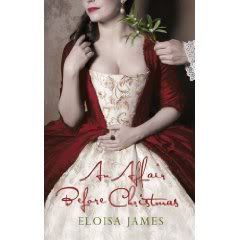
Alternate Title: Mrs. Hatelove, or, How I Learned to Stop Worrying and Love the Penis The Chick: Perdita, Duchess of Fletcher, a.k.a. "Poppy." After years of trying and failing to be the perfect duchess to the Duke of Fletcher, when he calls their marriage a sham in public, she decides she's had enough of being perfect. The Rub: Discovering her own person is nice and all - but her husband still loves her, and is so pretty. Can Poppy get over her fear of sex? Dream Casting: Kirsten Dunst.
The Dude: John, Duke of Fletcher, a.k.a. "Fletch." After four years of awkward sex and distance from Poppy, Fletch is tired of being unable to please his wife. The Rub: He changes his tune rather fast when Poppy deserts him - and allows his mother in law to play house in his ducal mansion. Dream Casting: Aidan Turner.
The Plot:
Poppy: I love you!
Fletch: I love you! *married*
Four Years Later
Poppy: I hate my husband! He expects me to do - weird things!
Jemma, Poppy's BFF: Weird things?
Poppy: YES! He *shudder* wants to give me pleasure and - eep! - be my own person!
Jemma: Wow, that .... fiend.
Fletch: I hate my wife! She obviously doesn't notice or appreciate me! Our marriage is a joke!
Crowd of Regency Gents: He badmouthed his wife! *GASP!* No man in Georgian England has EVER been unfaithful to his wife EVER!
Poppy: Okay, I'm done.
Fletch: What do you mean, done?
Poppy: I'm tired of trying and failing to live up to your ridiculously high standards of individuality, independence, healthy sexual mindset and affection! I'm leaving you and striking out on my own!
Fletch: *raises eyebrow*
Poppy: Oh! Guess I'm fixed then! Let's have sex!
Fletch: HOORAY!
Romance Convention Checklist 1 Orgasmless Wife
1 Seriously Sex-Starved Husband
1 "No Sex" Agreement Doomed to Failure
2 Cases of Cock-Fright
1 Screamingly Evil and Sexually Repressed Parent
1 Very Special Package Unwrapped Under a Fir Tree
1 Deadly Fever (Unsexy Variety)
1 Cross-Dressing Valet
1 Unintentional Tar & Feathering
The Word: When I read the first book in Eloisa James' Desperate Duchesses series, I had mixed opinions because although the book as a whole was vastly entertaining with Heyer-esque descriptions and banter (Jemma, in particular, reminded me of Fanny from These Old Shades - or was it the other way around?), the romance itself between Roberta and Damon ended up awkwardly abbreviated - I found they fell in love without a whole lot of development.
While the Holy Trinity of Jemma, Elijah, and Villiers are still present in An Affair Before Christmas, I'm happy to say that the central romance does get its due - but wow, is it strange.
An Affair Before Christmas uses Eloisa James' most trusted theme - the Marriage in Trouble. Poppy and Fletch married in Paris at Christmastime, deliriously in love. Four years later, however, little remains in common between them - and, as unpolitically-correct as this may seem, most of the problems are Poppy's fault. Or rather, Poppy's mother's fault.
Poppy's mum is a crazed harpy of a woman who, thanks to her own bitter resentment at being married to a mere mister instead of a peer, strictly raised her daughter according to her own ironclad rules of deportment, class distinction, fashion, and propriety so that Poppy could snag a Duke instead. She also imparted her own deep-seated terror and disgust of the penis to poor Poppy.
Thus, Poppy's spent four years living up to her mother's idea of the perfect Duchess: proper ladies don't encourage physical contact. Proper ladies don't bother their husbands with their own interests and feelings. And proper ladies never, ever enjoy sex. It's vulgar. Of course, poor deluded Poppy believes she does this all for Fletch's benefit, and has no idea why Fletch is perfectly miserable. Fletch is not only perfectly miserable, but incredibly horny - he's still very much in love with Poppy, but the fact that she doesn't enjoy his amorous attentions hurts him very deeply.
In a fit of sexual frustration, he tries flirting with a stranger at a party, only to be interrupted by his wife and her friends. Losing his temper, he rails about the barren state of their marriage in the middle of the party, humiliating Poppy. That's when our poor, precious, puddingheaded heroine snaps. She's tired of being a failure, tired of catering to Fletch's too-high standards and filthy sexual kinks (he wants sex *gasp!* on top of the bedcovers with the candles lit), and tired of working so hard for a man who obviously isn't satisfied with her and wants her to be someone she isn't. So she decides to leave Fletch and go live at Jemma, the Duchess of Beaumont's house, leaving her husband to the not-so-tender mercies of her criminally insane mother.
The one annoying part of this story is that it's all too clear that Fletch's "standards" and "kinks" aren't the problem at all - only Poppy's traumatizing upbringing. Eloisa James does a good job of showing us that it's not Poppy's fault, exactly - but most of the fixing of the relationship has to come from her development and transformation rather than Fletch's. An Affair Before Christmas is essentially Poppy's book. Most of the romance section of the book details how Poppy tries to become an independent person, nurture her own interests (she loves science, as it turns out), and establish her own boundaries.
She was a very difficult character to like, at least at first. She starts out so oblivious and repressed. She wails about how Fletch doesn't love her even though she refuses to tell him anything about her, just assuming he won't be interested. A lack of communication is definitely right up there with Poppy and Fletch's main problems. I'll admit, one of my biggest problems with the book was that I found it hard to believe that after four years, Fletch and Poppy still hadn't had a significant talk about their expectations and sexual desires. I understand that Poppy needed a good kick in the pants to finally explore herself as an independent person, but what was going on in those four years where they basically revealed nothing about each other?
Fletch, as a romance hero, is very charming and not an alpha male (Eloisa James tends to mostly avoid Alpha Males, to my everlasting gratitude), but his most obvious role in the novel is to act surprised (and eventually delighted) by Poppy's burgeoning personality, and resist the urge to club Poppy's mum to death with a giant phallic sculpture a laClockwork Orange. He's unabashedly in love with Poppy for the entire book, so there's no issue or revelation on that score.
However, he does undergo a subtle development that I quite enjoyed - at first, most of his frustrations come from the fact that he's not gettin' any. This leads to his flirtation with a few other women - he thinks the sex is what's missing from his marriage, rather than Poppy's wholehearted involvement. Once Poppy flees and her off-her-nutter-mother takes her place, Poppy's mum actually encourages Fletch to take a mistress, believing once he starts torturing another woman with his Trouser Snake of Evil, he'll only subject Poppy to the Dreaded Devil's Instrument when he absolutely has to. The separation only proves to Fletch that love can be independent of sex (although the two still go nicely together), to the point where his longing for Poppy's mere presence is so strong that he's willing to give up sex forever just to have her around. Awwww.....
Uh, meanwhile, Elijah is still Elijah and Jemma is still Jemma - although her constant, "Oh don't mind me I'm so scandalous and immoral and don't have a thought in my head except for chess and I'm TOTALLY not in love with my husband, la dee da" monologuing is becoming a bit grating. Villiers spends most of the novel in a delirious fever, which I suppose causes him to regret some of his Asshat behaviour, and more importantly he starts a will-they-or-won't-they romance with Charlotte Tatlock (a secondary character from Desperate Duchesses) that disappointingly takes a sharp left turn at the end - apparently when the author realizes that Villiers is her most flawed (read: interesting) character and thus must be kept from romantic bliss until the last four books are pumped out. Eh. The Holy Trinity were interesting enough, and this time around they didn't suck all the life from the central romance.
All in all, this novel contained all the gleeful period sparkle Eloisa James regularly brings to her romance, thankfully accompanied this time by a solid romance and enjoyable characters. While there were a few hitches - and, yes, I still found the heroine a wee bit irritating - it's still a good addition to the Desperate Duchesses series. B+