Thursday, April 05, 2012

"Not That Kind of Girl," by Siobhan Vivian

The Protagonist: Natalie Sterling. This year is her senior year, and she's determined to do the very best possible job by her school (as their ninth female student council president) and the girls she takes under her wing (her friends Autumn and Spencer).
Her Angst: Despite priding herself on being "the good girl" and "the smart girl," when her sanctimonious ways drive her best friend away, she starts making several less-than-good and -smart decisions.

The Secondary Cast:
Autumn: Natalie's best friend. Humiliated by a disgusting rumour in freshman year, Autumn was helped through the pain by Natalie, but now she wants more of a social life.

Spencer Biddle: A dance student who likes boys and what she can make them do. While she created the controversial "Rosstitutes" dance group, she's also involved with student council.

Connor Hughes: A shy, gentlemanly quarterback whose family owns a Christmas tree farm. Has a thing for Natalie.

Mike Domksi: Assclown of Epic Proportions. A jerky jock who likes to bully people who mess with him - particularly girls.

Ms. Bee: MOST PRETENTIOUSLY USELESS TEACHER EVER - a snobbish Professor Feminist who prefers sitting in judgment on female students to, uh, actually teaching them.

Angst Checklist:
  • Slut Shaming
  • False Rumours
  • Losing a Friendship
  • Secret Boyfriends
  • Pretentious Teachers
  • Double Standards
  • Feminism

The Word: Imagine Tracy Flick from Election and Rachel Berry from Glee, and you'll have Natalie Spencer, the protagonist of Not That Kind of Girl. Natalie is a volunteering, extra-curricular-loving overachiever who's in the running to become the student council president of the exclusive Ross Academy prep school - only the ninth girl to do so. She's got too many important things to do to waste her time at frivolous parties or pointless get-togethers with flirty jocks like Connor Hughes, and as a result, she doesn't have a lot of friends - in fact, she only has one: Autumn.

Autumn's reputation was ruined in freshman year when her boyfriend spread a pernicious rumour about her when she refused to put out. Natalie alone stuck by her side, and now that they're seniors, she's determined to help Autumn have the best year possible. However, Autumn is growing distant, and wants to hang out with other people and go to social events - even if it means fraternizing with the same people who turned their backs on her in freshman year. What can Natalie do to prevent Autumn from repeating her old mistakes?

At the same time, a girl Natalie used to babysit named Spencer Biddle is now a freshman at Ross Academy, and starts the school year off with a bang when she organizes a group of girls into a scandalous cheer team known as the Rosstitutes. Natalie doesn't understand - Spencer is clearly intelligent, confident and motivated, so why does she allow herself to be exploited by flashing her underwear and leading boys on? Clearly, Natalie needs to take this girl under her wing, along with Autumn, and teach them both how to respect themselves.

If you haven't already guessed by now, Natalie's not exactly an open-minded person, and her wings are not as capable as she thinks they are. Spencer, despite Natalie's good intentions, knows exactly what she wants out of life and what she's doing. Meanwhile, Natalie's disdain for Autumn's other friends masks a deep-seated insecurity that Autumn will abandon her for the social crowd. When her self-righteous moralizing goes too far and Autumn does just that, a heartbroken Natalie seeks comfort in a clandestine affair with cute quarterback Connor Hughes, and discovers for herself the blurry lines that persist in real-life morality.

Many YA authors, when dealing with a book with a central moral theme, give their protagonists a few flaws but tend to keep them open-minded in order to maintain reader sympathy - the negative and bigoted points of view generally come from secondary and supporting characters. In a ballsy choice, however, the bigoted, narrow-minded, condescending point of view is Natalie's, and she's the voice of the entire book.

Characterization-wise, Natalie Sterling is fascinating. While she is relatable (at least to me and my personal experiences with highschool), she is not a very likeable character, even by the book's end when she has her eventual come-to-nonslutshaming-Jesus moment.

On top of being judgmental, controlling, and manipulative, she is incredibly self-centred. Of course, this is totally in keeping with her character - she's an ambitious, goal-oriented loner who's used to organizing her life according to her own needs, so when her relationships with others fall apart (Spencer, Autumn, Connor), her reaction is always, "But what about me? Don't you see how you're hurting me? Don't you see how this is ALL-CONSUMING AND IMPORTANT TO MY LIFE?"

At the same time, the author cleverly uses Natalie's flawed POV to demonstrate how the culture of slut-shaming, at least among girls, springs from social insecurities. While Natalie continually defends Autumn against the cruel rumour her freshman boyfriend started, she always refers to the incident as "Autumn's mistake" and an example of Autumn's lapse in judgement, instead of her boyfriend's mistake and lapse in judgement. Natalie subconsciously blames Autumn for the incident because she wants to believe in the idea of the "Good" girl, the "Smart" girl - the idea that girls who are smart and good (i.e., girls like Natalie) will never have to worry about being taken advantage of.

Meanwhile, most of the secondary characters are strong, well-developed personalities who provide alternative voices to Natalie's shallow "make good decisions!" mantra. Spencer, in particular, was a nice surprise - a promiscuous, reckless girl with frank ideas about sex who is (gasp!) also smart, confident, and considerate of others. Autumn is also an excellent character - you understand her friendship with Natalie even as we see how Natalie's jealousy restricts her life. Connor is a bit of a puzzle for most of the novel, and I get that he's supposed to be, but by the end of it I still couldn't totally understand what he saw in Natalie that let him put up with the many, MANY cringe-inducing things she said to him (and to Autumn, AND to Spencer).

That being said, is this a perfect novel? Not really. The language, while very occasionally sublime (a girl in a pleated skirt bending over in front of a boy is described as a "ringing church bell"), is generally a little simplistic for my tastes, and I felt some of the characters acted younger than they actually were. I felt the novel pulled a few punches at the end, particularly when Natalie's social downfall is told instead of shown, and ultimately seems to have no lasting consequences. Otherwise, though, Not That Kind of Girl is a strong novel with an intriguing, flawed, frustrating heroine.
B.
You can purchase "Not That Kind of Girl" here.

Tuesday, April 03, 2012

"Dark Lover," by J.R. Ward

The Chick: Beth Randall. When a strange, dark, leather-clad man breaks into her apartment, the last thing she expects is to have hot monkey sex with him.
The Rub: Maybe the second last - she also discovers he has pointy teeth and five hot vampire brothers!
Dream Casting: Liv Tyler.

The Dude: Wrath, King of the Vampires. To honour his promise to a deceased friend, he seeks out his friend's half-vampire daughter to ease her through her coming transformation.
The Rub: He gets all warm and tingly around her - but his angst! If he settles down, he might actually have to take on all those responsibilities he's been shirking for centuries!
Dream Casting: Eric Bana.

The Plot:

Wrath: Surprise! You're going to be a vampire!

Beth: WTF! GET OUT OF MY APARTMENT!

Wrath: But I'm a sexy, angsty pain-filled vampire!

Beth: ...go on.

Wrath: And I have five brothers who are just as angsty as me!

Rhage: I bring the sex appeal!

Phury: I'll do your hair!

Zsadist: You'll want to fix me!

Tohrment: I'm full of pre-emptive angst because my hot wife is still alive!

Vishous: I bring homoerotic subtext!

Butch, Beth's Friend: What a coincidence! So do I!

Vishous: YAY! LET'S BE PLATONIC MAN-FRIENDS!

Butch: I CAN'T WAIT TO NOT MAKE OUT WITH YOU!

Wrath: OMG YOU GUYS THIS IS MY FREAKIN' NOVEL, GO AND BE NOT-GAY SOMEWHERE ELSE!

Vishous and Butch: *skipping away happily* ~*let's talk about baseball...*~

Beth: You were saying?

Wrath: Let's get hitched!

Beth: HOORAY!

Romance Convention Checklist
6 Orders of Piping-Hot Vampire Angst

1 Order of Piping-Hot Cop Angst

1 Pair of Wrap-Around Shades
1 Evil Karate Dojo

2 Accidental Cases of Forgot-the-Condom

1 Magical Transformation

1 Magical Aphrodisiac Vampire Doobie

1 Abused Ex-Wife

1 Secondary Romance between Abused Ex-Wife and Angsty Cop

1 Secondary Homoerotic Bromance between Angsty Cop and Hacker Vampire

The Word: I really must give J.R. Ward her due.

She has crafted one of the most enjoyably silly and spot-on parodies of vampire romances that I have ever read. It plays so close to the line that it can be read like the real thing, if that's your bag, but it's overlaid with just the right amount of cheese and exaggeration that people who are not normally fans of vampire paranormals (like me) are totally in on the joke.

The whole novel plays like a dark, twisted vampire parody of Snow White and the Seven Dwarfs - where a woman on the run is essentially adopted by a DudeGroup of inbred cannibal vampires who name themselves after incorrectly-spelled negative attributes.

Let me explain - this particular DudeGroup is the Black Dagger Brotherhood, a secret society of vampire warriors dedicated to protecting the slightly-less-secret society of vampire civilians.

The members of the Brotherhood are neatly introduced with all the pride and specificity of a new line of action figures. Each one comes with his own angst! Romantic Soulmate sold separately!

Wrath: He's the leader of the BDB, and the official King of the Vampires - presumably because he was the only one smart enough to spell his name correctly. However, he is visually impaired, so maybe someone else with a better grasp of English wrote it on his nametag for him. Likes: Black satin sheets, leather, ninja stars. Dislikes: Bright lights. Responsibility. His angst: He's been slacking off on the ol' Royal duties for 300 years because of his low self-esteem.

Vishous: The Hacker Vampire. Sports a goatee and a Mike Tyson-esque face tattoo. Casting: A sleazy Chris Evans. Likes: The Red Sox, hot cops named Butch, things he can do with his right hand. Dislikes: The Yankees, things he can do with his left hand. His Angst: A magical Left Hand of Doom that he must keep gloved.

Rhage:
The Hot Vampire - nicknamed "Hollywood." Described as a "sex legend." I suppose the name Hhumble was taken. Casting: Chris Hemsworth. Likes: Killing. Sex. Ladies. Not at the same time. Dislikes: Anything that does not involve killing, sex, and/or ladies. His Angst: Cursed to turn into a dragon when he's enRhaged.

Phury: The Fabulous Hair Vampire. Casting: Michael Bolton, circa 1991. Likes: Vidal Sassoon, Moroccan Oil, his twin brother Zsadist. Dislikes: Split ends, scrunchies, everything his twin brother Zsadist actually does. His Angst: Vow of celibacy! Woe!

Zsadist:
The "tortured" one, he is clearly the A.J. of the Backstreet Dagger Boys Brotherhood. Casting: Vin Diesel. Likes: Pain. Darkness. Terrorizing, torturing and possibly murdering women. Hitting that high F in "Defying Gravity" from the Wicked soundtrack. Dislikes: Women. Everything else, too - but especially women. His Angst: He was, um, literally tortured since infancy and is covered in scars.

Tohrment: The well-adjusted one! Nice, reasonable, easy on the eyes. His wife is awesome. Casting: Brian Austin Green. Likes: Rational arguments, and his wife Wellsie. Dislikes: Being called pussy-whipped. His Angst: Having a fabulous hot wife with a baby on the way more or less paints a Bull's-Eye for Fate on his ass - is he only two days away from retirement, too?

Darius: The Dead One. Bites it with a car bomb.

The whole group dynamic is a sharp riff off the Manly-Man-Pain stereotypes that tend to proliferate in DudeGroup romance series. There is absolutely no reason given for the ridiculous names that no other vampire has - and it can hardly be a coincidence that the one Brother in the Hood with a comparatively normal name is bumped off in the first chapter. They're all more or less Angst Archtypes hyped to 11 - Zsadist, in particular, takes the Done-Wrong-By-One-Woman-Therefore-ALL-Women-Are-The-Same trope so far he makes the average Judith McNaught hero look like a petticoated lesbian suffragette.

But beneath all the sweaty, angsty leather-coated muscle, there is a narrative! Before he's blasted to the Ann Rice Novel in the Sky, Darius (or Uhnlucky, as I like to call him) reveals to Wrath that he sired a daughter on a human woman 25 years ago. Thanks to her half-vampire heritage, she's due to undergo Fang Puberty very soon, and he asks Wrath to help her survive the transition with his pure vampire blood. Wrath, who has spent 300 years turning Commitment-Dodging into a science, refuses - but he feels differently after he's forced to collect his brother's remains with a dust buster.

Enter Beth, a perpetually sexually-harassed newspaper reporter. She's tasked with investigating a car bomb that went off outside a nightclub, but she's understandably distracted as she only barely escaped full-on sexual assault mere hours before. She's initially too shaken up to open up to Detective Brian "Butch" O'Neal, a human cop with Vampire-Sized Angst who is an acquaintance of hers - and Wrath certainly doesn't help when he pulls an Edward Cullen and gets caught sneaking into her apartment to see Darius' half-breed daughter for himself.

Forced to psychically sedate her and erase her memories, Wrath tries to Groundhog Day her and breaks into her apartment again, this time smoking a blunt of what I can only surmise is Secret Vampire Weed, which is intended to relax her into listening to reason. Unfortunately, it makes her uncontrollably horny instead - a common side effect in romance! - and they end up Doing It. Whoopsie!

It's not long before Beth's eyes are forcibly opened to the secrets of vampire society - as are Butch's, when he follows her because he suspects the enormous, tattooed, pierced, leather-clad, heavily armed men she now hangs out with are up to no good. Butch is easily the best part of the novel - he's nicely self-deprecating and the one male character who can communicate with a female character without dragging his knuckles across the floor and beating his chest. He's a little hyper-masculinized, too (his suspension from the force for police brutality is completely deserved!), but he makes up for it with his immediate bromance with fellow Sox fan Vishous, a pairing that generates enough homoerotic tension to fuel an armada of Disney cruise ships.

The Brotherhood, meanwhile, are opposed by an evil anti-vampire group with the wimpiest of possible names: the Lessening Society. Watch out! They're going to lessen you! They're not going to eradicate you, but they'll shave a little off the top! Enough so that you'll notice! Oh no!

But no, I'm being too harsh - the society is actually comprised of albino baby-powder-scented eunuchs. But threatening albino baby-powder-scented eunuchs! Ward very cleverly gives the villains attributes that are directly and exaggeratedly opposite of the descriptors stereotypically given to romantic heroes (who are typically dark-complexioned, musky-scented, and virile). Since there is no actual world-building reason given for why they smell like Johnson & Johnson, it seems apparent to me that this is a comedic choice for parody purposes.

As funny as they are, however, the Lessening Society serves more as a looming threat than an actual one. They seem to be trapped in the world of '80s films since their evil plans consist of recruiting boys into evil martial arts dojos. Most of the major baddie's (Mr. X) story arc involves him serving as an evil Mr. Miyagi to a young recruit, as he teaches him how to metaphorically wax on and off with paranormal villainy.

There is also a subplot with a Mad Vampire Scientist that is a little Jekyll and Hyde and a lot pointless.

When it all comes down to it, I suppose I am making a conscious choice to see this novel as a parody, because if it isn't, it really is a rather subpar paranormal. The worldbuilding is hit or miss - Wrath states that vampires feed on the blood of other vampires, not humans, and yet Zsadist frequently does and Mr. X catches vampires by attracting them with human blood. I also get iffy feminist vibes from the vampire culture's restrictive "protectiveness" towards the females of the species - why are there no Black Dagger sisters? I mean COME ON, no Bhitchy?

It's also easier to tolerate the Brothers' attitude towards violence and collateral damage when it's viewed through the lens of parody. Without it, the Brothers appear cruel, callous and bigoted (even Tohrment has a questionable scene where he threatens to rape Butch's significant other). And Wrath essentially abandons the wife he neglected and abused for centuries to the point where she's a shell of a person, for another woman and we're supposed to cheer and clap. If I didn't look at this novel as a take off of cliches that I despise, than I'd just plain despise it.

Honestly, I'm still pretty much immune to the Black Dagger Brotherhood's charms (in particular, Zsadist sounds so horrible and terrifying that I can't imagine how Ward would do his novel without retroactively neutering him first), but there are a host of other reviewers who are fans of the series, so if you're serious about giving this one a try, I would try searching for their reviews. In fact, if you are a fan of the series, do leave a comment below - and even drop a link to your own reviews!

As a Parody:
B

As a Serious Vampire Novel:
C-

Purchase Dark Lover here.

Sunday, April 01, 2012

The Weekly Wanting


Hey, folks! As part of my new focus on my blog, I'm starting a new regular event called the Weekly Wanting. Basically, every Sunday (or Monday, if I post a book review on Sunday), I'll highlight a couple of books I've discovered through other blogs or websites or bookstore/library browsing that caught my eye, either for their covers, their stories, or just because another book blog gave them SUCH a fabulous review!

For the inaugural post, we have:

The Miseducation of Cameron Post, by Emily M. Danforth.

Genre: YA

Why I Want It: The story!

I'd seen interesting reviews of it around the blogosphere, but I was especially drawn to it thanks to an excellent review by The Booksmugglers.

I've been getting more and more interested in YA stories with an LGBTQ bent, and this one (about a girl who discovers she's a lesbian in the late 80s and early 90s, and is sent to a repressive "conversion" school as a result) sounded really intriguing.


The List, by Siobhan Vivian.

Genre: YA.

Why I Want It: Strong feminist storyline - plus a great review!

I found this book thanks to the gals at Forever Young Adult. You really need to read the hilarious review for yourselves, but I was especially caught by how Poshdeluxe (the particular reviewer) said that this novel should basically be mandatory reading for all high school students, boys and girls alike.

Essentially, it's the story of how every year in this one high school, someone posts a list of the one hottest and one ugliest girl in every class, and how the eight girls who wind up on that list react to the news, in wildly different ways.

It sounded so good, that I actually went out and got Vivian's previous book, Not That Kind of Girl, from the library. I'll be reading it after Dark Lover.

Beguiling the Beauty, by Sherry Thomas.

Genre: Romance.

Why I Want It: It's Sherry Thomas, bitch!

No really. It's written by Sherry Thomas, which means lots of realistic angst, great female characters, and gorgeous gorgeous writing! By this point, she's pretty much an autobuy.

From what I can gather of the story, a wealthy Duke begins an affair with a gorgeous baroness while on an ocean liner - only she's so not who she says she is. And the secret's bound to get out. And they're both trapped on a boat. In the middle of the ocean. Sold!


Where It Began, by Ann Redisch Stampler

Genre: YA

Why I Want It: Excellent writing and great character voice.

Again, I found out about this book thanks to Forever Young Adult. Initially, the book's premise turned me off: a girl who winds up in a car accident with no memory of how it happened and subsequently makes a whole lot of bad decisions trying to win back a boy who doesn't really care about her? Yeah, I didn't enjoy that so much when I read it the first time with Forget You by Cee-Lo Green Jennifer Echols.

And yet, the review also included an excerpt, and the heroine's voice sounded so funny and self-deprecating, even though she's falling to pieces, that it called to mind the other Jennifer Echols book that I totally unequivocally loved.Link
What books are you guys excited about?

Saturday, March 31, 2012

Blog Renovations!

No! Don't click away! You HAVE come to the right place!

Yes, I'm still AnimeJune and this is still Gossamer Obsessions. But I decided I'd update the look. Why? Well, because while evaluating my life and goals, I decided I wanted to dedicate more time to my blog. It started out as just a personal thing - it was just something for me, something I did only for myself because I loved reading and venting about what I read.

But I've become part of such a wonderful blogger community and actually acquired a readership. Having this blog helped me strengthen as well as discover my writing strengths. This blog has come to mean a lot to me, and to my writing, so in my re-design, I wanted to:
  1. Make it cleaner and organized and
  2. Give it a personal flair. I wouldn't just pick a template that a hundred other people have also done - hence the lovely Banner, made with my God-given skills with Microsoft Paint and photos of my favourite books and tea cups.

For future blogging, I'm going to look into doing more content as well. Not just reviews - I mean, it'll still be mainly reviews, who am I kidding? But for books that are larger, reviews will be slower in coming, so I'm thinking of participating in memes and also having posts with my favourite bloggers and their blogs, as well as OMG I WANT THIS BOOK BECAUSE OF REASONS posts to get everyone all excited about reading!

What do you guys think of the redesign?

Friday, March 30, 2012

"The Fault In Our Stars," by John Green

The Protagonist: Hazel Grace Lancaster. Suffering from terminal cancer, she's on a new miracle drug that can't cure her, but may offer a few more years. But what's the point of a few more years if death is still inevitable?
Her Angst: The new boy in her Support Group, Augustus Waters, seems to really, really like her. Like immediately. But does she really want to be a tragedy in another person's life?
The Secondary Characters:
Augustus "Gus" Waters: In remission from osteosarcoma. Lives with parents who like to embroider uplifting catchphrases on pillows. Determined to enjoy all the simpler pleasures of existence - like asking out a girl he's known less than a day.

Isaac: Augustus and Hazel's mutual friend from Support Group. Suffering from a rare eye cancer that will eventually blind him.

Hazel's Mum: Stays home to take care of Hazel. Finds every occasion she can to get her family out to celebrate - Bastille day, Hazel's half birthday, Arbor Day.

Hazel's Dad: Loving and supportive, but tends to cry a lot.

Peter Van Houten: The author of Hazel's absolute favourite book, An Imperial Affliction. Lives in Amsterdam. May or may not be a pretentious assclown.

Lidewij: Peter Van Houten's assistant, and all-round superior kind of person.

Angst Checklist:
  • Death
  • Fear of Dying
  • Dealing with Cancer
  • Dealing with Grief
  • Pretentious Assclown Writers
  • Personal Identity
  • Literary Interpretation
  • Living in the Moment
The Word: So can a heart be bruised right after already being horribly bruised? Well, not entirely.
I was still in recovery from when Lauren Myracle punched me in the heart when I picked up The Fault In Our Stars by John Green in preparation for my town's chapter of the FYA Bookclub (I'm a keener!). And perhaps that was why, while I enjoyed this novel immensely and did tear up and sniffle by the end, even emitting a rather embarrassing, sorrowful whine, I didn't actually go as far down the mourning spectrum as to actually sob while reviewing it, as I did with Shine.

But that, perhaps, is due to what makes both books so interesting. Shine, on the surface, has a "happy" (or at least, positive) ending that is nevertheless built on a story of tragedy and ends with a heavy loss for the main characters. Conversely, The Fault in Our Stars is a story with a sad (negative) ending that is built on a story of defiant, insightful joy, with the remaining characters emerging enriched and irrevocably changed for the better on the other side.

Hazel Lancaster has been living under the expectation of death for three years, ever since she was diagnosed with terminal thyroid cancer at the age of thirteen. Thanks to a miracle drug, she's been granted a delay, but not a cure. Death has moved out of the immediate here-and-now, but still lingers on the edges of the foreseeable future, leaving Hazel in a kind of listless stasis. Her biggest fear is becoming an emotional "grenade" - a ticking time bomb whose death will only hurt the people who know her. She figures the fewer people she involves in her life, the less pain she'll inflict on the world with her inevitable death.

At her mother's insistence, she attends a bleak Support Group in the basement of a church, and that's where she meets Augustus Waters, a sexy teenage boy in remission from osteosarcoma who believes the opposite of what Hazel does - that people are obligated to leave the world better (or at least different!) then how they entered it. His experience with cancer taught him not to waste time - that same day, he indicates his attraction to Hazel and invites her over to his house to watch a movie. Hazel opens up enough to share her favourite book with him, and they both puzzle over its ambiguous ending. What follows is a beautiful, clever, achingly sweet and heartbreaking romance.

It's interesting to read how two different characters move at such different speeds. Augustus is all over the place, moving at the speed of light, practically vibrating in place as he jumps from idea to idea. Hazel is more hesitant, more introspective. She's very quickly drawn in by Augustus' intelligent humour (so similar to her own, and incredibly funny to read), but still - she doesn't want to be a grenade. She already has to live with being an impending tragedy in her parents' lives (and her relationship with them is so amazingly depicted). And yet, she's swept away by Augustus' energy. And who wouldn't be?

Reading this book brought to mind the other "cancer book" I recently read, I'm Not Her by Janet Gurtler, a book that, while not a bad book, was just relentlessly sad and depressing - which only highlights how strong and inventive The Fault in Our Stars turned out to be for taking such distressing subject matter and building it into a story of such joy and wit, as well as anger, frustration, and grief. By running the full gamut of emotions (not just the PC ones of sadness, bravery in the face of pain, and bereavement), John Green separates the characters from their illnesses. They're not cancer kids (particularly not the Lurlene McDaniel-esque, faultlessly brave and martyr-y capital-C Cancer Kids), they're kids - who happen to have cancer.

The identities these characters have apart from their illnesses is such an important theme in this book - Augustus even points out how the tragedy of cancer is how many of those afflicted with it just retreat from their lives until everything about them is about cancer. Augustus and Hazel's relationship operates in defiance of that - their friendship and romance brings out Hazel's wit and personality and passion for literature. As much as I adore Augustus, Hazel's journey is really the heart and soul of this book as she learns to find and enjoy the "smaller infinities" within the reality of a limited lifespan.

And as for the writing - well. I laughed out loud several times during this book, and the style manages to be both accessible and challenging, but challenging in the good way. Challenging in the way that makes you want to go out and find out about philosophy and science and Swedish hip-hop, not the challenging that makes you feel like a dirty, dirty Philistine. "You must read this much (holds up hand) Kierkegaard to understand this book!"

While The Fault In Our Stars did not bulldoze my heart like Shine did, it it gave it a good, solid whack, while at the same re-igniting my curiosity and joy for the world and all its craziness.
A

Wednesday, March 28, 2012

"Silent in the Grave," by Deanna Raybourn

The Corpse: Sir Edward Grey. Nice-looking. Pleasant at parties. Suffered from heart condition. Terrible head for wine - and for poisons.

The Gumshoes: Lady Julia Grey, nee March, Sir Edward's widow. Nicholas Brisbane, Swarthy Mystery Man of Sexual Tension.

The Suspects/Secondary Characters:
Sir Simon Grey: Edward's cousin. Slowly dying from same heart condition that afflicted Edward.

Aquinas: Julia and Edward's loyal Italian former-acrobat butler.

Magda: Julia's shifty Gypsy laundress.

Portia: Julia's lesbian older sister. Who owns a very flatulent pug.

Valerius: Julia's medically-minded younger brother. Who owns a very stolen Tower raven.

Renard: Edward's creepy French valet.

Doctor Griggs: Edward's patronizing and antisemitic family doctor.

The Word: "To say that I met Nicholas Brisbane over my husband's dead body is not entirely accurate. Edward, it should be noted, was still twitching upon the floor."

There's not much you can do wrong with opening lines like that. With a story set in 1886 London, Lady Julia Grey's husband, Sir Edward Grey, casts off his mortal coil after collapsing during a party. When private investigator Nicholas Brisbane informs Julia that her husband was in fear for his life and was likely murdered, she angrily dismisses his scandalous accusations. Her husband had no enemies, suffered from a debilitating heart condition since childhood, and his closest family doctor declared his death a natural one.

However, a year later, as Julia is on the cusp of coming out of mourning, she discovers an insidious death threat hidden amongst Edward's things and realizes Mr. Brisbane may have been right. She swiftly seeks to enlist his services, even though the odds of success, a year after the crime took place, are minimal. However, Julia soon learns that sleuthing can be a nasty job, everyone's got a dark secret, and that there is more to the mysterious Mr. Brisbane than meets the eye.

Lady Julia Grey is an engaging heroine. While she's very much a person of her time, and while extremely naive (at least at the start), she's open-minded and intelligent. I enjoyed that this novel was as much about Julia's journey of self-discovery as it was about who murdered her husband, if not more. A self-proclaimed "disappointingly ordinary" member of a prolific family renowned for its mad hatters, Julia's investigation helps her emerge completely from the gray life she led in the strained relationship of her marriage, and also leads her to discover her own propensity to deviate from convention.

Inferior authors would have taken the "eccentric large family" plot device and applied it to the narrative with all the discretion and grace of a shovel of hot manure, but Raybourn deftly weaves the Marches (Julia's family) into the background, to serve as an implicit indicator of Julia's background and behaviour rather than as cheap comic relief or sequel bait.

So what were the dislikes? Well, the pacing. The writing is very descriptive, lovingly so, and in Lady Julia's refreshingly witty and honest point of view. However, probably due to the historical setting, there is a lot of descriptio, and because of that, the investigation tends to move at a snail's pace. The writing style and Julia's observations are often interesting enough that I don't mind it.

However, there are a couple of times when this was just plain frustrating and I wanted Raybourn to get to the point. For instance, there's a scene where Julia and her brother race towards a Gypsy camp in London to intercept a dogged Nicholas Brisbane, a situation in which speed is of the utmost importance, lives are on the line, etc., only now Julia wants to slow down and enjoy the view and describe the children and the music and the smells and how interesting everything is. But lives are on the line. But we get to see Gypsies peddle horseflesh!

Other than that, however, Silent in the Grave is an excellent mystery with well-drawn characters, a marvellous historical setting, real humour and wit, and of course - a mysterious romantic hero in the figure of Mr. Brisbane to drum up enough sexual tension to fuel many more books (Silent in the Sanctuary is next).
B+

Sunday, March 25, 2012

"Ain't She Sweet?" by Susan Elizabeth Phillips

The Chick: Frances Elizabeth "Sugar Beth" Carey. Desperate for cash, when she inherits a mysterious painting from her deceased aunt, she high tails it back to her hometown of Parrish, Mississippi, where she was once Homecoming Queen.
The Rub: Unfortunately, too many people in Parrish remember her none-too-kind teenage antics and are all too willing to kick the queen now that she's down.
Dream Casting:
Elizabeth Banks.

The Dude: Colin Byrne. A teenage Sugar Beth had him fired from his teaching job and deported (!) when she accused him of sexual assault. Years later, he's now a successful author who's made Parrish his home.
The Rub: Now that Sugar Beth is back, he's determined to make sure she gets the payback she deserves - but what if she's more than the spoiled daddy's girl she used to be?Dream Casting: Richard Armitage.

The Plot:
15-Years Ago...

Sugar Beth: Hey, y'all, don't mind me. I'm just the prettiest, coolest, richest, luckiest girl in town and y'all are gonna kiss my ass for ever and ever, amen! Tee-hee!

Parrish, MI: Sure thing, Sugar Beth!

Present Day...

Colin: Now that Sugar Beth's back, I WILL HAVE MY REVENGE FOR BEING ACCUSED OF ASSAULT AND GETTING DEPORTED!

Winnie: I WILL HAVE MY REVENGE FOR BEING TORMENTED AND ABUSED!

Seawillows: WE WILL HAVE OUR REVENGE FOR BEING CRUELLY IGNORED BY HER RIGHT AFTER BOTH OF HER PARENTS HAD JUST DIED, HOW DARE SHE ABANDON US!

Colin: ... um, that's a little extreme.

Winnie: OMG! How dare you show kindness to a woman who did awful things as a teenager, instead of doing equally awful things back to her like the rest of us rational-minded, wealthy, professional adults! SHE'S GOT YOU UNDER HER EVIL SEX SPELL JUST LIKE MY HUSBAND!

Winnie's Husband: That's not even remotely close to true -

Winnie: STUFF IT! I'm walking out on you because I NEED A SUBPLOT.

Colin: YEAH WELL I LIKE BEING UNDER A SEX SPELL!

Sugar Beth: Awesome! I kind of like being with you too -- wait a minute! NO! YOU'VE GOT ME UNDER A MARRIAGE-AND-BABIES SPELL! HOW DARE YOU!

Colin: ...but it's a nice marriage and babies spell. Plus I'm rich and British. Really, what possible objection could you have?

Sugar Beth: Oh, alright FINE.

Colin: HOORAY!
Romance Convention Checklist

2 Awful Childhoods

2 Very Bad Dads (both deceased)

1 Token Rebellious Half-Niece

6 Bitchy Frenemies

1 Horrendous Prank

1 Unfaithful Basset Hound

1 Very Loving Husband (Deceased)

1 Rather Unnecessary Dead Wife

The Word: After reading Lauren Myracle's mesmerizing YA novel Shine, I didn't know what I could possibly read next that could compare. I was still very much in a sort of mourning - I still thought about the characters. I still do. Seriously, read that book.

But you should also read this book. I unwittingly made the best choice possible when I decided to go with one of my most reliable contemporary romance authors, Susan Elizabeth Phillips. I picked a book from an entirely different genre and tone from my last novel. As a result, I enjoyed myself immensely.

While Shine painted a resonant and extremely unflinching portrait of hardscrabble, drug-infested small town life - I still do kind of dig the cozy small town setting in literature. I think it's best to read books from both sides of that equation because I've seen both types of towns in my province and elsewhere. I'll read Lauren Myracle and Jennifer Echols for the bad side, Susan Elizabeth Phillips, Jennifer Crusie and Alice Hoffman for the good.

In this case, the town is Parrish, Mississipi, and at one time, Sugar Beth Carey was its queen. Scion of the richest man in town, she was gorgeous, popular, and nigh-untouchable, but also spoiled and cruel, particularly towards Winnie Davis, the school misfit. Parrish's most open and humiliating secret, Winnie Davis was Griffin Carey's other daughter, her mother his acknowledged mistress. Griffin Carey made no secret of how he preferred this family over his legal one, and Sugar Beth dedicated her high school years to taking out all of her daddy issues on Winnie's pride and self-esteem. She also had no qualms using her daddy's status to force everyone else to dance to her tune.

However, all this comes back to bite her in the ass in the present day when Sugar Beth, thrice-married, twice-widowed, once-divorced and now flat broke, creeps back into town to look for a painting her recently-diseased Aunt Tallulah bequeathed to her. Allegedly, it's an undiscovered painting from legendary artist Lincoln Ash, who was rumoured to have been Aunt Tallulah's tragic paramour. If it's authentic, Sugar Beth will be able to sell it for enough money to settle her personal affairs for good.

No one is particularly happy to see her back in town. Certainly not Winnie Davis, who married Sugar Beth's high school sweetheart Ryan Galantine and inherited the entire Carey fortune. Now she is the wealthy, respected social leader of Parrish, and while she longs to wreak some long-overdue vengeance on her high school tormentor, she's also terrified that Sugar Beth's return will reignite the torch Ryan held for her.

Certainly not the Seawillows, the Mean Girls clique Sugar Beth created, then abandoned when she went to college, who have now reformed with Winnie Galantine as their leader.

And certainly not Colin Byrne, the ridiculously pretentious young English teacher whose career was ruined when Sugar Beth leveled false accusations of sexual assault against him (yikes!), who is now a devastatingly sexy, rich and famous author who owns Sugar Beth's childhood home.

Colin, in fact, spearheads the Kick Sugar Beth's Ass effort, since she sets up shop in the carriage house Aunt Tallulah owned next to Colin's property. However, the Sugar Beth he meets isn't the same spoiled girl he remembers: while repentant for her past misbehaviour, she's a stronger, tougher woman, and unwilling take bullshit or back down from a fight.

As you can tell, this novel has enough drama to choke a llama, and I loved every page of it.

I loved Sugar Beth. What a fabulous heroine! She knows she screwed up, she's more than willing to take her justified licks, but she refuses to be a punching bag for people who've had nothing better to do than stew over how bad high school was (*cough*WINNIE*cough*). While the novel doesn't sugarcoat what Sugar Beth did (and she truly did get away with some horrendous behaviour in high school), I sympathized with her way more than Winnie or the Seawillows, especially after a teeth-grindingly painful scene where they team up against her at a dinner party. It's easier for me to understand awful, immature and hurtful behaviour coming from a distraught 18-year-old than from a group of professional, respected 33-year-old adult women who should know better.

But, little by little, Sugar Beth soldiers on and starts to earn the grudging respect and forgiveness of those around her, starting with Colin. Their wisecracks and chemistry sizzle and spark, a perfect mixture of Colin's dry British wit and Sugar Beth's Southern self-deprecation. As well, there are subplots and secondary characters galore, excellent backstories, and a comical dog character that doesn't make me want to watch the scene of Old Yeller getting shot on Youtube.

The only slightly burnt piece on this delicious peach pie of a novel is, perhaps, Colin's sad backstory of a wife who committed suicide. It's an extremely serious subject that's insultingly treated as a token Sad Backstory that had no real, demonstrated impact on Colin's life that wasn't already explained by the other events in his past. It really didn't need to be in there, and felt tacked on.

Otherwise, though, this is a highly entertaining, dramatic and romantic read from the ever-dependable but never predictable Susan Elizabeth Phillips.
A+

Saturday, March 24, 2012

"Shine," by Lauren Myracle

The Protagonist: 16-year-old Cat. When a dear friend of hers is brutally gay-bashed into a coma, she decides it's time to come out of her self-imposed exile and try to find out who's responsible.
Her Angst: Due to her own issues, she hasn't spoken to a lot of her classmates or former friends in years, and many of them now have dark secrets they don't want to share.

Secondary Cast:
Patrick Truman: Cat's childhood friend who now lies in a coma after a horrific assault. Fell in with the Redneck Posse after he and Cat drifted apart.

Christian: Cat's older brother, whom she's barely been able to speak to since he betrayed her when he needed her most.

Tommy Lawson: The town rich boy, and the leader of the Redneck Posse. A giant homophobic tool, and responsible for the pain Cat's had to hide for years.

Beef: A member of the Redneck Posse who stood up for Patrick. His future is still a giant question mark ever since a blown knee robbed him of a wrestling scholarship.

Bailee-Ann: Beef's girlfriend, and Cat's former best friend.

Aunt Tildy: Christian and Cat's surrogate mother ever since their own mother died and their father dedicated himself to the bottle. Rigid and responsible but unwilling to rock the boat.

Robert: Bailee-Ann's 11-year-old brother, who suffers from Fetal Alcohol Syndrome. This makes him hyper and talkative - especially about other people's secrets.

Angst Checklist (New feature for YA Reviews):

  • Homophobia
  • Sexual Assault
  • Drug use
  • Poverty
  • Family ties
  • Depression
  • Overcoming one's circumstances
  • Social Anxiety
The Word: A young gay teen is beaten, strung up to a gasoline pump, with the nozzle jammed down his throat. The words, "Suck this, faggot" are scrawled on his chest. His name is Patrick Truman, and the members of his small, backwoods North Carolina town of Black Creek are shocked, of course. So terrible. What a tragedy. But the sheriff seems convinced the now-comatose Patrick was attacked by a rowdy group of out-of-towners and doesn't feel the need to investigate further.

Due to her own trauma, our heroine, Cat, let her close friendship with Patrick fall by the wayside years ago, but this tragedy spurs her to find out who's really responsible for this hate crime. To do that, however, she will have to come out of her shell, make peace with her ghosts, and confront the friends, family members, and enemies she left behind when she retreated from the world due to her own pain.

This book was - how can I be objective? A miracle. A masterpiece. It got under my skin and dug tunnels into my heart, flooding me with empathy for everyone in this book. Readers, I read this book in 24 hours. I started it at 5:50 in the morning before I had to get up - I almost called in sick to work. I sneaked peeks while I was on the phone. I counted the seconds to every coffee break. Read it at stoplights. I fell asleep reading it (thankfully didn't lose my page!) and I finished it at 6:00 am the following day.

It's not only a mystery. It's a coming of age novel. A healing novel. Cat is forced back into the world to find justice for her friend, even though it's not the easiest transition. As you can guess, Black Creek is not a squeaky-clean wholesome-livin' small town full of kooky characters (and I'm so guilty of loving that trope, you have no idea). It's a backwoods, narrow-minded community rife with poverty, drop outs, and drugs. Cat's investigations drag her through filth and hope, as she uncovers the secrets in the lives of her friends, family, and peers, all of whom are fighting for a piece of sunlight, just enough to see them out of the darkness of their lives.

I loved the heroine. I loved how she dug her way out of her own pain and saved herself while saving Patrick. I loved that she was naive, and frightened, and emotional, but willing to ask the hard questions and learn the difficult answers anyway. I loved that she doesn't just come out, solve the crime, and retreat back to her world of books - during her investigations, she works to rebuild a lot of burnt bridges, even if it means accepting the flaws in other people.

If I had to pick one thing that didn't quite fit (at least at first), it would have to be the character of Jason, who ends up being a love interest for Cat. At first it felt odd - because the central story doesn't really require Cat to have a love interest and it felt tacked on, like she had to have one because it's a YA novel. But even this aspect is eventually explored, and by the end of the novel made perfect sense.

I put this book down with an ache. An ache for the characters - for Cat and, perhaps especially, for the antagonist. I won't spoil anything, but I cried for this character, quite literally, which is a rarity for me. It doesn't mean I haven't been moved, emotionally, by books (I wouldn't read, otherwise), but it's very rare for it to affect me so emotionally that I have a physical reaction to it. I believe I've only physically cried over four books - I Love You Forever by Robert Munsch, Bridge to Terabithia by Katherine Paterson, Otherworld: Mountain of Black Glass by Tad Williams, and this book.

I put this book down with an ache for a beautiful novel, now finished, knowing I would have read something else, something that would inevitably be different. But one joy remained - the opportunity to write a review of this profound, emotional, heartbreaking, time-devouring novel, and get you all to read it.
A+

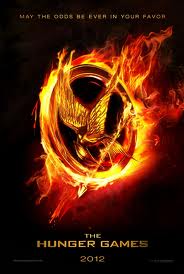
"The Hunger Games" - Film Review and Analysis

Well, I saw The Hunger Games - in a full theatre, popcorn and pop, the whole nine yards. To review it, however, I feel like I have to review each aspect of the film individually, because even 12 hours later, it's still hard for me to examine the film as an artistic creation independent from the novel itself. When you watch a film that's based on a book you've read and enjoyed, you're not exploring, you're waiting - for that one scene, and then the scene after that, and then for that special character's appearance. I watched this movie differently because I'd read the book and remembered it so well. WARNING: FILM AND BOOK SPOILERS AHEAD.

The Adaptation:
Honestly? Full marks. In terms of overall accuracy to the source material and conveying it in an understandable way, the film did an excellent job. What pieces were cut from the film, like Madge's character or Peeta's prosthetic leg, made sense and didn't detract or distract from overall story (honestly, Madge never had a huge impact on the series, and Peeta's fake leg is much like Luke Skywalker's fake hand - mentioned once and then never again). What scenes were added contributed to the story and to its place as first in a series (more on that later). A.

The Katniss:
Also very good, which surprised me, since Jennifer Lawrence was easily the weakest link in the acting chain in X-Men: Gay Mutants In Love. Lawrence underacts and plays it close to the vest, which is in keeping with Katniss' character. Katniss isn't a screamer or a maker of speeches - she's private, she's introverted, and she's focused. Jennifer Lawrence embodied her perfectly. A

The Peeta:
I'm sorry, Josh Hutcherson, but you are really, really silly. He's not a terrible actor, and Hutcherson does a decent job when he's playing it up for the Capitol audience, but his serious acting just can't compete. It's not even about how he overacts, but more like the tone he sets with his character is off. He acts like someone in a far less perilous situation - like a person who wants to win the Boston Marathon, whatever it takes, not someone who's fighting to the death with a bunch of other kids. The audience actually erupted into unintentional laughter at the scene where Katniss finds him all painted up at the stream. C

The Gale:
He's pretty and not annoying, which is all that was asked of him for this movie, really. A

The Supporting Cast:
A mixed bunch, to be honest. Haymitch was decent but not outstanding. Elizabeth Banks channeled Bette Midler from Hocus Pocus for most of the movie as Effie Trinket. Lenny Kravitz was excellent as Cinna - but his portrayal also raised a lot of questions about Cinna's character and his motivations, and why he works for the Hunger Games if he clearly doesn't support them.

Every other kid in the Hunger Games (especially the Careers) was terrible. I mean, just awful. Similar to Peeta, they didn't set the right tone. There's a scene where the Careers are chasing Katniss, and the way they acted wasn't menacing at all. It felt like they were going to corner her and tease her about her jacket and throw beer cans at her like a bunch of hicks. They were acting like bullies when they should have been acting like predators. When they murder the tribute who starts a fire (off-screen, of course), afterward, they're giggling and snarking like they TP'd her house. With a film already hampered by a PG-13 rating, it was up to them to pick up the slack and inject some legitimate menace and suspense into the film, and they failed royally. C-

The Love Triangle:
One of my favourite aspects of the novel was the ambiguity surrounding Peeta and Katniss' relationship. We think Peeta is faking his love for Katniss for audience support, so Katniss goes along with it, maybe starting to feel the real thing, if only a little. The big discovery at the end of the novel is that Peeta's feelings for Katniss are actually real, and his heart is broken when he realizes that Katniss is still very much ambivalent. Granted, the subtlety of their relationship would be tough to translate onto the big screen, but the film still failed on that score, and I think it failed especially with the viewers who haven't read the books, because at least we know what they're trying to do.

Firstly - the whole background between Katniss and Peeta with the burned bread was really clumsily filmed. In a recurring flashback, it's raining, Peeta sees a sad Katniss lying against a tree and throws a loaf of bread at her. It lands in a puddle. She never picks it up. Discussing this past in the cave, she never mentions her family's starvation or how important that bread was to her, just that Peeta gave it to her. While the books' readers would understand, I think the new viewers would just be puzzled as to why this was such a big deal.

Secondly, while the film tries to imply that Katniss is fabricating feelings for Peeta, it's not followed up on, and there's no scene at the end where it's established her feelings for Peeta are not exactly on the level. I understand to some extent that that is a subtlety that just can't be easily filmed, and it looks like they're jettisoning that whole ambiguity and going for the full I-Love-Two-Guys thing that only slowly developed in the books. But while I may understand it, I don't like it. C.

The Extra Stuff:
By extra stuff, I mainly mean, the introduction of other points of view. While books can have a first person POV, movies are pretty much entirely 3rd person, with a few incredibly rare, artsy exceptions. With The Hunger Games I loved it - it still followed the story, but it gave us something new to look at and think about. My biggest frustration with the Hunger Games trilogy is how, with Katniss' limited POV, we end up missing a lot of the important rebel actions, but here we get a taste of it, in five important ways:
  1. Seneca Crane's scenes. As the Games go on, we see the head Gamemaker managing the game with his crew. He's a producer, and he's producing a television event, and it's fascinating to watch how he manipulates the board and why. I would have liked to have seen how he censored or tampered with Tribute footage to ensure it toed the Capitol party line, but it was still interesting watching the very Truman Show-esque manipulation going on behind the curtain.
  2. The commentators: Toby Jones and Stanley Tucci set a very satirical tone as cheery commentators for the Hunger Games, and serve as an incredibly effective Exposition Device to explain things to the newbies without intruding on the story.
  3. Haymitch's wheelin' and dealin': Haymitch manages to smuggle in medicine and food to Katniss during the Hunger Games. We never see how he does this in the novel - again, Katniss' limited POV. In the movie, however, we see him negotiating, making alliances and coming out of his shell in order to get Katniss and Peeta the items they need. This was great - we actually got to see how Haymitch could interact and sell himself to other people, and just how far he was willing to go out of his comfort zone to help his tributes.
  4. The rebellion scene from District 11: While we don't get the bread-gift scene in the film, we do watch as members of District 11 lash out against the Peacekeepers in a violent uprising as a reaction to Rue's death. I don't think this happened in the books, but it was an excellent early indication of the significance of Katniss' actions. I was also caught by the racial symbolism - both District 11 tributes are black, and District 11 is shown to have a higher black population than the Capitol or District 12, and the Peacekeepers eventually put down the rebellion with high-pressure water hoses. I wondered if this was an intentional invocation of Civil Rights Movement imagery.
  5. President Snow. In the first novel, he's more an impending menace than an actual one, but here, we get scenes of him voicing his concerns about Katniss and the significance of keeping the districts under control. I liked this - it gives Katniss' actions a far-reaching impact that connects the Hunger Games to the rest of the series. It also clearly establishes Snow as the central antagonist even if he only meets Katniss is person once.
Overall, these scenes were an A.

The Violence:

Of course, the hardest aspect of this adaption is doubtless the violence. It is a story about teenagers killing each other - but it is also a story written for and aimed at teens. Recently, outrage erupted over the MPAA's decision to give the anti-bullying documentary Bully an R-rating for profanity - thereby barring the film from the very audience (school-age adolescents) it had been expressly intended for.

So I get the PG-13 rating for The Hunger Games - it would hardly be fair to adapt a film from a book beloved by teens and make them unable to see it without their parents. However, let's just say I'm really glad the MPAA has never had anything to do with books.

In this case director Gary Ross uses the tried-and-true Walt Disney method for gruesomely dispatching villains in a family-friendly way: imply, imply, imply. During the scenes of the most intense violence (the initial scene at the Cornucopia) he uses lightning-quick flash-cuts and a jittering camera to give us a sense of violence without showing it. We see weapons slash down, we see the resulting corpses and splashes of corn-syrup blood, but we don't see any of the blows or weapons connect with an actual person.

For the most part, it works. The Cornucopia scene was based on mad chaos and mob mentality in the novel, and the swift, jagged editing of the film's scene gives us that tone while disguising the gore at the same time. The three most disturbing deaths in the actual movie are:
  • Glimmer's death by Tracker Jackers (props to the Foley artists for mastering the perfect sound effects as Katniss pries the bow out of her enemy's swollen, dead fist)
  • Rue's death by spear (the only time we actually see the bloody results of a weapon connecting)
  • Random Tribute's neck-snapping at the hands of Cato (this by far got the biggest audience reaction)
These choices in deaths are interesting because - in both the novel and film - these deaths aren't just gory, they're important. Glimmer is the first person to actually die as a result of Katniss' actions. Rue is the most tragic death, the death of an innocent. Random Tribute's death very clearly established Cato's character and bloodthirstiness as Katniss' most immediate antagonist. The fact that these deaths got special attention definitely shows an understanding of the source material.

With one noticeable and disappointing exception: Cato's death (which is one of the most disturbing in the novel) is reduced to a pale rip-off of Scar's demise from The Lion King. I get that they couldn't show him getting slowly eaten over a nine-hour period, but his death is meant to have an impact, and they could have found a better way to imply that then with the very quick and superficial death scene he does receive. He also gets an out-of-character moment of self-awareness before his death that didn't ring true and seemed manipulative. B+

Overall? I had a good time. I don't think it was my favourite movie of all time, but it was interesting and it did the novel justice. Even now, I still can't pin down how it works as an independent movie, so I don't think I can review it just as a film. What do you guys think? Comments are open!

Wednesday, March 21, 2012

"Tiger Eye," by Marjorie Liu

The Chick: Delilah "Dela" Reese. A skilled metalsmith vacationing in Beijing, she is talked into buying a mysterious riddlebox at a local market by a mysterious old woman.
The Rub: The box releases a powerful warrior cursed to serve her every whim, but can he protect her from assailants who also want the box - or who have a personal vendetta against Dela herself?
Dream Casting: A younger Gwyneth Paltrow.

The Dude: Hari. A tiger shapeshifter cursed into eternal servitude by an evil Magi, he is bound to Dela until the end of her days, regardless of either of their wishes.
The Rub: While Dela is kind to him, his experience tells him it's only a matter of time before the temptation to command him grows too great.
Dream Casting: A younger Keanu Reeves with flashy highlights.

The Plot:

Wise Old Chinese Woman: Buy this mysterious box!

Dela: Sure! What could possibly go wrong?

Hari: *poof!*

Dela: SWEET!

Hari: I am cursed to serve you hand and foot, shall I commence sexual stimulation while wearing an expression of total and profound disgust?

Dela: Wow, not so sweet.

Assassin: Die, oh tiny blond one!

Hari: Here, I'll defend you!

Dela: Oh no, let me defend you! For as a seven foot tall trained warrior with 2000 years of experience, you are far more susceptible to pain and injury than an unarmed blonde woman!

Hari: After 2000 years of torment, your insane and unreasonable Mary Sue Martyr tendencies are strangely appealing!

Dela: Let's get out of China!

In America...

Three Hot Sequel Baits: Hey Dela! Let us protect and cherish you, in a totally platonic and angsty way!

Hari: I am totally cool with this - they are clearly destined for future novels.

Dela: SWEET!

Hot Sequel Baits: Someone's trying to kill you - because someone used one of your artsy knives to kill a child!

Dela: WHAT?! Someone used a SHARP METAL BLADE that I fashioned into an item EXPRESSLY DESIGNED FOR CUTTING AND STABBING THINGS to do just THAT? My world is falling apart!

Antagonist #1: *kills self*

Hari: Well that was easy!

Antagonist #2: *gets eaten*

Dela: Yay! More time for love scenes!

Antagonist #3: Despite having no build up or true motivations and only sporadic appearances throughout the novel, it turns out I'm your big bad! Watch as I tell instead of show you what happened to me because I'm obviously just a narrative plot device whose motivations remain pretty sketchy!

Dela: *kills herself, thereby killing villain, achieving Martyrdom Singularity*

Hari: Good thing I have Last Minute Never Explained Resurrection Powers!

Dela: *revived* HOORAY!

Romance Convention Checklist:

1 McGuffin Curse

2 Suspense Subplots

1 Fiddler BFF

3 Shapeshifters

1 Evil Magi

2 Dead Gang Leaders

1 Use of The "Love Fixes Everything" Cure-All

3 Pieces of Hot, Angsty Sequel Bait

The Word: It's always interesting when one finds a favourite author, because no matter how awesome an author and some of their books are, everyone has their bad days. All books aren't created equal. It's even more interesting when it comes to evaluating a favourite author's series, and how the quality degrades or evolves from the first book onward.

I started on the eighth book of Marjorie M. Liu's Dirk & Steele series, then moved on to the ninth. They were both excellent paranormal romances, and this comes from a gal who does not often enjoy paranormals. So I thought I would see where the series started, and went to the very beginning with Tiger Eye, and was intrigued with the result.

Dela Reese, an artist with the psychic ability to manipulate metal, is vacationing in China when an old woman convinces her to purchase a mysterious, beautiful riddle box. Soon after, she is attacked by a malevolent stranger but she escapes. Back in her hotel room, she manages to open the box and is astounded when a super-hot, 7-foot-tall man-genie with awesome highlights appears.

Okay, so he's not technically a genie, just a tiger shapeshifter (hence his crazy striped hair) cursed by an evil Magi to serve whomever opens his box, but that's close enough. Hari has endured 2000 years of torment as a slave, bodyguard, hired killer, and very reluctant lover to a parade of cruel, bloodthirsty masters, and he expects Dela to be no different.

Dela, however, is appalled at Hari's curse and all-but-literally clasps the poor, tormented mankitty to her bosom. All bosom-clasping is put on hold when another mysterious assailant tries to kill Dela - with a dagger she herself designed. With Hari's help, they escape, and Dela calls her pals at Dirk & Steele (the world's only Secret Magical People Detective Agency) to help them out of this jam.

I'll be honest and flat-out say that Tiger Eye was not to my taste. It had an interesting setting, a solid mystery, and beautiful writing, but dull characters and superficial characterization. Dela just plain annoyed me. I felt I was being told she was a tough, independent, smart character while being shown that she was a naive, inexplicably innocent and easily-bruised Mary Sue whose only flaw is Caring Too Much. When she learns that one of the weapons she forged was actually used in a crime, she acts all appalled and surprised - while I kept thinking, if you hate violence so much, WHY DO YOU MAKE WEAPONS FOR A LIVING? There are a MILLION other things you could do, artistically, with metal!

I also felt her romance with Hari was very simplistic. She is literally the only person who has ever been kind to Hari in the entire 2000 years of his imprisonment, and before you know it love bounds in on heavy tiger feet and they're both perfectly in sync by the halfway mark. The attraction is very much of the "you are pure kindness and light," "you are pure bravery and sacrifice bound up in angsty pain I will heal with my pure kindness and light" variety. Again, it's not badly written, it's just not to my taste at all.

It makes the rest of the book pretty dull in terms of romantic development. What relationship obstacles they have seem token and easily brushed aside. Ultimately, they're too busy fending off assassins and bantering with the Three Sequel Baits (three hot dudes from Dirk & Steele who are friends with Dela) to really worry at or build on their relationship past It's True Love. As for fantasy elements, they're okay but the flaws show here and there - mostly in the presentation of the novel's main antagonist, a cartoonish, sketchily-drawn villain.

What interests me about my reaction to Tiger Eye is that it seemed, to me, to be very conventional. While the language reveals burgeoning amounts of the linguistic grace Liu would put to good use in later books, the use of language and the plotting and the development of the romance was very derivative, and even cheesy. All the hallmarks of a standard paranormal starter are there - copious amounts of exposition, hot super-powered angsty manfriends fated for their own sequels, obvious plot threads left tantalizingly dangling by novel's end.

But when I think about it, it makes sense. An established, successful author can take more risks, be more creative and defy more conventions because she already has a demonstrated regular readership. Someone just starting out with a series would still be required to be original and creative (of course!), but I think maybe they're expected to follow the more established "rules" of what's popular and desired in their genre because they're just starting out, and have to hook an entirely new pool of readers who have no prior experience with them.

Take it from me, though, when I say that her series has nowhere to go but up from Tiger Eye.
B-

Sunday, March 18, 2012

Re-Read Review: "Five Quarters of the Orange," by Joanne Harris

The Protagonist: Framboise Simon, nee Dartigen. For six years she's been living under her married name in the same small village she was forced to leave as a child under tragic circumstances.
The Rub: When greedy relatives threaten to expose her true identity to the villagers, she's forced to revisit the events that led to her exile, with the help of a cryptic diary/recipe book written by her harsh, neglectful, but ultimately inscrutable mother.

The Secondary Cast:
Mirabelle Dartigen: A war widow left to raise three wild children. Uncommunicative, stern, harsh, and yet not unloving, she suffers from terrible migraines and blackouts.

Cassis: Framboise's older brother. He introduces her to the German soldiers exchanging information for black market merchandise, and it's his son and daughter-in-law who harangue the older Framboise to hand over the album.

Reine-Claude: Framboise's beautiful older sister. She has a serious crush on Tomas Liebnitz, but being a pretty, docile girl in a German-occupied town comes with its own hazards.

Paul Hourias: Framboise's shy, constant, stuttering friend - both when she's young, and when she's old. As older people, he becomes her ally against a slick huckster trying to scare away her business.

Yannick: Cassis' son, and Framboise's nephew. Owns a restaurant with Laure that isn't doing well - he hopes that his grandmother's album of recipes and secrets will improve their fortunes.

Laure: Yannick's awful wife - desperate to revive her career, she'll go to any lengths to take the album for herself, and she's not afraid to play dirty.

Tomas Liebnitz: A charming, amoral German soldier who operates a blackmail scheme in Les Laveuses in order to secure better conditions for himself and his friends.

The Word: It's been some years since I last read this book. It was a Christmas gift from my Nana, back when I was immature enough to resent being gifted with literary fiction because I saw it as an attempt to "improve me" and get me read "grown-up books" that weren't fantasy, science fiction, or romance. I always read them but they usually came off like University-assigned reading - frequently pleasant but rarely strong enough to penetrate through to my true interest. However, I remember enjoying it enough to keep it on my shelf.

When I was older, however, I discovered and read Gentlemen and Players by the same author, and was absolutely blown away. Truly, its cover is pinned to the small corner of my mind where "The Classics" are, reserved for the books that weren't just good, but transcended good. The Holy Grails for which every reader keeps reading. So I impulsively decided to re-read Five Quarters of the Orange to see if it measured up.

Five Quarters operates within two stories and time periods - one takes place in the present day, where the elderly, widowed Framboise operates a small, but successful gourmet restaurant in her small childhood village of Les Laveuses. She works under her married name, hoping no one will recognize her as the daughter of the infamous Mirabelle Dartigen, a woman held responsible for a horrific tragedy that occurred there 55 years ago. The only clues to what really happened lie in Framboise's own memory and an album of recipes and secrets her mother bequeathed to her upon her death. However, Framboise's nephew and his appalling wife want to use the album to further their own careers, and Framboise must re-examine the events of the past and her mother's closely-held secrets.

The second story takes place the summer before the tragedy, with a nine-year-old Framboise and her siblings Cassis and Reine-Claude learning to adapt to their mother's migraines and erratic behaviour now that their father is dead. It's World War II, and Les Laveuses is under German occupation. Desperate to tag along and be included in her older siblings' adventures, Framboise finds herself involved in a seemingly harmless arrangement with a charming and rebellious German soldier.

Honestly, the setting drew me in more than the characters. Joanne Harris is very like Alice Hoffman in this way - the setting of Les Laveuses is as much a character as anyone else in the story. Due to their mother's illness and general bad temper, Framboise and her siblings spend most of their time as far away from the house as possible, running in the woods, fishing in the river, picking berries and mushrooms and sharing secrets up in the tree house. When they are in the house, we get mouthwatering depictions of their mother's cooking, which is the one true legacy she managed to pass on to Framboise.

In the modern story, the picturesque village setting is tainted by the forced addition of modernity, as a boisterous and hostile fast-food chain sets up across from Framboise's quiet eatery and starts (intentionally?) scaring away business.

Character-wise, the older Framboise, steeped in memory and regret and hindsight, was more understandable to me than the younger Framboise. The nine-year-old character is very believable, to be sure, but a lot of her story emerges due to her childish cruelty. Realizing her mother smells oranges before the pending arrival of a migraine, Framboise starts smuggling the fruit into the house (even going so far as to sneak pieces of orange peel into her mother's pillow) so that she can spend more time outside without supervision while her mother is bedridden. This increased freedom sets up the story and creates a devastating and fascinating ripple effect that the older Framboise discovers while going through her mother's album, but if you know anyone who is prone to migraines or chronic pain you will not like the younger Framboise one bit.

Again, though, much like Alice Hoffman, Joanne Harris knows how to balance tragedy with joy, with her beautiful writing. Even though the events during the German Occupation irrevocably changed and damaged Framboise's life, there is room and more for some happiness and meaning to seep back in. Life goes on, and while her mother's album helps Framboise understand the hard, enigmatic woman who was her mother, it also helps her better understand her own life and priorities.
While it didn't have the same life-destroying awesomeness of Gentlemen and Players, Five Quarters of the Orange is still an excellent book, full of secrets, gorgeous description, delicious recipes (I want to try the one for raspberry liquor!) and a great story.
A

Monday, March 12, 2012

"On the Way to the Wedding," by Julia Quinn

The Chick: Lady Lucinda Abernathy. The plainer friend of the beautiful, accomplished Hermione Watson, Lucy's used to being overlooked, so she has no problem helping Gregory Bridgerton win Hermione's hand away from an unsuitable paramour.
The Rub: Lucy has no problem, that is, until she starts to fall in love with Gregory in the process.
Dream Casting: Laura Carmichael.

The Dude: Gregory Bridgerton. He's always known that he'll be able to identify his One True Love on sight - and he does! It's Hermione Watson!
The Rub: But what's a man to do when his One True Love doesn't return his feelings? Get help from her BFF - her surprisingly witty, kind, graceful, lovely BFF...
Dream Casting: Charlie Cox.

The Plot:

Gregory: Some day my prince - er, princess will come, someday I'll find my love...

Shaft of Light: *falls on Hermione Watson*

Hermione: Why, hello -

Gregory: A DREAM IS A WISH YOUR HEART MAKES.

Hermione: Cool. I'mma go talk to anyone else as far away from you as I can get.

Gregory: *heart crushed*

Lucy: Easy, tiger. Let me give you a few tips.

Gregory: Okay!

Lucy and Gregory: *love training montage*

Hermione: Hey, guess what! I just got compromised by Lucy's brother so now I'm heading offstage since I've rendered myself irrelevant to the storyline! Byyyyyeeeee!

Gregory: ARE YOU FREAKING KIDDING ME? I suddenly want to make out with a random person in a jealous rage!

Lucy: I like the sound of that!

Gregory and Lucy: *le kiss*

Lucy: BTW I'm secretly in love with you. But I'm ten minutes late for my evil-uncle-arranged marriage to my future gay husband! Ta, darling!

Gregory: Wow, now I'm secretly in love with you. Back off, evil uncle and future gay husband!

Evil Uncle and Future Gay Husband, respectively: Cool.

Lucy: HOORAY!

Romance Convention Checklist

1 Missed Love At First Sight

1 Evil Uncle

1 Daaaaark Secret

1 Use of Bondage (non-sexy variety)

1 Secret Gay Fiance

1 Raging Annoyance of a Little Sister (GO AWAY, HYACINTH)

1 Love of Bacon
The Word: Before we move on to the body of the review, let's have a little Bridgerton Recap:

Book 1: Ah-Ah-Ah-Ah-Ah, Eh-Eh-Eh-Eh-Eh, Oh-Oh-Oh-Oh-ee-Oh, Duke Is Stutterin'.
Bridgerton: Daphne
Grade: B+
Pros: Angst, nice heroine. Cons: Hero's motivations are sketchy at best.

Book 2: "I Like My Women the Way I Like My Father - COVERED IN BEES!"
Bridgerton: Anthony
Grade: A-
Pros: Excellent use of themes, better use of story structure. Cons: Beautiful heroine who refuses to believe she is beautiful - a turn-off for me.

Book 3: An Offer from a Gentleman (my favourite in the series)
Bridgerton: Benedict
Grade: A
Pros: Subtle beta hero, lovely fairy tale premise. Cons: Benedict's mum is okay letting her son's mistress serve her daughters? Really?

Book 4: Rakish McCryingOnTheInside and Penelope NosyGossip-BodyIssues.
Bridgerton: Colin
Grade: B
Pros: Good humour, interesting conflict. Cons: Lame pay-off for over-hyped Bridgerton character. Heroine is too cutesy.

Book 5: How To Terrify Your Family, Seduce a Man and Tame His Demon-Spawn Children, All In Three Easy Steps.
Bridgerton: Eloise
Grade: B-
Pros: Interesting hero and hero issues, relateable (somewhat) heroine. Cons: While relateable, heroine is still ANNOYING beyond all reason. Also: demon-spawn children.

Book 6: My Best Friend's Girl
Bridgerton: Francesca
Grade: B+
Pros: Friends-to-lovers conflict, believable love-at-first sight story. Cons: Wishy-washy heroine.

Book 7: Don't Read this One, or, How a Crazy Manic Pixie Dream Girl Gets Everything She Wants While Everyone Works Around her Crazy.
Bridgerton: Hyacinth
Grade: C-
Pros: It's written in grammatically-correct English. Cons: You'll want to set the heroine on fire.

So On The Way To the Wedding already begins on a high note for the simple fact that it's not Hyacinth's book (although *sigh* she does make a number of ill-advised appearances). As well, Hyacinth's book and the comments of my friendly Tweeples lowered my expectations to such an ebb that I was actually pleasantly surprised by this novel. While it's still not Julia Quinn's best (that remains An Offer from a Gentleman) it is a far lovelier tale than Hyacinth's hot mess of a tale.

Gregory, the youngest Bridgerton son, has always believed in true love - how could he not? Lightning already struck 7 times in his family, so it's reasonable to assume it could happen an 8th time. He's convinced that he'll immediately know The One on sight, and until that time he's content to live a privileged, irresponsible, rootless existence eating sandwiches at his siblings' fancy parties.

It is at one such house party that he meets The One: Hermione Watson, the darling of the ton. However, despite Gregory's determined advances, Hermione - gasp! - doesn't appear to share his feelings. However, he gains an ally in Hermione's (slightly plainer) BFF Lucy Abernathy. Lucy is a veteran observer of the various types of "true love" crushed by Hermione's innocent indifference. Having recently discovered Hermione's inappropriate fondness for her father's secretary, Lucy is now quite invested in herding Hermione's heart towards a more socially-equal subject, and she agrees to help Gregory win Hermione's hand in marriage.

Of course, nothing does go according to plan in a Julia Quinn novel. Thankfully, Quinn saves the histrionic drama for the third act and builds the first and second on the layered, believable protagonists and their (thankfully!) angstless blossoming romance. Lucy is a wonderful heroine. Rational, ordered and pragmatic (perhaps a little too much for her own good), her romantic and sexual awakening is sweet and realistic. Despite her growing love for Gregory, she needs to build and develop her own needs and desires and priorities before she's able to reach out and take a risk.

Gregory's character is more subtle. He was never really much of a presence in the earlier books - he was usually a child or away at Eton. In fact, both he and Francesca feel like the Odd Bridgertons Out, simply because so many of their siblings (including *sigh* Hyacinth) make a point of popping in and out of each other's books, whereas they do not - Francesca, in fact, is never referenced again after her own book. But Gregory actually feels like the Odd Bridgerton - born ten years after the youngest of his brothers, he never had the close brofest Anthony, Benedict, and Colin had. And his upbringing (realistic for 19th century England) kept him from wholly connecting with his sisters as well.

While his character, as a whole, left less of an impact on me than Lucy, the motivations for his personality and lifestyle are sound, believable, and surprisingly undramatic - and I always appreciate well-adjusted characters whose foibles are simply theirs, and not a result of a traumatic accident or shady past.

That being said, the third act does veer a little into Crazytown, but on the whole, it's a pleasant drive to Crazytown. The pressure (however silly and far-fetched the dramatic "twist" is) puts the character development both Gregory and Lucy have undergone to excellent use and their reactions to their predicament are entertaining and romantic (for the most part - Gregory loses points for a stunt involving hand restraints and a toilet).

On the whole, however, On the Way to the Wedding is a surprisingly quiet note to end an eight-book series on. Unlike most other romance series, Julia Quinn did not save the last book for the angstiest, darkest, or most mysterious character. She doesn't reveal any shocking revelations about the Bridgerton family. In fact, most of the Bridgertons keep their happily-wedded noses out of this story (barring the occasional throwaway reference) a fact for which I am very grateful. I'm not sure exactly why, except for his age, Gregory was left for last. Either way, it was a perfectly pleasant novel, and a nice addition to an overall entertaining series.
B+