Sunday, October 27, 2013

"To Have and To Hold," By Patricia Gaffney (Penguin Reissue)

The Chick: Rachel Wade. A convict who's just been released from a ten-year prison sentence for the murder of her abusive husband.
The Rub: She's saved from returning to jail when she's hired by a local viscount - who has seduction in mind even as he holds her freedom in his hands.
Dream Casting: Anne Hathaway.

The Dude: Sebastian Verlaine, Viscount D'Aubrey. A bored and debauched viscount who's looking for a challenge, any challenge, to amuse him out of his apathy.
The Rub: When he encounters an emotionally frozen woman charged with the murder of her husband, he sets out to untangle her secrets for his own entertainment - until he realizes he's far out of his league.
Dream Casting: Jake Gyllenhaal.

The Plot: 

Sebastian: I'm bored.

Local Magistrates: Oh hey look, we're about to send a convicted murderess back to prison because the convicted murderess job market is in a freefall these days.

Sebastian: SOLD! ... I mean hired.

Rachel: ....

Sebastian: I hope you like sex! Because we're totally going to have that at some point!

Rachel: Fine.

Sebastian: I totally mean it! Because I love sex. And you have to do it or I'll fire you!

Rachel: *shrug*

Sebastian and Rachel: *nonconsensual funtimes*

Sebastian: ....that was less fun than I expected.

Sebastian's Douche Bros: 'S'up dude! Let's shag girls and get wasted! Whooooooooo!

Sebastian: OMG I am a terrible person who's accomplished nothing with my life! *falls into depression*

Rachel: For pete's sake, snap out of it.

Sebastian: But now I love you! For reals! And I will prove it with puppies and sexy baths and fully consensual lovemaking!

Evil Conspirators: Too bad Rachel's going back to prison!

Sebastian: LIKE HELL SHE IS!

Random Character From a Previous Novel: Hey look guys, a random letter that completely excuses Rachel of any wrongdoing!

Sebastian: Let's get married!

Rachel: Okay! Yes!

Sebastian: HOORAY!

Vine Review

Romance Convention Checklist:

  • 1 Bored Little Rich Boy
  • 1 Strong-Yet-Damaged Heroine
  • 1 Bitch Maid
  • 3 Asshole Friends
  • 1 Puppy Gift
  • 1 Very Bad Husband (Deceased)
  • 1 Spurned Mistress
  • 1 Incestuous Sister out of Freakin' Nowhere
  • 1 Sexy Bath


The Word: I've spoken up about rape in romance before. I do not like it Sam I Am, I do not like Rape Eggs and Ham. I do not like it in McNaught, nor in this Bonnie Vanak I got.

But ... I'd heard a lot about Patricia Gaffney's To Have and To Hold, a classic romance from the '90s that's recently been reissued in eBook form. However, several reviewers that I trust (or at least whose reviews are enjoyable and comprehensive) reviewed it positively, despite its controversial plot line that has the hero raping the heroine. After finding out it was on sale from Kobo, I nabbed it and decided to see for myself.

And, you guys, I loved this book. Even with the rape scene and the hero's behaviour towards the heroine in the beginning. I'm normally someone who despises abusive heroes and rapes in romance - so why did I still enjoy this novel to the extent that I did? And moreover, how did I still buy the romance between Sebastian and Rachel?

Well, I think one difference is that the narrative does not support the hero's actions at all. At the beginning of the novel, Sebastian is very clearly a jaded, cynical, selfish and manipulative cad. Growing bored with his luxurious life, he turns to debauchery and mind games to entertain himself. When he drunkenly agrees to serve as a magistrate to the village on his property, he hears the case of Rachel Wade, a woman picked up for vagrancy. Even better - she's only just been released from a 10 year prison sentence for murdering her husband a week into their marriage.

Intrigued by Mrs. Wade's indifferent numbness to the world around her (especially the prospect of being sent back to jail for the "crime" of not finding work), he hires her on as his housekeeper in order to toy with her implacability and eventually seduce her.

I was able to tolerate this plotline because the narrative refuses to frame any of these actions in a positive light. Sebastian is a cruel child with a stick and Rachel is the anthill he's eager to poke in order to see how its insides work. The narrative never ascribes any secret selfless meanings to Sebastian's choices, or offers up any Abusive Childhoods to blame for his failings. Moreover - the heroine is fully aware of what Sebastian intends, even though she knows her employment with him is the only thing keeping her from returning to prison.

And, yes, he rapes her. Whitney My Love portrayed Whitney's rape as a punishment that Clayton took a wee bit too far because he's Just Such An Overwhelmingly Passionate Manly Man. The Lady and the Libertine enforced the idea that it wasn't rape because the Hero Had a Secret Heart of Gold and also the Heroine Liked It. In THATH, however, it is clearly depicted as rape - despite the fact that it's not violent and Rachel physically acquiesces. It's an intense and interestingly written scene, because it's so clear that while Rachel physically capitulates to save her job, she mentally, emotionally, and spiritually resists Sebastian's attempts to get under her skin.

The reason I could tolerate Sebastian's behaviour is that his horribleness is the point of the story and something he learns to recognize as his character develops. Sebastian's attempts to play at being evil help him realize what evil really is as he discovers more about Rachel's past, as he finds out there is nothing he can do to her that she hasn't already endured, survived, and recovered from. As a result, while he pursues Rachel to find out more about her - he only finds out more about himself, and it's not pretty. Sebastian's epiphany (i.e. that he's a shitful person) is a mesmerizing scene that makes the entire book. For the rest of the novel, Sebastian struggles to pull himself out of the jaded rut he's found himself in and defeat his boredom by pursuing meaning, rather than distraction.

And Rachel - wow Rachel. She is such an amazing and complex character. When we first meet her, she is a bare husk of a person, pared down to the essential drive of surviving in the moment. There is no past, there is no future, there is only existence - but as she spends more days in freedom, she slowly expands the limits of her perception.

I loved the parallels between Sebastian's and Rachel's development: they both struggle to break free from their habitual ways of thinking. Of course, Sebastian's limited life is due only to his own selfish indulgence whereas Rachel's was forced upon her (and the "mystery" of who really killed her husband ... isn't really a mystery), but they both have to break free of their comfort zones and I appreciated how their characterization dovetailed.

And really, Patricia Gaffney's writing is exquisite. She has a gift for cutting into her characters' thoughts and intentions and picking them apart with careful thoroughness - and I think that's how I could never truly hate Sebastian. Because I knew him too well, and I could see how hard he tried to change in the second half of the novel.

There are probably lots of people who still won't like this novel because of the rape element, and they are more then entitled to. The first half of the novel is meant to be excruciating - and your enjoyment of the novel hinges on how well the second half convinces you that things can be different.

For me, the brutally objective portrayal of Sebastian in the first half, coupled with the gorgeous writing and characterization in the second half, sold me on this novel, and on Patricia Gaffney's awesomeness. It's refreshing to find awesome new romance authors while I'm still struggling with my apathy with the genre.
A+

Friday, October 25, 2013

The 167-Page Drop: "The Postmistress," by Sarah Blake

So - why did I pick this book?

Good question. It had an oh-so-fancy literary-ficion title, and that so classy old-fashioned-looking cover, with its crinkled paper and faded, dried rose!

It lured me in with an interesting time period (1941) and a drama-proof setting (small town Massachusetts and London) and the promise of secrets and, presumably, a postmistress who does something interesting.

Ha! Lies.

The 40-year-old postmistress in question (whose name I have already forgotten) starts the book off in fantastically creepy form by going to her gyno to have him check her, uh, PO box and write a doctor's note declaring her virginity. She has a crush on Harry Vale, a regular visitor to the post office in their tiny town of Franklin, MA, and is convinced that all men prefer to have their women's hymen-status notarized.

Her doctor is royally creeped out by this, but her move inexplicably works. Hooray! This is the most original and interesting thing to happen in this whole novel!

In the same town, a young orphaned woman (whose name I've also forgotten!) moves in with her new husband, Will Fitch, who is the town's new doctor (not the virginity-officiating one). Unfortunately, thanks to Daddy Issues, Dr. Fitch has an incurable case of Mangst (Man-Angst) and when a patient dies in his care, he abandons his wife like a selfish asshole to volunteer his services to the victims of the London Blitz. In London. While his friendless, orphaned, pregnant wife is left to wallow in her misery back home. What a prince.

There he meets Frankie Bard, an American journalist in London who works for BBC radio, broadcasting stories of London's suffering across the Atlantic in an effort to galvanize the United States into joining World War II.

And that's about it. Although the historical details are well developed and the writing is gorgeous, there is little to no plot. I found myself halfway through the novel, still somehow convinced that I was reading the introduction, still waiting for the inciting incident to happen. By more than halfway through, all the events still seemed so unconnected, so unimportant, and so boring.

I wouldn't say it was a terrible novel (I did learn some new things about the Blitz, and how legitimately awful it must have been for the people living in London during it), but honestly, historical details and pretty words mean less than nothing if there isn't a solid plot or story to hang them on. Or at least a story that occurs before the 167 page mark.

Return to sender!
DNF

Monday, October 21, 2013

"Trial By Desire," by Courtney Milan (Harlequin, 2010)

The Chick: Lady Kathleen Carhart. While hiding beneath the guise of a flaky society lady, she secretly saves women from their abusive husbands.
The Rub: Her estranged husband unexpectedly returns - right when she's hiding the battered wife of one of his bros.
Dream Casting: Rose McIver.

The Dude: Lord Ned Carhart. A young aristocrat who went to India to atone for his feckless youth and gain control over his depressive moods.
The Rub: He's back in town, but his wife threatens his tightly-held control over his emotions.
Dream Casting: Tom Mison.

The Plot: 

Kate: Now that we're married, can we have sexytimes now?

Ned: NOPE SORRY, MY MANFEELINGS TELL ME I HAVE TO GO TO INDIA KTHXBAI.

Three Years Later

Ned: Sup. I'm back. What's with the cold shoulder? I abandoned you for three years, refuse to have sex with you or touch you, and ignore everything you actually say because I'm only thinking of your comfort.

Kate: You're a moron. *hies off to save ladies*

Ned: Wow! You save ladies for a living! Clearly I've come in at just the right time to do everything for you and save everyone because I'm a dude!

Kate: I am inexplicably unoffended by this. Proceed!

Day: *is saved*

Ned: Oh bee tee dubs, I have depression but I've decided to trust you now because I feel like it.

Kate: Awesome! Happy ending time!

Ned: HOORAY!

Romance Convention Checklist
  • 1 Estranged Married Couple
  • 1 Super-Capable Heroine
  • 1 Hiding-His-Damage Hero
  • 1 Mental Illness
  • 1 Malfunctioning Pistol
  • 1 Abusive Misogynist Villain
  • 1 Twitchy Cart Horse
The Word: This was an interesting novel to read because there was an enormous gap between how much I loved the heroine - and how incredibly annoyed I was with the hero.

The novel opens with our hero, Ned (who we previously met in Milan's debut novel Proof by Seduction) abandoning his wife of three months to battle his personal demons in India. 

His abandonment devastates his new bride, Kate, and leaves her with a whole host of trust issues and a burning desire to prove to herself that she's more than just a wife to be laid aside like an accessory. So ... she becomes a Battered Woman Saver, secretly using her wealth and status to spirit away abused wives and give them new lives and identities in America.

For reals. Her newest case is her friend, Louisa, Countess of Harcroft. Her husband, the Earl of Harcroft, is a vicious abuser who has already started threatening their infant son, Jeremy. Louisa's husband's high rank and her baby being his heir make this Kate's toughest case yet, and she can't afford to make a mistake.

So, of course, this is when Ned decides to make his glorious return - three years after deserting his wife to fart around in India. And did I mention he and Harcroft used to be bros? Kate (who is hiding Louisa and her baby on her property) obviously can't afford to trust Ned with her secret. 

I was consistently infuriated by Ned in this novel. We're clearly meant to empathize with him more than Kate because, as we soon learn, he suffers from bouts of terrifying clinical depression. Which sucks because, well, it's the 19th century and people hadn't even identified it as an illness yet, much less developed treatment for it.

I tried to empathize with Ned, really I did. I understood his dedication to physical activity and why he was constantly challenging himself and creating intentionally uncomfortable environments in order to keep himself mentally alert. I also understand that depression is something that only the sufferer can really deal with. Unfortunately, the bulk of his condition more or less translates into the common hero angst of, "I can't be near the heroine because she makes me feel the powerful Man Feels that are too manly for her delicate female sensibilities!"

His own capacity for empathy is breathtakingly shallow. He shows up after three years and spends much of the first half of the novel befuddled at Kate's anger with his past absence and present refusal to do the nasty. Can't she tell that he's only protecting her from his Big Bad Man Feelings? Can't she tell, magically, that he's doing all of this for her own good?

I understand that the running emotional subplot of this novel is Ned's realization that Kate is her own awesome heroine, doesn't need rescuing from him and that he doesn't have to be Big Strong Hero Ned around her, but he never really loses that condescending vibe - especially with his patronizing attempts to emotionally manipulate her into trusting him.

Kate, on the other hand, is pretty freakin' awesome. She's a gallivanting Lady Batman who saves abused women while hiding her true identity beneath the veneer of an airhead debutante. Of course, the downside of that veneer is that even the people close to her believe she's too delicate and flighty to participate in intellectual discussions, and her loneliness is starting to consume her. I loved her character and her conflict and also her refusal to put up with Ned's ridiculous angst.

All in all, Trial By Desire is kind of a middling novel - it's got a good set-up with a strong heroine, but a condescending and oblivious hero coupled with inconsistent pacing and a strangely anticlimactic ending.
C+

Thursday, October 17, 2013

"Fire with Fire," by Jenny Han and Siobhan Vivian (SimonTeen, 2013)

Our Protagonists:

Lillia: Since winning Homecoming Queen, she now has to weather the brunt of her frenemy Rennie's anger - and now her friends want her to go after Rennie's crush Reeve to score two revenge birds with one stone.

Kat: College applications are coming up, so this girl from the wrong side of the island will have to clean up her act if she wants to get into Oberlin.

Mary: While watching Reeve suffer after the events of Homecoming feels good, she worries that she'll never be fully able to recover from what he did to her. Does this mean more revenge is required?

Secondary Protagonists:

Rennie: While temporarily ousted from the top of the Popular Girl Heap, she refuses to take her de-crowning lying down. And first on her Shit List is her former BFF Lillia.

Alex: A pretty decent, super-rich and super-hot guy who has an enormous heart-on for Lillia - but might have a side-crush on Kat. Drama!

Reeve: Jar Island's resident Bad Boy refuses to slow down - even after breaking his leg during Homecoming. But he may not be as confident (nor as remorseless) as he seems.

Bette: Mary's artistic aunt, with whom she lives on Jar Island. She's started acting strangely - burning strange candles and casting spells.

Angst Checklist:
  • The consequences of revenge
  • The eternal appeal of Bad Boys
  • Mental Illness
  • TREACHERY
  • Fake Relationships That Become Real Relationships
  • College Applications
  • Dealing with Grief
  • Rape
  • Female Friendships
  • Forgiveness
  • Paranormal Twists!
The Word: In Siobhan Vivian and Jenny Han's utterly addictive and enjoyable Burn for Burn, our heroines Lillia, Kat, and Mary sought vengeance against their high school tormenters. By the end of the novel, they'd managed to rob Mean Girl Rennie of the Homecoming Queen crown, lace bad boy Reeve's drink with liquid Ecstasy, and destroy a good portion of the gym when Mary unexpectedly pulled a Carrie.

However, there's no rest for the revenging. Reeve ruined Mary's life when they were kids, but even though he's now lost his football career and his college scholarships thanks to his drugged-out accident at Homecoming, he refuses to acknowledge any remorse for the pain that he's caused. Then Mary discovers a surprising secret: Reeve's got a crush on Lillia. 

Mary and Kat concoct the perfect plan - Lillia will seduce Reeve, win his heart, and then smash it into a million pieces. However, the more time Lillia spends with Reeve, the more she discovers he's not (entirely) the total asshat he appears to be. Rennie, however, has now turned against her former BFF Lillia, and doesn't hesitate to make her new hostility known. 

Revenge is still an important part of the novel, but in Fire with Fire, the focus is more on the consequences of vengeance and on moving on from the pettiness of high school. Kat and Lillia are looking at colleges now, and as they prep for their admissions essays and extracurriculars, the teenage conflicts of yore seem relatively small potatoes. Mary, meanwhile, has to contend with the psychic powers (for reals) she unleashed at Homecoming, new powers that may or may not be connected to her aunt Bette's increasingly irrational behaviour. While the "twist" is pretty easy to guess, the hints and nudges are integrated well into the story and contribute to a pretty spectacular climax.

Fire with Fire isn't really a paranormal YA, though - it's more a contemporary YA....with a light paranormal glaze? It's more about female friendships and growing up and moving on from crappy experiences. All three protagonists have tragedies in their backgrounds that they don't know how to move on from (Lillia's rape, Kat's dead mother, Mary's suicide attempt) and those parallel nicely with the high school crimes they're working so hard to avenge.

Fire with Fire, I'm happy to note, loses none of its momentum from Burn for Burn. It's equally heartfelt, funny, insightful, and crazy-addictive as our three heroines pursue their friendship beyond mere co-avenger status, develop crushes on boys (of both the right and wrong kind), and wonder about their respective futures. I love all three heroines - they're each so different, so interesting, and bring their own dynamic to the trio.

Narrative-wise, Fire doesn't really stand on its own, but it's not meant to. It reads more like an extension of Burn for Burn, and I think all three books (including the finale, Ashes to Ashes) are meant to be structured as a single enormous story broken into three pieces. Fire maintains nearly flawless pacing as it ramps up the excitement and tension from the first novel, while also introducing new themes and characters. It's a fluffy guilty revenge-y pleasure - but with substance. And forethought. And awesomeness.

In case I haven't made this clear enough already, I adored Fire with Fire. A lot. As much as (if not more than) Burn for Burn. I cannot recommend this series enough. Awesome heroines. Deep themes. Delicious soapiness with interesting commentary. Also, psychic powers.

....how long do I have to wait for Ashes to Ashes?
A+

Saturday, October 12, 2013

"In This House of Brede," by Rumer Godden (2005, Loyola Press - originally 1969)

Our Protagonist: Phillipa Talbot, recently Dame Phillipa of Brede.
Her Angst: After forty-two years of being a free-thinking, powerful and successful careerwoman, can she truly fit in with the humble poverty of monastery life?

Secondary Characters:

Abbess Catherine: The newly elected leader of the monastery who discovers that along with inheriting the previous abbess' duties, she's also inheriting the possibly disastrous consequences of the previous abbess' mistakes.

Dame Agnes: A traditional, scholarly sister who distrusts Phillipa's vocation and thinks she won't last as a nun.

Dame Cicely: A recent novice with a gorgeous voice and a surprisingly powerful vocation - but how long can she keep up such perfect devotion?

Dame Veronica: A melodramatic, prideful, spiteful, and all-round terrible nun. Essentially the worst.

The Word: When I announced that I was reading In This House of Brede, one of my followers complimented me on my eclectic reading style. Well, in this instance, don't thank me - thank my mother. This is one of her absolute favourite books and a yearly re-read during Lent, so I finally decided to read it and see what all the fuss was about.

What plot there is centres (mostly) around Dame Phillipa - a woman who discovers her religious vocation at forty-two and leaves behind a brilliant career and an office full of dumbfounded employees to become a humble postulant in Brede, an English monastery. There, she is both welcomed and viewed with suspicion - how well will she be able to adapt when her fellow novices are 18 or 19 years old?

Plot isn't really too important in In This House Of Brede - most of the novel is comprised of loosely-connected episodes that help to illuminate and examine the everyday life of Benedictine nuns - as well as the vocations, doubts, conflicts, and joys involved in their lifestyle. Dame Phillipa is only one of a host of wonderful women whose stories we get to explore.

And honestly? It's surprisingly addictive and enlightening. Most of the conflict is internal, but everyone involved (with maybe one exception) is such a genuinely good person. However, they're nuns, not saints - capable of cattiness, pride, deception, and spite. The novel examines the difficulty of pursuing a vocation despite doubt and family opposition, the stresses of restrictive communal living (which can even result in romantic feelings), and how best to balance worldly needs against spiritual needs. More than anything, In This House of Brede delves into the "use" of monastic life - how "useful" is it, to lock oneself away from the world to pray?

Godden writes with a conversational word-on-the-street style that frequently bundles and compares various opinions at once. It can sometimes get convoluted with the way it jumps back and forth in time and quotes numerous different people (the prologue is particularly tangled), but once you grow accustomed to the writing style, it creates such a detailed and multifaceted view of a lifestyle that is frequently stereotyped but rarely understood.

That being said, if you're not religious, will you still be able to enjoy House of Brede? I'd like to say yes, tentatively - the way learning anything new about a rarely-explored way of life can be enjoyable. However, if you actively dislike religion or religious aspects in fiction then House of Brede will obviously not be the book for you.

However, if you've ever been curious about how cloistered nuns live, I doubt you'll find a better novel than In This House of Brede.
A

Sunday, October 06, 2013

September Round-Up!

September was a weird month for me. I didn't read as much as I wanted to - in hindsight, I think my decision to recap some awesome shows turned into a much more time-consuming endeavour than I'd anticipated, and it kept me from reading and blogging about books as much as I had wanted to. And this is a book blog (primarily). So less recapping, more reading from now on!

*September Winner*
Fangirl, by Rainbow Rowell. YA, Contemporary. A
Pros: Lively and relateable heroine. Great examination of creative process. Hilarious skewering of fandoms. Cons: A wee bit on the long side. Love interest is great - but maybe a little too perfect?

*September Dud*
The Burning Sky, by Sherry Thomas. YA, Fantasy. D
Pros: Interesting concept. Cons: Utterly cliched execution, Mary Sue heroine, implausible set up, lacklustre magical worldbuilding. 


*Best of the Rest*

The 5th Wave, by Rick Yancy. YA, Science Fiction. A-
Pros: Fantastic heroine, strong concept, interesting themes, entertaining romance. Cons: Plot is a bit unfocused, too much depressing navel-gazing.

Rose Under Fire, by Elizabeth Wein. YA, Historical. B+
Pros: Well-written, great themes and use of storytelling. Cons: Emotionally distancing.

One Perfect Rose, by Mary Jo Putney. Romance, Historical. B
Pros: Protagonists are refreshingly reasonable, happy people. Cons: Cliche-laden. Silly ghost ending.

Saturday, October 05, 2013

"Thieftaker," by D.B. Jackson (Tor, 2012)

The Corpse: Jennifer Berson. The young daughter of one of Boston's wealthiest citizens, she's found dead in an alley after an anti-Parliament riot.

The Gumshoe: Ethan Kaille, professional thieftaker and semi-secret conjurer.

The Suspects/Secondary Characters:

Abner Berson: Jennifer's father, and the head of one of Boston's most prominent families.

Cyrus Derne: Jennifer's fiance, who can't explain his whereabouts during her murder.

Mister Trevor Pell: A young minister with spellcaster's blood who is sympathetic to Ethan's magical investigations.

Sephira Pryce: A criminal queenpin who masquerades as Boston's first and most respected thieftaker. She does not take kindly to Ethan nosing in on her usual clientele.

Ebenezer Mackintosh: An anti-Parliament rebel prone to inciting violent riots against Parliamentary representatives.

The Word: Ethan Kaille works as a thieftaker in pre-Revolutionary War Boston. It's a risky living, made riskier by the fact that he's a conjurer - an aspect of himself he keeps (poorly) hidden thanks to widespread fear against magic users. And Sephira Pryce - Ethan's popular and much more ruthless competitor - ensures he never lands the truly wealthy clients.

Until Abner Berson, one of Boston's richest landowners, asks Ethan for help. His young daughter Jennifer was murdered on the night of a deadly riot against Grenville's Stamp Act. Berson would like Ethan to recover a priceless brooch that was stolen from her corpse - but what he really wants is to find out who killed her.

Against his better judgement, Ethan takes the job, and it doesn't take long to discover why Berson hired him: Jennifer was killed with magic. And the conjurer responsible really doesn't want Ethan interfering in his plans.

Juggling genres can be a tricky thing, but Thieftaker does an admirable job. Jackson combines a relatively unusual historical period with a sparingly-developed fantasy element. I enjoyed how the novel briefly explored both sides of the American colony situation and mined the natural conflict of that period for tone and drama. Broad, efficient strokes are used to describe and explain Ethan's powers and their influence on his circumstances in a way that develops him and the world around him without cluttering the storyline or slowing the pacing - a common flaw in crossgenre mysteries.

That being said, the interesting setting and magic worldbuilding are used to tell a fairly straightforward mystery that grows more repetitive as Ethan pursues the case despite escalating opposition. The mystery itself - as well as the revelation and payoff at the end - seem pretty small potatoes in comparison to the other things that Ethan and his allies have to deal with, but perhaps as the series progresses both aspects of the narrative will be able to balance out.

Thieftaker is a solidly-paced whodunnit with a lot of interesting window-dressing. Provided the author can learn to balance the different genres a little better, the rest of the series looks promising.
B

Saturday, September 28, 2013

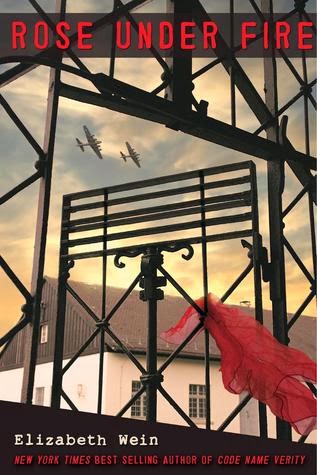
"Rose Under Fire," by Elizabeth Wein (Hyperion, 2013)

The Protagonist: Rose Justice. A young American girl who flies planes for the ATA - until she runs afoul of some German fighter pilots.
Her Angst: Interned at the Ravensbruck concentration camp, Rose must fight for survival. Because no one on her side knows where she is, if she dies - she'll literally vanish, just like thousands, millions of others.

Secondary Characters:

Roza: A brash, passionate, and furious Polish prisoner and Rabbit who has been left crippled by sadistic Nazi experiments.

Lisette: The "Camp Mother" of Block 32 who nurtures her charges to help cope with the grief of losing her own children.

Gitte: Their block leader who helps protect the people in her charge - but not without consequences.

Anna Engel: The German criminal who oversees Rose and the others. While the others despise her as a German convict and collaborator, Rose comes to learn her life is harder than she realized.

Angst Checklist:
  • Concentration Camps
  • Yeah, that about sums it up
The Word: At Book Expo America 2013, you would have been hard-pressed to find an ARC more lusted over than Rose Under Fire, the companion novel to Elizabeth Wein's best-selling, heart-breaking, love-taking (?) historical novel Code Name Verity

Rose Justice is an American pilot in England who ferries planes for the Air Transport Auxiliary - Maddie from Verity is a coworker and friend and even appears briefly in the novel. When Rose gets lost transporting a plane across France, she's captured by the Germans, and winds up in Ravensbruck. A concentration camp. Oh, it's a "fairly ordinary" concentration camp. Not a death camp like Auschwitz or Treblinka. But that knowledge doesn't comfort Rose or the other female inmates she encounters and befriends. 

While Code Name Verity had some pretty horrific scenes (particularly regarding Queenie's torture), the vast majority of Rose Under Fire is composed of these. Life in an "ordinary" concentration camp still involves starvation, illness, and torture while crammed into appallingly crowded living conditions. While Verity told the story of a moving female friendship that was then placed under extreme duress, Rose examines female friendships that are formed during, because, and in spite of extreme duress.

Rose is sent to live in Block 32 and befriends Roza, one of a group of girls who are called Rabbits, thanks to the hideous experimental procedures inflicted on them by Nazi doctors. Of course, these girls are also huge liabilities to the Germans because they are living evidence of their crimes against humanity. When the camp administrators decide they need to cover their tracks, Roza and the Rabbits are put in danger. Rose and her fellow inmates have to come up with a plan to keep the Rabbits safe, alive, and capable of telling the world what was done to them.

From her accounts of her life before her capture, it's clear Rose comes from a family of wealth and influence. Rose is a very privileged character, but that works in this story as she becomes aware of her privilege, and of how life at the camps turns even the most basic rights (to warmth, to food, to being able to sit down) into privileges. I loved Rose because she's also a writer (a poet, to be more specific), and when the ability to perform such a simple act is taken away from her, she turns to memorization and oral storytelling.

The concept of truth is integral to Rose Under Fire. Before her capture, Rose dismisses reports of the horrors of the camps as anti-German propaganda. "It's like trying to get us to believe the Germans eat babies!" she remarks at one point. But the truth is a precious, dangerous thing - as the Allies close in, the Nazis try to destroy the truth that would condemn them just as the prisoners of Block 32 fight to preserve it.

And yet fiction also serves a purpose, a theme I appreciated. To lift their spirits, Rose becomes a storyteller, reciting poetry and inventing tales of her boyfriend Nick coming to rescue them. Rose and her friends also become adept at lying and obfuscating details and numbers in order to protect themselves, using fiction to protect the truth. The truth may not set them free, but it does prevent them from vanishing off the face of the earth.

Like Verity, Rose Under Fire is an epistolary novel comprised of Rose's journal entries before she was captured, and the frantic, compulsively-written entries after her escape. This style of writing works both for and against this novel. The diary style renders the constant horrors of the setting bearable, as we, the readers, are buffered from it by the knowledge that these events aren't "happening" right now, but are being told to us by someone we know has escaped. The downside is that, for me, I felt emotionally distanced from the novel - but I felt the same way about Verity as well, at least until the gut-punch of the ending.

Rose Under Fire is a worthy companion novel to Code Name Verity - they both use epistolary narratives to explore the importance of truth and the strength of female friendship. Rose is definitely a darker, bleaker novel than Verity, but it is a darkness everyone needs to experience now and again, in order to remind us why light is so important.
B+

Tuesday, September 24, 2013

Fringe Season 1 Finale: "There's More Than One Of Everything"


Nina Sharp is rushed into emergency surgery after being shot in the previous episode - thankfully, she survives thanks to having Kevlar implants in her ribcage (for reals, yo). Unfortunately, her assailants stole a powerful energy core that William Bell had hidden in her BadAss Robot Arm.

Finally, Nina agrees to cooperate with the Fringe Buddies - especially once they find out that David Robert Jones (whose heavily-bandaged face now looks like banana pudding, the unfortunate after-effects of his teleportation) was behind her assassination attempt.

According to Nina, Jones was one of Massive Dynamic's first employees and looked up to William Bell as a mentor/father figure. Needless to say, when he was fired, he did not take it well and he became consumed with a desire to prove himself to Bell that has now become a desire to kill Bell. So why is Jones stealing power sources and using his Mad Science Machine to attempt to open holes in reality - holes that have the unfortunate habit of closing suddenly, shearing off everything in its path?

Because, as Nina finally reveals, William Bell isn't in this reality and hasn't been for some time - he's been in the Alternate Reality, the one the ZFT Manifesto claims is at war with ours. Jones has been trying to break through reality by finding "soft spots" - areas where the barrier between realities has begun to decay. According to Nina, these "soft spots" used to be rare, but the advancement of natural-law-violating scientific progress has caused them to multiply.

But where is Walter in all of this? The Observer takes him to an old beach house where he used to spend summers with his family. Walter apparently hid something there that he needs to find. The only problem? He can't remember what it is. Peter eventually tracks him down there and tries to help. An increasingly-frantic Walter remembers that when he and Bell used to trip balls on LCD (as one does), they caught glimpses of an alternate reality that had slightly different versions of themselves in it. They started the drug trials for Cortexiphan in order to develop a way to travel between these worlds without requiring drugs.

It's here that Walter admits their research took on personal significance - during this time, he lost something incredibly precious to him and he hoped that by learning to travel to the other side, he could steal the Alternate version of it for himself. However, portals work two ways - if he and Bell could travel to the Alternate world, people from the Alternate world could travel back to ours. With Peter's help, he remembers what he built - a special patch that could close reality portals to prevent the wrong people from going through. The Bishops retrieve the patch and start driving to Reiden Lake - which is apparently the Softest of all Soft Spots.  Broyles and Olivia, having figured this out as well, are also en-route.

Jones has already opened the portal by the time they arrive, but Peter activates the patch just as he's crossing through - slicing him in half.

The day has been saved - but there are still a few questions left unanswered. Walter goes off by himself to mourn - at a gravestone marked for Peter Bishop, 1978-1985. Just as he'd told Peter - he'd lost something precious and hoped to find a replacement for it in the Alternate world. He just neglected to tell Peter that he'd succeeded.

Meanwhile, Olivia finally gets the chance meet William Bell in person. As she boards the elevator, everything suddenly goes blue and it lets her off on a strange floor. There she meets William Bell in his personal office - which apparently resides in the un-exploded World Trade Center, in an Alternate Reality where history happened quite differently.

Dun dun DUNNNNNN!

Mad Science:
  • Alternate Realities
  • Inter-Reality Travel
  • Banana-Pudding Faces
  • Inter-Reality Plugs
Best Death Scene: David Robert Jones - although I've loved his character - gets the best death when he is sliced in half by the collapsing portal between realities. 

Mad Science Questions:
  • Holy shit, Peter's from the Alternate Reality?
  • SPOOOOOOOOCK - is William Bell! 
  • Olivia's in the Alternate Reality - soooo, how does she get back?
  • If Walter kidnapped Alternate Peter - what happened to Alternate Walter? 

Monday, September 23, 2013

"One Perfect Rose," by Mary Jo Putney (Ballantine, 1997)

The Chick: Rosalind Jordan, a.k.a. Marguerite St. Cyr. The stage manager for her adoptive family of travelling players.
The Rub: Although her family is loving, she does long for stability and security.
Dream Casting: Anna Torv.

The Dude: Stephen Kenyon, Duke of Ashburton, a.k.a. "Stephen Ashe." When he's diagnosed with a terminal illness, he rides off on his horse to find the adventure he'd previously been too staunch and duty-bound to pursue.
The Rub: He quickly falls in love with fair Rosalind, but what kind of a future can he give her when he doesn't have one himself?
Dream Casting: Christian Bale.

The Plot:

Shady Doctor: You're dying!

Stephen: Poop. Screw this! *rides off on his steed*

Rosalind: You saved my brother! How can I repay you?

Stephen: You can't. I'm dying.

Rosalind: Poop.

Stephen: But you can marry me and have security!

Rosalind: Sure!

Stephen: ... I'm also a duke. *marries*

Rosalind: Double poop.

Non-Shady Doctor: Turns out you're just being poisoned!

Stephen: Yay! I mean, poop. I mean - what do I mean?

Rosalind: I means you're going to live. With me!

Stephen: HOORAY!

Romance Convention Checklist:

  • 1 Orphan with a Mysterious Past
  • 2 Estranged Siblings
  • 1 Loving Adoptive Family
  • Several Thousand Shakespeare References
  • 1 Shady Doctor
  • 1 Awesome Doctor
  • 1 Poisoning


The Word: I seem to be saying, "I've burned out on romance" with more and more frequency. Trusted authors are disappointing me, new authors are boring me.

Perhaps it would be more accurate to say that my over-reading in romance over the last couple of years has refined my tastes in the genre - my tastes and standards have become pretty specific and exclusive and rule out a huge chunk of the genre itself. Which makes me sad - and more than a little nervous since the vast majority of my TBR pile is taken up by romance novels.

People have suggested I take a break, but I love the romance community and industry, and I also don't want to over-read in the other genres I'm enjoying now (YA especially), because I know I'm a person who, when she enjoys something, wants to do and read nothing but that special something until I grow absolutely tired of it. My iTunes account is full of songs I've listened to thousands of times that I can't bear to hear anymore.

Long story short - I was underwhelmed by Putney's One Perfect Rose, for no real reason than I think I'm growing apart from romance.

Rosalind was a foundling child who was rescued and raised by a quirky, loving family of travelling actors. While not a great actress herself, she works as their stage manager as she helps them perform Shakespeare in remote English villages. She comes complete with a Mysterious Aristocratic Past and a Dead Asshole Husband, but to her credit, she behaves like a relatively cheerful and rational person about her baggage.

While travelling to their next gig, Rosalind's brother Brian falls into a river and is rescued from drowning by a mysterious, wealthy gentleman named Stephen Ashe. The players take him in to help him recuperate from his own injuries and he and Rosalind develop an emotional connection.

Stephen Ashe, however, is really Stephen Kenyon, the Duke of Ashburton. He's also dying of liver disease. Furious at both his diagnosis and at how he believes he's wasted his life clinging to duty and propriety, he fled his privileged life and home to try and wring some last passion from life before his comes to an end. While he's quickly coming to care for Rosalind, he's unsure of how to proceed with her now that his days are numbered.

Both protagonists are empathetic, more or less sensible people who are refreshingly honest with each other (mostly) and there's some interesting conflict and drama. There's nothing that could really qualify as bad until the last third, when the author tries to forcibly inject the hero with a spiritual awakening using ghosts and past lives in a really goofy, ham-handed way.

However, I found myself growing bored and annoyed with the use of obvious tropes (Orphan with a Past! Daddy Issues!) and the romanticized perfection of just about everyone who isn't a villain (is no one on the protagonists' team allowed to be hurtful or have flaws?) and the repetition of certain words and phrases that are too familiar and overused in the genre to inspire the romantic longing I'm sure the author intended.

I did enjoy a measure of comfort reading throughout part of it, and the hero and heroine are such genuinely nice, reasonable people, so I would recommend it - but you may want to get a second opinion from someone who's more engaged with the genre than I am, at the moment.
B

Tuesday, September 17, 2013

AnimeJune's All-Natural, All-Positive Alternative Reviewing Method

Things have been getting very stressful on the internet lately. I've noticed a lot of conflict, a lot of name-calling, a lot of negative energy. Especially surrounding authors and bloggers of negative reviews.

Negative energy can be a very destructive force to the delicate creative constitutions of authors. The slightest stiff breeze of criticism can wilt a lovely novelist in the bud! Dozens of authors have cried foul (and just plain cried - salty, literary tears onto their university editions of Jane Eyre) over being "assaulted" and "bullied" by the pure non-positiveness of the internet. Who could have guessed that the internet would become so positivity-challenged, the complete opposite of how the real world is?

Since bullying in schools has now reached the point where children are killing each other and themselves because of it, you can tell how seriously these authors feel when they appropriate this word to describe their emotions when they voluntarily read words on a screen.

I used to be one of those careless people producing that negative energy that is so destructive to creative freedom. But I've seen the light, I've learned from my errors, and I've changed my ways.

I've now become an Alternative Reviewer. Alternative Reviewers use positive and symbolic reinforcement to convey an opinion on a novel that encapsulates one's reaction to it while still protecting the delicate membrane of sensitivity that protects an Author from Bad Feels.

Let me show you some examples of my new Alternative Method:


My positivity-challenged review for Can't Hurry Love by Christie Ridgway was a D. Such a thoughtless, negative letter - and a hard consonant to boot! Hard consonants bruise! Using my new Alternative Reviewing Method, my verdict is now Pineapple.

Can't Hurry Love was a totally pineapple book. You can tell from the obvious symbolic connotations of pineapple what I think of this novel. It is really so pineapple - it's practically a kumquat. Part pine, part apple. It says it all, really - and everything is conveyed without any nasty negative energy.


Or how about my review of Jackson Pearce's Fathomless? I originally gave it a C-. Such an ineffective reviewing method! So unnecessarily and painfully exact! I lived fast and hard back in ... May 2013. I was running with a rough crowd, throwing bolded letters at people with no regard to how hurtful alphabetical symbols in emphasized fonts could be. Truly, letter grades are the flaming bags of dog poo on the front porch of the soul.

Now, as a newly-licensed Alternative Reviewer, I can confidently grade Fathomless with a Downward Facing Dog.

Opinions can be prickly and hurtful and wrong - especially when over-enthusiastic, wickedly articulate, and predominantly female bloggers without Master's Degrees in Literature have them.

So Alternative Reviewing is not so much about expressing an opinion, as expressing a visual feeling. And if you squint a little, you can pretend you got an A. Oh, wait - letter grades! Crap! Does this mean I have to retake that online Alternative Reviewer Course? Aw man, the last time I took it I clicked the wrong link and became an ordained minister... Never mind! Time and place, AnimeJune, time and place!

Remember, when you read a novel that represents women, LGBT individuals, or racial minorities in careless or offensive ways, responding to that with negative energy solves nothing. Okay, so their words might pass blanket judgements on whole swaths of diverse people, but angry capslock is not the answer!  Do you have any idea the emotional toll all-caps arguments have wrought upon the author community? It's gotten to the point where some authors can't even handle acronyms anymore - all they can read are e. e. cummings and ruth weiss! A capitalized letter is not a toy! 

I've learned from my mistakes, and after studying the calming, conflict-free ways of Alternative Reviewing and the Ancient Eastern art of Stock Photos, I changed my review of Jennifer Rush's Altered from a D+ to a Weird Fucking Moustache, instead.
Isn't this better for everyone? Isn't this a much more wholesome, positive, and author-friendly way to talk about facial hai-- I mean books? It's so easy.

Why, even Judith McNaught's Whitney, My Love can be reviewed with this method. It now rates an Elephant Sitting on a Slide. Why?
Because it goes nowhere and it's full of shit! Waka Waka! 

AnimeJune's Alternative Reviewing Method - Placating Entitled, Privileged Whiners with "Artistic" Temperaments Since 2013. 

Monday, September 16, 2013

"Fangirl," by Rainbow Rowell (St. Martin's, 2013)

The Protagonist: Cather Avery, an 18-year-old writer who hopes to be able to continue writing her popular fanfiction while attending her freshman year at the University of Nebraska.
Her Angst: College is scary and unfamiliar, her sister doesn't want to hang out anymore, she's worried about leaving her unstable father alone - and she's developing feelings for her roommate's boyfriend.

The Secondary Cast:

Wren: Cath's twin sister who's excited to take chances and go on adventures in college - adventures without her sister.

Reagan: Cather's snarky, sarcastic but awesome roommate.

Levi: Reagen's permanently-cheerful adorable maybe-boyfriend who increasingly enjoys hanging out with Cath as well.

Nick: A classmate in Cath's creative writing class who starts co-writing a story with her.

Angst Checklist:

  • First year at college
  • Social Anxiety
  • Fandoms and Fandom Expectations
  • Befriending Your Boyfriend's Ex
  • Alcohol Abuse
  • Gay Ships
  • Plagiarism
  • Mental Illness
  • Parental Abandonment

The Word: I'm getting worried.

I'm thinking a number of authors may be secretly spying on me. Through my laptop camera, maybe? Bugs in my bookshelf? I can't be sure. But after reading another book with a heroine I related to on a surprisingly personal level, I'm getting mighty suspicious.

Our heroine, Cather, is a fanfiction writer - an especially prolific and popular one. As younger teens, Cath and her twin sister Wren fell in love with the Simon Snow novels (Harry Potter with a dash of Twilight thrown in) and started writing fanfiction together - particularly gay slashfiction between Simon and his mortal enemy, Baz (a clear stand-in for Draco Malfoy).

However, Cath's passion for fanfiction masks a deep-seated social anxiety that surfaces whenever she's around crowds, strangers, or unfamiliar situations. When her more confident sister Wren decides to room with someone else and discover her independence during their freshman year at the University of Nebraska, Cath feels resentful, anxious and betrayed. Nevertheless, she's determined to continue working on Carry On, Simon, her Simon/Baz magnum opus that regularly receives 20,000 hits per chapter.

Thankfully, real life still has a way of dragging Cath out of her shell - especially her new roommate Reagan and her affable boyfriend Levi who decide to adopt her and correct her nerd-hermit ways. Cath slowly learns to integrate into regular college life - but she still has a bipolar father to worry about, a growing attraction to a fellow classmate to mull over, and a creative-writing professor to impress who does not appreciate the literary merit of fanfiction.

I found Cath to be an intensely relatable and authentic character. She's socially inept and adapts slowly to new situations, and her fear of change permeates the novel. Her whole life is about finding comfort in the familiar - part of the reason she loves writing fanfiction is because it allows her to remain in the world of Simon Snow long after the author stops writing about it. One of the most poignant conflicts in the novel comes from Cath's discovery that her twin sister (and former co-author) has moved on from the Simon Snow fandom and actively pursues a life without her. Some of my appreciation may derive from my own bias because I had a very similar adolescent experience - social awkwardness, comforting routines, more adventurous sisters and all.

Of course, Fangirl is also a canny examination of the creative process, as Cath has to juggle her fanfiction schedule with the original material she's expected to produce for her Creative Writing class. This cleverly ties into Cath's struggle between familiarity and progress.  She can easily churn out thousands of words a night on Simon and Baz's budding romance, but writing her own fiction, with no built-in parameters or pre-established worlds, is a much more daunting experience. Rowell wisely refuses to downplay the legitimate creativity and effort required to write fanfiction, but also shows how it can be a bit of an artistic security blanket.

Rowell deftly weaves these related themes together with a bright and deceptively light writing style. Her depiction of fandoms and fanfiction is hilariously spot-on (especially with the titles of Cath's fics, which precede every chapter) and the novel maintains an upbeat and knowing tone even when dealing with darker material (such as Cath's father's mental illness or the intrusive presence of her estranged mother).

Fangirl is a heartfelt, funny, and eerily accurate depiction of how fiction is created, celebrated, and interacted with in the 21st century.
A

Saturday, September 14, 2013

"The 5th Wave," by Rick Yancy (Putnam, 2013)

The Primary Cast:

Cassie: A 17-year-old survivor of the alien attack who needs to rescue her little brother, Sammy, after he's kidnapped by aliens.

Zombie: A former high school  football star who's rescued by the surviving military who want to turn him into a soldier to fight the alien menace. But is he brave enough to make up for his past mistakes?

The Secondary Cast:

Sammy: Cassie's little brother who is kidnapped by alien soldiers (or was he?)

Vosch: The commander of the surviving military who helps train Zombie to fight in the human resistance (or is he?)

Evan Walker: A lonely farm boy subsisting in his family's farmhouse who rescues Cassie from a snowbank (or is he?).

Ringer: A hardbitten but talented recruit on Zombie's team who gives him another perspective on the alien menace (or is she - okay I'm done).

Angst Checklist:
  • The threat of complete and utter annihilation
  • Trust issues
  • Dead Parents
  • Dead Pretty Much Everybody
  • Hamburgers, and the Dirty Deeds Required to Acquire One
The Word: I realize that I'm relatively late to the 5th Wave party. This book has been touted up and down the blogosphere and, for much of that time, I remained more or less apathetic. I wasn't in the mood for yet another super-depressing dystopian YA. But I kept reading the reviews.

The first wave (heh) were all rapturous reviews, all about the details and the worldbuilding and the super-strong heroine, and the lack of gender-specific and homophobic violence to unsubtly show teen readers that Hating the Gays and Ladies Is Bad (an unfortunate trait in lesser dystopians). The second wave of reviews were the naysayers - the ones who said it was boring and meandering and who didn't like the super-creepy stalkery Twilight-esque romance halfway through.

Well, I've finally finished the book, and while I understand the negative reviews about it, I generally liked it. A lot. A hell of a lot. Even - perhaps especially - the romantic subplot.

The 5th Wave is about an alien invasion - only the aliens are definitely not the type to let Will Smith and Jeff Goldblum take them out with a '90s-era computer virus. No, these are aliens who know how humanity thinks. Thanks to electromagnetic pulses, tsunamis, and engineered diseases, they've successfully exterminated 97% of the human population. And those were just the first three waves of their plan.

Cassie, our teenage heroine, discovers the hard way how horrible the fourth wave is when official-looking soldiers visiting her refugee camp turn out to be aliens in disguise, who swiftly butcher every survivor over the age of twelve. Cassie manages to survive, but now the aliens have her little brother, Sammy.

While this is going on, another survivor named Zombie is rescued by the remaining military, who have found a way to identify which humans are real, and which ones are infested by aliens. Zombie undergoes extremely strenuous training in order to help fight the alien menace - but how far will he be expected to go to keep humanity from going extinct?

Yancy creates a truly hopeless situation for humankind - the fourth wave (aliens who look like humans) psychologically hamstrings any sort of last-ditch human resistance. It's hard to join forces against a common enemy when your enemy is indistinguishable from your friend. The resulting tension, isolation and paranoia further shape our characters and their respective grips on humanity. The 5th Wave is an extremely effective thriller, not least of which because the conflict is just as much internal as it is external.

As for the romance - well, it'd be hard to go into detail without spoilers so you've been warned. While Cassie is injured looking for Sammy, she is rescued by a reclusive boy named Evan Walker. He takes care of her, helps her heal, cooks for her, and eventually falls in love with her (and vice versa). The only problem? He's an alien (of course). While I fully understand the people who thought Evan was a creepy, morally-compromisd, stalkery Cullen from Space, I actually really liked him and his relationship with Cassie.

For one, it is so, so heartbreakingly understandable why Cassie would fall for him. After months without real human contact, Cassie runs into an adorable boy who gives her hot baths and homemade hamburgers. Someone she can relax around. Talk to. Be with. The fourth wave turned even ordinary conversations with other people into an unthinkable luxury. But still - Evan's an alien. And he's not exactly forthcoming about that fact.

The big difference (to me) between Twilight and The 5th Wave is that both the narrative and the heroine of 5th Wave acknowledge the romantic subplot's problematic nature. Evan's stalking of Cassie isn't chalked up to his "being in love." He's a Silencer - an alien in human form who is trained to hunt down and kill other humans. And he does so. Many times. The narrative is pretty clear cut on all of this, with no sugar-coating. And yet he can't manage to take out Cassie. The part of him that is human longs for human contact as much as Cassie does, and that part of him might just be strong enough to overpower the part of him trained to exterminate.

Moreover, when Cassie finds out Evan's an alien (using her own brainpower, thank you!), it is a huge conflict for her. She does not take his being a Silencer lightly or excuse his actions before he met her, and we've already spent the first third of the book understanding her as an uncompromisingly intelligent character. So when Evan continues to fight for her, and she continues to feel for him, it results in a hugely satisfying emotional payoff.

In short, Evan is not so much an Edward Cullen from Twilight as he is Spike from Buffy - he's killed people, both story and heroine acknowledge and respond realistically to this, but he wins us over with his heroism is the present.

To me, what makes The 5th Wave so powerful a novel is that the protagonists' victory doesn't come from surviving to beat the aliens, but from their choice to survive even though they know they're doomed. The aliens have all but won - what's the point of going on? Why bother? Why continue? When everything is all but over, just the act of placing value on human life is an act of defiance. Of course, the flip-side of this is that the novel is extremely dark and depressing. The reason this review isn't an A+ or even an A is because, well, there is a surfeit of navel-gazing what's-the-point? internal monologues from Cassie and Zombie. We get it. Life sucks. That's kind of the whole novel's point.

But if you can get past that, The 5th Wave is a well-developed, psychologically tense yet thoughtful novel with a fantastically-realized heroine.
A-

Friday, September 06, 2013

Fringe 1x19: "The Road Not Taken"


The Fringe Buddies are called to the scene when a frantic young woman named Susan Pratt abruptly catches fire and explodes on her way to a hospital. Olivia has a mild freak-out because she can see two charred corpses while everyone else only sees one. Later, while asking Broyles a question in his office, she notices his furniture is completely rearranged and he starts asking her about the two victims - but in a flash, Olivia abruptly "returns" to the real Broyle's office.

In regards to the Exploding Lady, Olivia uncovers that she was being "tested" for something by a Dr. Isaac Winters, and her apartment is full of burned furniture. Walter theorizes that she might have been genetically engineered to possess pyrokinesis, but when her power was "activated," her inability to control it caused her to turn it inward upon herself.

Meanwhile, since learning from Dr. Boone in "Midnight" that William Bell has been funding the Mad Scientist Terrorist organization ZFT, the Fringe Division has started a full-scale investigation into Massive Dynamic. Walter even discovers that William Bell wrote the ZFT manifesto while they shared a lab - although he's convinced that crucial pages have been removed. Neither Nina Sharp nor Agent Rapist are happy about the investigation, and Agent Rapist demands Broyles shut it down.

Olivia: Are we seriously going to stop--

Broyles: LOL NO.

Broyles is a bad-ass. Anyway, Olivia finally goes to Walter with her visions, worried that she's going bonkers. Thankfully, Walter can always be trusted to come up with a somewhat-believable, pseudoscience explanation: Olivia, thanks to her childhood treatment with Cortexiphan, might be able to see more than one reality. Walter theorizes that every decision we make creates two realities - the road taken, and the road not taken. The ZFT manifesto stated that our reality was at war with another's, so perhaps Olivia is catching glimpses of that other reality, and she should use her glimpses into the other reality to find answers in her own.

When she gets another flash of the Alternate FBI Headquarters, she questions Alternate-Charlie and discovers the second victim was Susan's twin. Back in her own reality, Olivia finds out Susan ran away and changed her name - but her twin, Nancy Lewis, is still alive. Unfortunately, she's already been kidnapped by Dr. Isaac Winters who intends to activate her powers.

Thankfully, Peter comes to the rescue - apparently, he's been cannibalizing all of Walter's equipment to create a device that will digitize Walter's water-damaged record collection. Awww - Walter and Peter share an adorable moment when Walter realizes Peter made the most Mad-Sciency homemade gift ever. Another use for Peter's machine? When Nancy was kidnapped, she melted the glass in her window in a panic, and apparently the soundwaves in the room made indentations on the melted glass. Peter uses his machine to read those grooves and translates them into sound - and we get the sound of screams and a dial tone.

Olivia uses an app (for reals, just an app) to call the dial tone - and it's Agent Rapist's phone! So, yeah, he's apparently been a traitor this whole time! Just don't expect any actual explanation or follow-through on this discovery - he gets cooked from the inside-out by Nancy during the FBI's rescue when Olivia tells her to focus her powers outward. Agent Rapist goes out in a massive flamey explosion and it's delightful.

So all's well in the universe - well, not completely. The next time Olivia sees Walter, she unleashes the full brunt of her outrage on him for abetting in William Bell's experimentation on children. Two people subjected to these experiments are dead - Susan Pratt and Nick Lane from "Bad Dreams." She tears several thousand (well-deserved) strips off him and demands to know what he and William did to her with the Cortexiphan. Walter bursts into tears and says he can't remember.

When he returns to his lab, Walter discovers the missing pages of the ZFT manifesto - that supposedly contain the good reasons why William's against the war of realities - in his record collection, but before he can do anything with them, the Observer appears and tells him it's time to go.

The episode ends with Nina Sharp staring at the wrong end of a gun barrel as she enters her apartment - right before it goes off.

Mad Science!
  • Pyrokinesis
  • Alternate Realities
  • Reading Soundwaves from Melted Glass
Best Death Scene: Agent Rapist's glorious and completely-deserved immolation! 

Mad Science Questions:
  • So, wait, was Agent Rapist a traitor all along? How does that work? I'll admit, I'm as happy as anyone that they found out he was an obvious bad guy and that he met a deliciously gruesome death but they don't really explain how he came to be a traitor. They just go, "Welp, we don't need this obstacle anymore. Let's just stick him to the Pattern, kill him off, and never mention him again."
  • So which reality was Olivia having visions of? Just one that was slightly different? 
  • Is Nina Sharp okay?
  • So Walter and the Observer are just going on a really awesome roadtrip, right? He'll be back, right?

Wednesday, September 04, 2013

Fringe 1x18: "Midnight"


The Fringe Buddies are called in when two people are found separately murdered, their spines broken and exposed at the neck. It appears a human being - albeit one with enhanced jaw strength - tore them open and drained them of spinal fluid.

Walter detects traces of an extinct strain of syphilis on the body, and the CDC discovers that the strain of syphilis - along with a host of other nasty diseases - have all been ordered from them by the same company, Lubov Pharmaceuticals. Included on the World's Grossest Grocery List? The same rare strain of virus that was used to create the horrifying skin-growth toxin from "THIS EOISDOE." Which means Lubov Pharmaceuticals is tied to ZFT, a.k.a. the League of Mad Scientist Terrorists.

When the FBI storm the place, they only find a single wheelchair-bound scientist named Dr. Nicholas Boone. Dr. Boone is surprisingly cooperative, and promises to tell the FBI everything they need to know about ZFT - if they find and rescue his wife, who was taken by the terrorist group three weeks ago when Dr. Boone realized he wanted no part of their Mad Science Shenanigans.

The FBI storms the address Boone gives them - they're doing an awful lot of storming this episode - and they find a Secret Chinese Restaurant Science Lab, but no Mrs. Boone. Boone admits that ZFT didn't actually kidnap his wife to punish him for his defection - they infected her with the biological weapon he helped create. Yup - it's the Wifey who's been killing people for their spinal fluid - since the disease makes her body burn through her own supply. At first, Boone tried to give her his own spinal fluid - hence his wheelchair - but she started craving more than he could afford to give and she went feral and escaped.

While Olivia and Peter rush off to try and capture Wifey alive, Boone's allowed into Walter's science lab to help him concoct an antidote for the disease. The two Mad Scientists are adorable together and swap stories - as well as shared guilt over how their discoveries have led to some pretty Hinky Shit.

Unfortunately, the first batch of antidote doesn't work. Boone realizes that the antidote will require spinal fluid as a catalyst, and he's the only person on short notice who has some that's compatible with his wife's. Walter objects, since Boone is clearly running dangerously low on spinal fluid, but Boone insists that he's kept a careful tab on his supply and he can afford to safely donate another 25 milligrams.

Walter concocts a successful antidote just as Charlie, Olivia, and Peter discover Wifey hunting for prey at a nightclub. Olivia and Peter tranq her (although she requires a top-up when she wakes up halfway to the lab and tries to chow down on Olivia), just as Boone starts having a stroke - he lied to Walter about how much spinal fluid he had left, but he knew it was the only thing that would save his wife.

Boone passes away mere moments after the antidote is safely administered to Wifey, but not before making a videotaped confession telling the FBI everything he knows about ZTF - including who's funding the terrorist organization - none other than the founder of Massive Dynamic, William Bell.

Yeah, not surprising AT ALL. But at least now it's official!

Mad Science:
  • Biological Weapons
  • Secret Chinese Restaurant Science Labs
  • Super-Pencillin
  • Spinal-Fluid Vampires
Best Death Scene: The adulterous player in the beginning getting his neck snapped by the Wifey. 

Mad Science Questions:
  • Why is William Bell funding ZFT?

Monday, September 02, 2013

August Round-Up!

And that's the summer, you guys. It's time for fall - colourful leaves, hot cocoa, overcast skies, and blessedly reasonable temperatures.

So what happened during this last month of summer? Other than finding out my novel's about to be published (still squeeing over this!)? I read a bunch of books!

*August Winner*
OCD Love Story, by Corey Ann Haydu. YA, Contemporary. A+
Pros: Fascinatingly detailed account of mental illness, great voice, empathetic protagonist, good tension. Cons: Kind of a misleading cover.

*August Dud*
Hope's Follyby Linnea Sinclair. Romance, Science-Fiction. DNF
Pros: Great worldbuilding, lots of detail. Cons: Too much detail, drowning in detail, boring boring detail, just not enough story.


*The Best of the Rest*

Deerskin, by Robin McKinley. Fantasy, Fairy-Tale Retelling. A-
Pros: Gorgeous writing, exquisite detail, excellent build of tension. Cons: Slow pacing, ending is a bit abrupt.

Counting by 7s, by Holly Goldberg Sloan. Middle Grade. B
Pros: Lovely writing style, nicely balanced tone. Cons: Weird, unsatisfying ending.

Written On Your Skin, by Meredith Duran. Romance, Historical. B
Pros: Exquisite writing, great dialogue, good heroine. Cons: Slack pacing, no real suspense plot, couldn't connect with story.

The Infinite Moment of Us, by Lauren Myracle. YA, Romance. C+
Pros: Good development of heroine's parents, nice supporting characters. Cons: A poorly-drawn Evil Slut Villain, no real plot, goopy romance.

Just Like Fate, by Cat Patrick and Suzanne Young. YA, Science-Fiction. C
Pros: Great concept, some interesting implications. Cons: No follow-through on concept, lame romance.

Fringe 1x17: "Bad Dreams"


Olivia wakes up from a particularly vivid dream where she pushed a young mother off a subway platform and into the path of a train. At first, she brushes it off as a simple nightmare - until she sees a news story about that same woman, whose death is being labeled a suicide.

She and Peter head off to investigate, and she's extremely shaken to discover that all the details about the crime scene correspond with her dream. However, when she looks at the security camera footage, it looks like the woman jumped.

Despite taking caffeine pills, Olivia falls asleep again and dreams she's sitting in a restaurant, watching a woman suddenly accuse her husband of cheating on her. The hysterical woman then stabs her husband repeatedly - while Olivia's hand is holding the knife.

When Olivia interrogates the woman after waking up, the woman can't explain her actions. All she knows is that she suddenly felt angry and afraid, somehow convinced her husband was going to leave her. But it makes no sense, they were a happy couple.

A guilt-stricken and freaked out Olivia is now convinced she's somehow inducing these people into hurting themselves or others. However, when she goes to the restaurant to find clues, she learns a blond man with a scar had been sitting at the table her dream-self had been using when the murder occurred - the same blond man with a scar who was present on the subway platform when the young mother jumped.

The good news? Olivia isn't killing people with her mind! The bad news? Someone else is - a man named Nick Lane who recently checked out of a mental hospital where he'd been receiving treatment for his anxiety and suicidal tendencies. Walter theorizes that this man may be a reverse empath - he unwittingly infects people with his emotions. Hence, when he's thinking about jumping in front of a train, someone else does. And when he's feeling angry and alone at a restaurant, a woman experiencing his emotions kills her husband.

But why is Olivia dreaming about his experiences? Well, Olivia finds out that she and Nick are the same age and lived on the same military base in Florida when they were toddlers - the same place where Olivia was apparently treated with Cortexifan, the Psychic Brain Drug mentioned by Jones in THIS EPISODE. Walter admits that he and William Bell performed this testing, and they preferred to keep the young test subjects in pairs to stabilize their emotions - Olivia may have been Nick's Illegal Experiment Buddy. Peter and Olivia are both Understandably Appalled with Walter.

However - now they have a way to find Nick. Olivia's put under a hypnosis-induced REM sleep and tracks him to his house, but the FBI arrives too late. Nick is already planning on killing himself, and thanks to his emotions, he's unwittingly roped a huge crowd of people into standing on a ledge with him.

Nick recognizes Olivia when she comes to talk him down, and he calls her "Olive." He explains that they were both treated with Cortexifan in order to become soldiers for the upcoming war between realities (which corresponds with the prophesy in the ZFT manifesto from THIS EPISODE), but that he can't handle it anymore. He doesn't want to hurt people, and he begs Olivia to kill him before he unwittingly induces the other people into jumping off the ledge. I really feel sorry for this guy - and so does Olivia, because she shoots him to free the bystanders, but doesn't kill him (he instead winds up in a drug-induced coma).

Meanwhile, the episode ends with Walter watching some of his super-old test videos - and realizes without a doubt that both he and William Bell personally experimented on Olivia as a child - and that Olivia's powers may have been pretty nasty.

Mad Science:
  • Drug Experimentation on Children
  • Telepathic Bonds
  • Emotional Viruses
  • Empaths
Best Death Scene: The woman who jumps off the building when Nick snaps at Olivia. 

Mad Science Questions:
  • Did we really need those scenes of Olivia making out with a stripper and then experiencing a public orgasm during REM sleep? Were you losing the 18-34 male demo that badly? 
  • What war were Olivia and Nick being prepared for? What powers does Olivia have beyond dream-speaking and defusing Lite-Brite bombs?
  • Who is William Bell and why does his voice sound so familiar?

"The Burning Sky," by Sherry Thomas (HarperCollins, 2013)

The Protagonist: Iolanthe, a.k.a. "Archer Fairfax." A mysterious orphan with the power to work all four magical elements.
Her Angst: Since her country's Evil Overlords keep a sharp eye out for powerful mages they can enslave/destroy, she has to keep her own powers a secret.

The Other Protagonist: Prince Titus. The ruler of the Domain in name only, he's organizing a secret rebellion to avenge his mother. The only thing missing from his plan is an Oblivious Empowered Orphan.
His Angst: He's bent on organizing this rebellion and freeing his people from the cruel reign of Atlantis - all the while knowing (thanks to a prophesy) that it will result in his own death.

Secondary Cast:

Master Haywood: Iolanthe's cheating, stealing, lying drug-addicted guardian - but don't worry! He has a magical excuse for being A Terrible Person so it's all good!

Kashkari: An Eton student from India who seems to know more than he lets on.

Wintervale: An exile from the mage realm who's also a student at Eton with Prince Titus.

The Bane: The High Commander of Atlantis - is supposedly 200 years old and impossible to be killed.

The Inquisitor: The Evil Minion of the Bane who investigates possible rebellions.

Angst Checklist:
  • My teacher is a dishonest, cheating drug-addict but he has a magical excuse for it
  • I have super magical powers and no one will tell me how to use them
  • The power of fate
  • Consent-optional blood oaths
  • My mum foretold my death so I'm kind of bummed out
  • Man this chick is way hotter when she's dressed as a dude - should I be worried?
  • Cricket matches
The Word: Keep writing romances, Sherry Thomas.

Your romance novels are some of the best I have ever read. Not Quite a Husband, Private Arrangements and Delicious are exquisite stories with gorgeous details and fantastic dialogue. 

Unfortunately, for some inexplicable reason Sherry Thomas' skills with detail, storytelling, and character building do not translate into Young Adult Fantasy. After reading about a hundred pages of her first YA effort, The Burning Sky, with all of its cliched tropes, bland character development, and utterly absurd worldbuilding, I had to start skimming.

Our heroine, Iolanthe, is an Oblivious Empowered Orphan in a realm known simply as the Domain, currently under the cruel usurping thumb of Atlantis, an empire that likes to make mages who get a little too powerful disappear. Everyone in this world is familiar with elemental magic (wordless control of fire, air, etc.) and "subtle" magic (verbal spells using wands a la Harry Potter). Iolanthe, of course, has Way More Elemental Power than the average bear but, being an Oblivious Empowered Orphan (with a Destiny, no less!), no one's willing to explain her powers to her in anything other than Meaningless Riddles.

She's currently practicing minor magic in a small village with her inept, drug-addicted guardian, Master Haywood. When he ruins one of her potions because he's A Terrible Person, Iolanthe notices a scrawled note on her potion book that says a thunderbolt will make her potion as good as new.

Now, despite the fact that she has no idea who wrote that note, no one in their Domain has been able to cast lightning in a thousand years, and the only one who did it is a figure from folklore, Iolanthe decides to try poking her finger at the sky and shouting "Lightning!"

I'm dead serious. And it works. Because of course it does. 

Her magical lightning milkshake brings all the Evil Minions of Atlantis to the yard, and Iolanthe is barely rescued in time by Titus - the teenage Prince of the Domain. Rendered a powerless figurehead by Atlantis, Titus has been secretly scheming to topple their empire once he finds the Destined Oblivious Empowered Orphan. Now that he has her, he spirits her into the human world, where he disguises them both as male students at Eton. The rest of the novel plays out like a reverse-Harry Potter, with the magical students pretending to be normal in a famous British boarding school, as they try to dodge the spies of Atlantis and train Iolanthe to fulfill her Destiny as the World-Saver.

Now, okay, I don't mind hoary fantasy cliches so long as the Oblivious Empowered Orphan is a developed and memorable character. Unfortunately, Iolanthe is a pert Mary Sue for much of the novel. Despite a haphazard and impoverished upbringing in a series of podunk towns, she is inexplicably flawless at pretending to be a boy at an upper-class all-boy's school, is a star player at cricket on the first try despite knowing nothing about the game, and, oh yeah, can call down lightning by poking her finger at the sky and asking for it. 

Titus, meanwhile, is a fairly bland Mentor with Mummy Issues. He spends most of the novel whining about his responsibilities and what a Duplicitous Angsty Trickster he has to be to outsmart the Atlantis spies and keep his secret rebellion a secret. Wash, Rinse, Repeat. 

The magical worldbuilding is similarly overly-convenient. There is no cost to doing magic, and no barriers or limitations to what it can do. It can hem sheets and cook food. It can predict the future. It can teleport people over hundreds of miles. As a result, whenever Iolanthe and Titus run into a problem, there's always a Handy Magical Item on hand for just about every occasion. Magical typewriters, magical Dead Mother Prophesy diaries, magical wardrobes. It makes it very difficult for the author to establish true stakes when magic is capable of just about everything.

It also begs the question of why Atlantis doesn't just try taking over England and the human world, seeing as Thomas establishes how literally everything about Victorian England is inferior to the Domain - at one point, Titus worries that Iolanthe won't know what a salt shaker is because the food in the Domain is always perfectly salted. Really, truly. 

And on top of the by-the-numbers characters and nonsensical worldbuilding, the pacing is also fairly slow - lots of angsting and training and whining and Etonian hijinks from the other schoolboys. There is no real goal in this novel, apart from Not Getting Caught and Killed. Our characters spend the novel reacting instead of acting - and even the big climax is a reaction to the Bad Guys' initiative rather than any decision on the protagonists' part.

While I am a long way from taking Sherry Thomas' romance novels off my autobuy list, I doubt I'll be continuing with this series.
D